


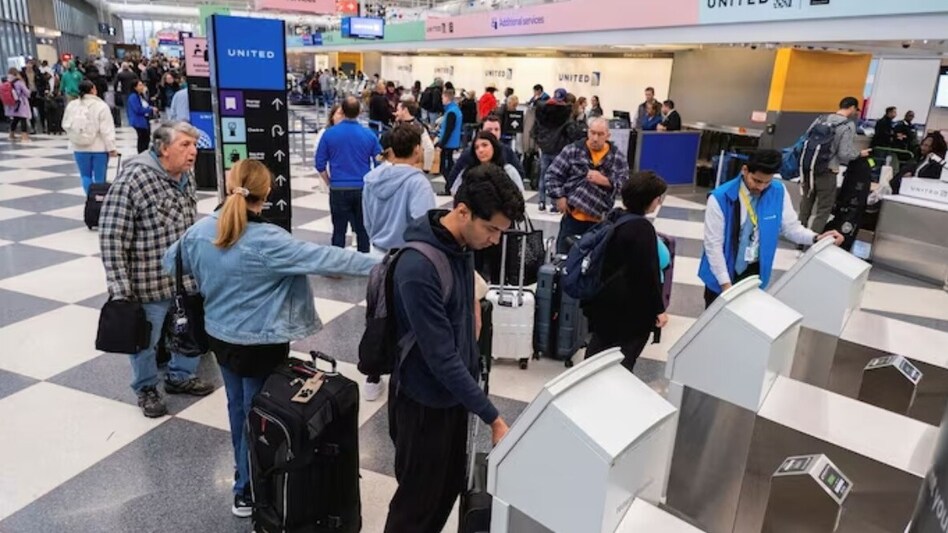
 AAA spokesperson Aixa Diaz advised travelers to monitor airline apps and arrive early at airports, noting that many are now considering driving.
The FAA will slash air traffic by 10% in 40 major U.S. markets starting Friday, citing growing safety concerns as unpaid air traffic controllers show signs of strain during the longest government shutdown in U.S. history.
With air traffic controllers working six-day weeks without pay since the shutdown began on October 1, the Federal Aviation Administration announced Wednesday that it would cut flight operations in top-volume zones to prevent a potential crisis.

 100% tariffs immediately? What Trump’s new Russia sanctions law means for India
 Russian oil & gas purchase: Trump signs Bill into Act targeting 100% tariffs on India, China
 'Tatas today are the face of India...': Former Solicitor General Harish Salve backs Tata Sons public listing
  Trump’s announces Greenland deal with Denmark: What it means for US military presence
 Panic button: California governor issue order for mandatory kill switch on advanced rogue AI
 “Unacceptable And Unprofessional”: MEA Rejects Pakistan’s Claims Over INS Kolkata Collision
  Commodity Trading For Beginners: How MCX & NCDEX Work | Trading Basics | Money Today
 US Fed Rate Hikes A Headwind For Foreign Flows? | Jibi Jacob | Jefferies
 ₹25 Billion FII Outflow: What Could Bring Foreign Investors Back? | Jefferies' Jibi Jacob
 India’s Private CapEx Picks Up: Christopher Wood On The Market Outlook
 Jindal Supreme, SS Retail, Hero Motors IPOs subscribed up to 181 times on final day; details here
 Sensex, Nifty post sixth weekly loss; TCS, Titan among top laggards, slip up to 4%
 How AI collapse could benefit Indian equity market; Jefferies' Christopher Wood explains
  Banks are no more secular growth story, prefer NBFCs: Chris Wood
 Jefferies' Christopher Wood sees gold at $10,000 'sooner or later'; likes India's small, midcaps
 'Fake news': Trump bans CNN, Politico, MS NOW from White House; press groups vow legal action'Tatas today are the face of India...': Former Solicitor General Harish Salve backs Tata Sons public listing 100% tariffs immediately? What Trump’s new Russia sanctions law means for India
 Petrol, diesel prices today, September 19: Check latest rates in Delhi, Mumbai, Chennai, Kolkata & more
 Quote of the Day by Steve Jobs: 'For you to sleep well at night, the aesthetic, the quality, has to be carried all the way through'












