








 Roughly a year ago, US President Donald Trump publicly threatened to seize control of the canal, calling it “vital to our country” and alleging that it was being operated by China.
  Roughly a year ago, US President Donald Trump publicly threatened to seize control of the canal, calling it “vital to our country” and alleging that it was being operated by China.
 Panama’s Supreme Court has ruled that a concession held by Hong Kong-based conglomerate CK Hutchison to operate ports at either end of the Panama Canal is unconstitutional, a decision widely seen as aligning with long-standing US concerns over China’s strategic footprint in the region.
In a brief statement issued on January 29, the court said the legal framework under which Panama Ports Company (PPC) — a subsidiary of CK Hutchison — operates the Balboa port on the Pacific coast and the Cristóbal port on the Atlantic coast violated Panama’s constitution and was therefore invalid. The court said the ruling followed “extensive deliberation” but did not spell out what steps would follow or how the ports would be managed going forward.
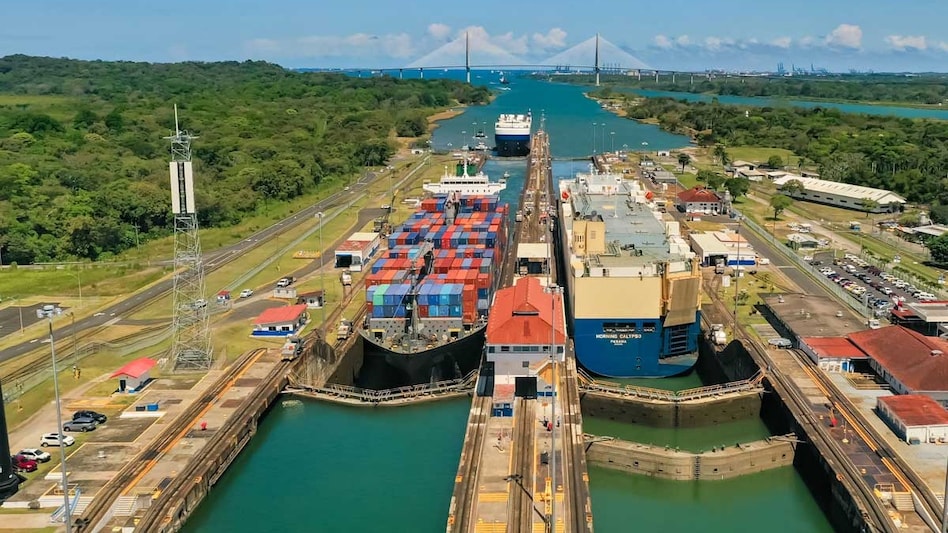
The decision comes amid heightened geopolitical scrutiny of the Panama Canal, particularly from the United States. Roughly a year ago, US President Donald Trump publicly threatened to seize control of the canal, calling it “vital to our country” and alleging that it was being operated by China. Blocking Beijing’s influence over the canal has since become a stated priority of the Trump administration’s security strategy in the Western Hemisphere.
China reacted swiftly to the ruling. A spokesperson for China’s Ministry of Foreign Affairs said on January 30 that the decision was “contrary to the laws governing Panama’s approval of the relevant franchises” and added that the affected companies would “reserve all rights, including legal proceedings.” Beijing, the spokesperson said, would take all necessary measures to protect the legitimate rights and interests of Chinese companies.
Trump has repeatedly criticised Panama Canal tolls, describing the transfer of the canal from US to Panamanian control as a “foolish gift that should never have been made,” and has on multiple occasions threatened to take the canal back. At his inauguration, he again claimed — without providing evidence — that “China is operating the Panama Canal,” adding, “We didn’t give it to China. We gave it to Panama and we’re taking it back.”
The 82-km (51-mile) canal, which links the Atlantic and Pacific oceans, was built and owned by the United States in the early 20th century before being handed over to Panama under a 1977 treaty that guaranteed the waterway’s neutrality. The US remains the canal’s largest user, accounting for roughly three-quarters of the cargo that passes through it each year.
At both ends of the canal sit major ports operated by a Hong Kong-based company. In 1996, Panama awarded Hutchison-Whampoa — now part of CK Hutchison Holdings — a concession to operate the Balboa and Cristóbal ports on behalf of the Panamanian government. The agreement did not grant ownership of the ports, only operational control. The concession was extended by 25 years in 2021.
CK Hutchison Holdings is controlled by Hong Kong billionaire Li Ka-shing, one of Asia’s most prominent business figures. The court’s ruling now casts uncertainty over the future of the concession and adds a new flashpoint to the growing US-China rivalry playing out along one of the world’s most strategically critical trade routes.
 India in discussions with Iran for safe passage of 20 oil tankers through Hormuz: Report
 Iran's new Ayatollah says Hormuz must remain closed
 'It can't happen now': US Navy not ready to escort oil tankers through Hormuz
 From 20 mn barrels a day to a trickle: IEA says Hormuz closure is biggest oil supply disruption ever
 Mukesh Ambani's refinery deal rekindles momentum in India-US ties
 Rahul Gandhi Vs Hardeep Puri In Lok Sabha Over India’s Oil Security
 Induction Cooktop Sales Jump 300% In Delhi-NCR Amid LPG Supply Concerns
 Market Fall Deepens | Oil Hovers Near $100, Nifty Slips - Sanjay Sinha Explains What Next
 Market Crash Amid Oil Surge? Devang Shah Decodes | Live Market Commentary
 #Podcast | #Episode09 | From Bollywood Icon To Entrepreneur: Malaika Arora On Food, Fashion & Fitness
 Brent oil prices above $100 again after Khamenei signals Hormuz will stay shut
 NSE IPO: Leading exchange appoints 20 merchant bankers for its mega issue; check full list
 Sensex tumbles 2,171 pts, Nifty falls over 2% in 2 days; will stock market extend losses?
 Adani Power, Tata Power, Coal India shares jump up to 7%: Jainam Broking's Kiran Jani weighs in
 Iran war, oil-gas crisis: BHEL, Suzlon, Adani Power, Tata Power, AGEL among JM's top picks