


 In 2025, as the Bengaluru-headquartered company turns 10, it has transformed into one of India’s largest fintech infrastructure providers, enabling more than a million merchants to move money seamlessly.
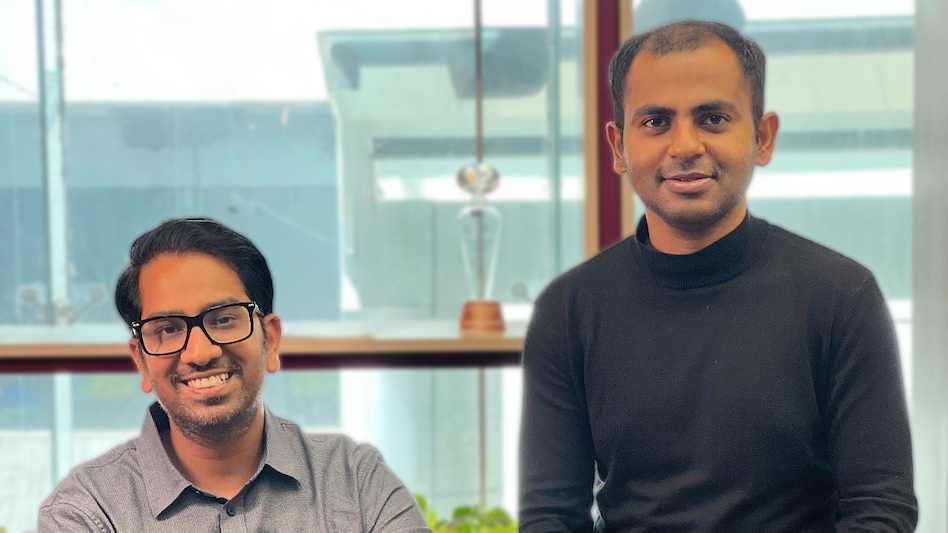
A decade ago, when fintech was still finding its feet in India, Reeju Datta and Akash Sinha launched Cashfree Payments as a lean, API-first payments start-up. At the time, UPI was not yet rolled out, wallets were booming, and payment gateways were still dominated by legacy players.
In 2025, as the Bengaluru-headquartered company turns 10, it has transformed into one of India’s largest fintech infrastructure providers, enabling more than a million merchants to move money seamlessly.
“We started Cashfree to solve the cash-on-delivery (COD) challenges businesses were struggling with, as the name Cashfree goes” recalls Co-founder Reeju Datta. “Our very first client was a restaurant we frequently ordered from, and since then there’s been no looking back. Today, everyone from e-commerce players to BFSI companies to SaaS firms relies on Cashfree Payments.”
Over the past decade, Cashfree has carved a space for itself in a fiercely competitive market dominated by Razorpay, PayU, and more recently, PhonePe and Paytm. Its early bet on an API-first model gave it traction among startups and SMEs who needed plug-and-play payment solutions. Today, it processes billions of dollars in transactions annually across payment collections, payouts, and cross-border flows.
“In a month, we do more than 250-300 million transactions,” Sinha reveals.
But the competition is only heating up. Rivals are expanding into lending, insurance, wealth management, and even e-commerce enablement. The obvious question is whether Cashfree too will diversify beyond payments. Company insiders suggest the focus will remain on merchant infrastructure, cross-border payments, and compliance-driven products, areas where regulation is creating white spaces. With RBI cracking down on digital lending and tightening KYC norms, compliance-first fintechs are suddenly better positioned than the growth-at-all-costs brigade.
At the same time, Cashfree is eyeing international expansion. It has already dipped its toes in markets like the UAE and Southeast Asia, regions where Indian fintech expertise is increasingly in demand. Cross-border remittances, a $700-billion-plus opportunity for Asia, remain a key growth lever.
The other big shift is technology. Cashfree has been integrating AI and machine learning into fraud detection, risk management, and reconciliation. “Payments are no longer just about transactions; they’re about trust,” says Sinha. “In a market where regulation is tightening, our edge is the ability to build scalable yet compliant systems.”
Still, challenges remain. Wallet adoption in a UPI-led ecosystem is uncertain, and regulatory unpredictability can derail the best-laid plans. Moreover, with well-funded competitors racing to capture more of the financial services pie, Cashfree must pick its battles wisely.
For now, the company seems focused on cementing its role as the invisible backbone of digital commerce. As it marks 10 years, the founders are betting that Cashfree’s next decade will be defined not just by scale, but by resilience, compliance, and the ability to turn regulation into opportunity. The company doesn’t have immediate IPO plans but in the next 3-4 years “after crossing a revenue of Rs 3,000 crore,” says Sinha.
“Fintech in India has matured from disruption to consolidation,” notes the analyst. “The next winners will not be those who only innovate, but those who can innovate within the regulatory guardrails. Cashfree is trying to prove it can do both."

 Vikram-1 launch today: What the mission is about, launch date, time, objectives, its significance for India
 'Not anti-consumer, but pro-India': JSW Group's Sajjan Jindal as E20 blending fears grip motorists
 Why record mutual fund inflows aren't making investors richer: The hidden impact of IPOs and FII exits
 HDFC, ICICI, KMB, Axis Bank Q1 results today: Key expectations
 'Vikram-1 will prove our commercial product': Skyroot Aerospace CEO Pawan Kumar Chandana as start-up gears up for lift-off
 Faith Conclave 2026: Tourism Leaders Chart India’s Seamless Global Growth Roadmap
 No Diesel, No Emissions: PM Modi Launches India's First Hydrogen Train
 Mercedes CEO: Cars Are E25 Ready, India Among Top 5 Maybach Markets | Santosh Iyer Exclusive
 Tech Gear Show EP 11 | Tech News, JBL Live 780NC Review, Motorola Edge 70 MAX Unboxing
 Faith Conclave 2026: VFS Global’s Yummi Talwar On Building Resilient Global Tourism Organisations
 HDFC, ICICI, KMB, Axis Bank Q1 results today: Key expectations
 Jio Platforms Q1 earnings: IPO-bound firm logs Rs 45,961 crore revenue, profit up 9%
  Reliance Retail Q1 results: Net profit at Rs 2,805 crore, revenue rises 7%
  RIL Q1 net sales up 25%; what Mukesh Ambani says on Jio Platforms IPO
 Foreign investors may rotate to India as AI trade froth fades, says Gaurang Shah









