What is underway represents a structural reorganisation of how value is created and how expertise functions within society. When the architecture of opportunity evolves in real time, universities are called upon to reconsider the forms of preparation that will endure across decades of technological and political change. The work required extends beyond updating syllabi or introducing new technical modules. It requires institutional clarity about purpose and a willingness to align culture, pedagogy, and leadership around outcomes that are explicitly defined and intentionally pursued.
The challenge is significant. While universities have long aspired to cultivate critical thinking, the gap between traditional rote learning and the "intellectual agility" required by today’s marketplace is widening. In India, the New Education Policy (NEP) 2020 has taken a bold step in recognising this, asking higher education to equip students with greater capacity in multidisciplinary thinking and creative problem solving. The forces reshaping our world - from quantum computing and climate vulnerability to the waning trust in public institutions - demand more than just curriculum tweaks. They demand a fundamental shift in institutional culture. Institutions must ask whether their incentive systems reward integrative teaching, whether their structures encourage sustained collaboration across fields, and whether students experience complexity as a lived part of their education.
The intellectual agility we referenced – which is the cultivated capacity to reason across fields of study, to engage ambiguity with intellectual discipline, to integrate technical knowledge with ethical reflection, and to collaborate across differences of geography and institutional culture – is at the core of this important institutional shift. These capacities shape effectiveness in environments influenced by artificial intelligence, shifting global power balances, and rapid technological transformation. Graduates who develop such agility are better prepared to navigate careers that will evolve in ways that cannot yet be fully predicted.
Technical proficiency remains indispensable in fields underpinned by computational systems and advanced analytics, yet sustained leadership in complex environments depends equally on judgment, contextual awareness, and integrative thinking. Employers and civic institutions consistently emphasise the importance of individuals who can frame problems with nuance, interpret competing forms of evidence, and synthesise insights from multiple domains into coherent courses of action. The durability of innovation increasingly rests on the quality of such integrative reasoning.
A rigorous liberal arts foundation contributes directly to this development by strengthening interpretive reasoning, ethical discernment, and the habit of connecting ideas that are often taught separately. As machine systems take on greater analytical responsibility, human capacities for contextual understanding and moral evaluation carry greater weight in decision making. Educational design gains strength when scientific and technological training develops in sustained dialogue with historical, philosophical, and social inquiry from the beginning of a student’s formation.
Translating these convictions into practice requires coordinated institutional action. Structural transformation within universities emerges through alignment of leadership priorities, faculty engagement, curricular architecture, and cross institutional partnership. With this understanding, Ahmedabad University, Vassar College, the University of Global Health Equity in Rwanda, and the University of Edinburgh convened at Ahmedabad to advance institutional capacity for cultivating intellectual agility alongside marketplace readiness.
This cross-geographic engagement is an exercise in educational diplomacy. At a time when social media feeds and fears of “the other” can impel retreat back to one’s tribe, we believe that encountering different institutional cultures develops a necessary cognitive flexibility. Engaging multiple perspectives is not just a civic virtue; it is a competitive asset. The student who can navigate a multi-continent collaboration can grow into the visionary who can navigate a fragmented global marketplace.
One example of this collaboration is a jointly developed course on humanistic technological innovation that connects students across continents. Participants will be encouraged to engage with technological systems through economic, political, ethical, and sociocultural perspectives while interacting with diverse innovation ecosystems and regulatory environments. Through sustained dialogue and structured collaboration, students can understand how a Unified Payments Interface (UPI) or artificial intelligence can be applied within distinct social contexts and institutional frameworks, and they can consider the responsibilities that accompany technological advancement.
India’s role in hosting this convening reflects the increasingly multipolar character of educational leadership in the twenty first century. As innovation ecosystems expand across Asia and Africa, institutions in the Global South contribute actively to shaping how higher education responds to structural transformation speaks to a shared global responsibility.
The question facing higher education today is no longer whether our model will change. That change is already well underway, driven by silicon and shifts in global power. The real question is whether we will shape that change deliberately, centring humanity at the heart of technology, or allow it to overtake us. If we want our students to do more than merely survive the next decade - if we want them to lead it - we must educate for agility, for humanity, and for global collaboration. And we must do it together.
Professor Elizabeth Bradley is President of Vassar College.
Professor Pankaj Chandra is Vice Chancellor of Ahmedabad University.


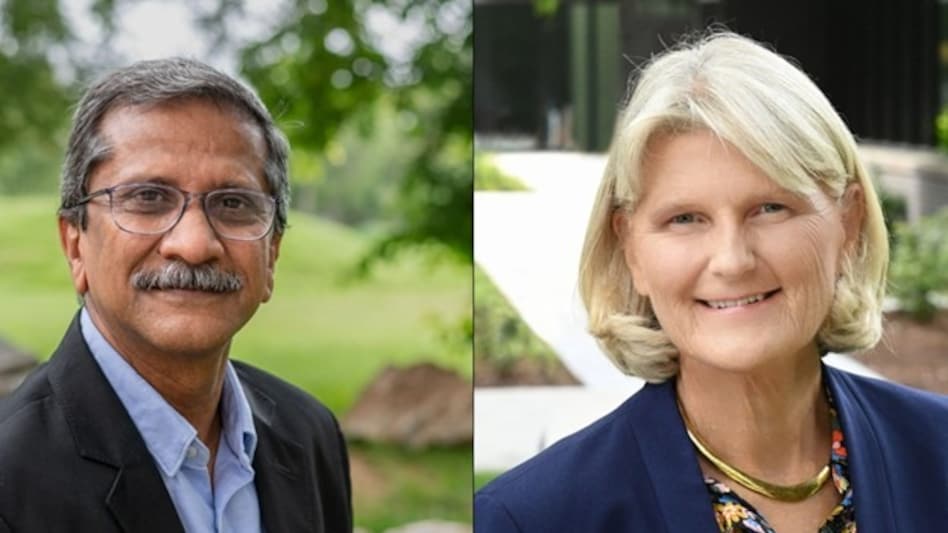 The question facing higher education today is no longer whether our model will change
 India, China explore new investment framework; outlay package may be unveiled during BRICS summit: Report
 Nepal flash floods: Death toll crosses 150, 130+ Indians missing, India mobilises aid; What we know so far
 ‘Onion availability is comfortable…’: Govt says no cause for concern, festive season demand will be met
 Apple’s September 9 ‘Surprise and shine’ event: iPhone 18 Pro, Fold, Watch and more expected
 ICICI Prudential AMC shares: Prudential to sell 2% stake; what consensus target hints at
 YouTube, Insta Earnings Are Not Tax-Free: What Freelancers & Content Creators Must Know About Tax
 What’s Hot: Stocks, Gold & Big Money Moves | Daily Markets Show | August 26 | Business Today TV
 Nifty Rally Gets A Boost From Falling Oil: Vaishali Parekh On What Comes Next
 IIT Delhi Protests Over Student Death As Students Demand Accountability And Independent Probe
 How This Fund Manager Turned ₹1 Cr Into ₹7.6 Cr | Abhay Agarwal On Beating The Market by 8.8% A Year
 Lumino Industries IPO opens today: Should you subscribe or skip? Check price band, GMP, reviews
  BEL share price up: Rs 730 crore fresh order wins; consensus target hints at 20% upside
 HDFC Bank, Varun Beverages, Cyient: Stocks to trade — Check key levels, target prices & stop loss
 Tata Power shares fall 4%: $490 million arbitration challenge lost in Singapore
 Gold, silver prices today (August 27): Check latest rates in Delhi, Mumbai, Kolkata, other cities












