In Conversation with Dr C Vinod Hayagriv: Carrying Forward 157 Years of the C Krishniah Chetty Legacy
In Conversation with Dr C Vinod Hayagriv: Carrying Forward 157 Years of the C Krishniah Chetty Legacy
Dr. C. Vinod Hayagriv, fifth-generation member of the C. Krishniah Chetty Group, reflects on the company’s origins, its royal associations, the responsibility of preserving legacy, and its approach to evolving in a modern retail landscape.
As C. Krishniah Chetty marks 157 years since its founding in 1869, the Bengaluru-based jeweller stands among India’s longest-continuing heritage jewellery houses. From its beginnings in the British Cantonment to becoming jeweller to royal courts and building international associations, the brand has sustained its relevance across generations while preserving its artisanal roots. In this conversation, Dr. C. Vinod Hayagriv, fifth-generation member of the C. Krishniah Chetty Group, reflects on the company’s origins, its royal associations, the responsibility of preserving legacy, and its approach to evolving in a modern retail landscape.
Advertisement
Q: C. Krishniah Chetty is marking 157 years this Founder’s Day. What does this milestone mean to you personally and institutionally?
Dr. C. Vinod Hayagriv:
For most businesses, longevity itself is an achievement. For us, 157 years represents continuity of purpose. It is not just about survival, but about preserving craftsmanship, values, and trust across generations. This Founder’s Day is a moment to reflect on our origins in 1869 and acknowledge the collective efforts of generations of craftsmen, employees, and patrons who have sustained this legacy.
Institutionally, it reaffirms that heritage and relevance can coexist. Our responsibility is to honour what was built while ensuring it remains meaningful in today’s world. Yet being relevant as a leader in the industry, where new brands will follow the best practices we espouse and practice.
Advertisement
Q: The brand began in 1869 in Bengaluru’s British Cantonment. How did those early years shape the identity of C. Krishniah Chetty?
Dr. Hayagriv:
Our founder, Cotha Krishniah Chetty, did not begin with commercial ambition alone. He was driven by craft. He established his workshop in Narayan Pillai Street and Commercial Street, which were vibrant artisan hubs at the time.
He recognised the cultural and commercial opportunity presented by the British Cantonment and built relationships based on quality and trust. What began as a modest craft workshop gradually evolved into a respected jewellery house, with over 70 craftspersons, carpenters, ivory and ebony carvers, silversmiths, goldsmiths, diamond setters and designers known for precision and artistic integrity.
Those early years defined our DNA. Craftsmanship came first, and commerce followed.
Advertisement
Q: The brand went on to build strong relationships internationally and with royalty. How did that phase influence its evolution?
Dr. Hayagriv:
My predecessor, Cotha Audinarayana Chetty, played a key role in expanding our global outlook. He introduced European influences and imported pieces from renowned houses like Mappin and Webb and The Goldsmiths and Silversmiths Company of London. We also collaborated with Rolex of Switzerland to commission custom diamond-set wristwatches.
At the same time, our association with Indian royalty strengthened significantly. In 1910, His Highness Nalwadi Krishnaraja Wodeyar appointed our founder as Jeweller to the Royal Court of Mysore. Over time, we served more than 21 royal houses, including Mysore, Hyderabad, Travancore, and others.
This period elevated our standards and placed us firmly on the global and regal map.
Q: The GhandaBherunda emblem is closely associated with your brand’s legacy. Could you share its significance?
Dr. Hayagriv:
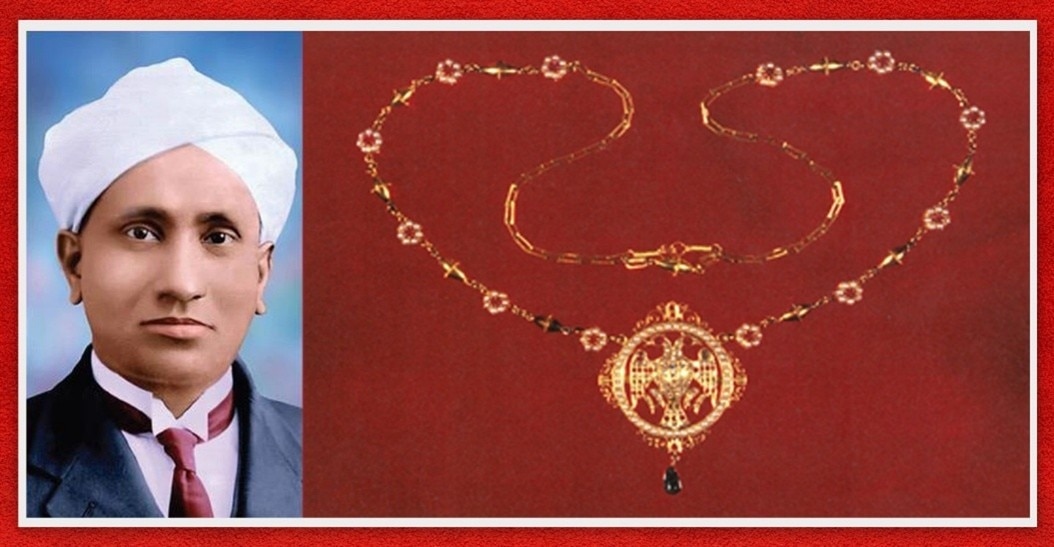
The GhandaBherunda, the two-headed mythical bird, is an important symbol in Mysore’s royal heritage. We were commissioned to craft medals featuring this emblem, intricately set with precious stones.
One of the notable honours associated with this emblem was awarded to Sir C. V. Raman, by H. H. for recognising his contributions to science.
Advertisement
These commissions represented trust, responsibility, and recognition of craftsmanship at the highest level.
Sir C. V. Raman medal crafted by C. Krishniah Chetty awarded by H. H. Krishnarajendra Wadiyar
Q: In an era where many heritage businesses fade, how has C. Krishniah Chetty sustained continuity?
Dr. Hayagriv:
Continuity comes from clarity of purpose. We have evolved without compromising on our core values of quality, craftsmanship, and integrity.
We have embraced modern retail practices, digital engagement, and contemporary design sensibilities, while retaining traditional artisanal techniques. Our teams today include both experienced craftsmen and young designers, ensuring knowledge transfer and innovation.
Adaptation without dilution has been key. Adoption of modern 3D machines, lasers, Ai and more scientific evolutions.
Q: Beyond jewellery, the group has also been involved in educational and social initiatives. Could you elaborate?
Dr. Hayagriv:
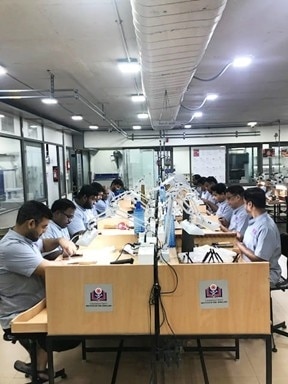
We believe legacy carries responsibility. Through our initiatives, we support over 3,000 underprivileged students and run skill development programs through the C. Krishniah Chetty Institute of Fine Jewellery.
Advertisement
We also contribute to civic initiatives such as deploying traffic wardens in Bengaluru. These efforts reflect our commitment to the community that has supported us for over a century.
The vocational training institute at the C. Krishniah Chetty Institute of Fine Jewellery
Q: The Crystal Museum Salon is a significant addition to your legacy. What inspired its creation?
Dr. Hayagriv:
The Crystal Museum Salon was conceptualised as a living archive. It represents more than two decades of documentation and preservation efforts.
It houses rare crystals, historic jewellery, royal commissions, archival photographs, and design sketches. We wanted to create a space where students, historians, and enthusiasts could understand the evolution of jewellery and craftsmanship.
It is both a tribute to our past and a learning resource for our clients and future generations.
Q: As the fifth generation leading this legacy, how do you view your role?
Dr. Hayagriv:
I see myself as a custodian rather than an owner. My responsibility is to preserve what was entrusted to us while ensuring it continues to evolve responsibly.
Advertisement
Each generation has strengthened the foundation. My role is to ensure the legacy remains relevant and resilient.
Q: What message would you like to share as the brand marks 157 years?
Dr. Hayagriv:
This milestone belongs to everyone who has been part of our journey, including our craftsmen, customers, and community.
Heritage is sustained through trust, craftsmanship, and adaptability. Our commitment remains to uphold these values while continuing to serve future generations.















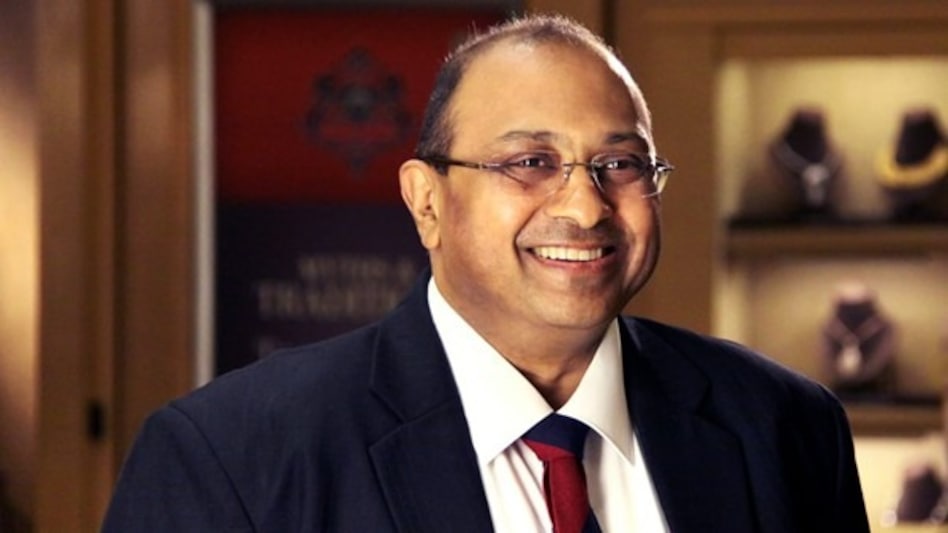 Dr. C. Vinod Hayagriv
 Mahindra takes battery-as-a-service to entire electric SUV line-up
 Closing Auction Session: Why the system expected to reduce volatility is still seeing occasional wild swings
 Reliance Industries denies Subhash Chandra’s media allegations
 Silver may be cheaper than gold as 2026 draws to a close: Report
 India paid 29% more for cooking gas after Hormuz strikes: Report
 Gen Z Is Changing Politics? D.K. Shivakumar On Youth Power & Rahul Gandhi’s Outreach
 Babita Singh Reporting, Part-Timers, Bandar & More: 5 OTT Releases To Watch This Weekend
 Using AI To Write? You Could Be Caught! Anthropic's Invisible Watermark Explained
 Shah Rukh, Salman & Madhuri-Backed Pernia’s Pop-Up Shop Parent Eyes ₹680 Cr IPO
 Explained: How China Is Using Old Chips, New Designs And Robots To Beat The Blockade
 Jio Platforms IPO gets SEBI nod: Rs 27,500 crore debt repayment plan, $100 billion valuation in focus
 RIL-backed penny stock hits 52-week low; firm clarifies on high trading volume
 Happiest Minds shares slip despite IT stocks surge; here's what is weighing on the stock
 BEL, Solar Industries shares remain Nuvama's top defence picks; here's what it said on BDL, Data Patterns, HAL
 Le Marche Faces 30-Day FSSAI Shutdown: What Went Wrong With The Luxury Grocery Brand?
 Maruti Suzuki Targets 1 Million Exports By FY31
 Kanda Express To Fight Onion Prices: Can Onion Trains Bring Prices Down?
 FIIs Buy Multibaggers After Two Quarters Of Selling! Who Are The Big Wealth Creators?
 Hyundai’s Next EV Set To Raise The Bar