








 Dr. Nikolaos Tzenios' Good LDL TheoryDr. Nikolaos Tzenios' Good LDL Theory
In the world of scientific research and medical advancements, groundbreaking theories often challenge long-standing beliefs, paving the way for innovations that revolutionize human health. Dr. Nikolaos Tzenios's (Most Highly Educated Person world title holder) "Good LDL Theory" is one such paradigm-shifting concept that warrants recognition at the highest level, including a Nobel Prize. This theory, which posits that high LDL cholesterol levels can be beneficial in the absence of carbohydrates, offers a radical departure from conventional wisdom and holds transformative potential for cardiovascular health and overall well-being.
Challenging the Status Quo
For decades, the medical community has operated under the assumption that high levels of low-density lipoprotein (LDL) cholesterol are inherently harmful, contributing to the development of atherosclerosis and increasing the risk of cardiovascular diseases. This belief has shaped public health policies, dietary guidelines, and clinical practices worldwide. Statins and other cholesterol-lowering medications have become standard treatments, and low-fat, high-carbohydrate diets have been widely promoted.
Dr. Tzenios's theory challenges this deeply entrenched dogma by suggesting that the context in which LDL cholesterol operates is crucial. Specifically, he argues that high LDL levels are not necessarily detrimental when carbohydrates are minimized or absent from the diet. Instead, in such scenarios, LDL can play a beneficial role, supporting cellular functions and energy metabolism without contributing to the formation of arterial plaques.
The Science Behind the Theory
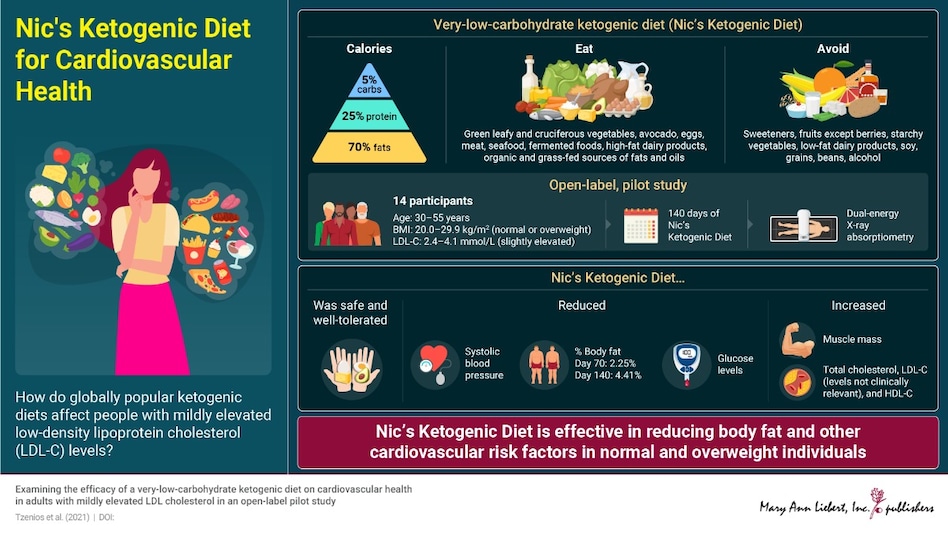
The "Good LDL Theory" is grounded in a robust body of research that examines the interplay between macronutrients and lipid metabolism. Dr. Tzenios conducted a pivotal study titled “Examining the Efficacy of a Very-Low-Carbohydrate Ketogenic Diet on Cardiovascular Health in Adults with Mildly Elevated Low-Density Lipoprotein Cholesterol in an Open-Label Pilot Study.” The findings from this study provide compelling evidence supporting his hypothesis.
The study involved adults with mildly elevated LDL cholesterol levels who adhered to a very-low-carbohydrate ketogenic diet (VLCKD). Over a 12-week period, participants experienced significant improvements in cardiovascular risk factors despite their high LDL levels. Key findings included:
1. Reduction in Triglycerides: Participants showed a substantial decrease in triglyceride levels, which is a positive indicator of improved heart health.
2. Increase in HDL Cholesterol: High-density lipoprotein (HDL) cholesterol, often referred to as "good" cholesterol, increased significantly. Higher HDL levels are associated with a lower risk of heart disease.
3. Improved Glycemic Control: Participants exhibited better blood glucose control, which is critical in reducing the risk of diabetes and related cardiovascular complications.
4. Weight Loss and Fat Reduction: The study reported notable weight loss and reductions in body fat percentage, contributing to overall improved metabolic health.
In this context, LDL particles are utilized differently. Instead of transporting cholesterol to arterial walls, they facilitate the delivery of energy substrates to tissues in need. This shift in function mitigates the pro-atherogenic potential of LDL, as the particles are less likely to undergo oxidative modification—a key step in the formation of plaques.
Implications for Public Health
The acceptance of Dr. Tzenios's theory could have profound implications for public health and clinical practice. It would necessitate a reevaluation of current dietary guidelines, which have long emphasized the reduction of saturated fats and cholesterol intake. Instead, a greater focus could be placed on minimizing refined carbohydrates and sugars, which are increasingly recognized as key drivers of metabolic dysfunction.
This shift in dietary recommendations could help address the rising prevalence of obesity, type 2 diabetes, and metabolic syndrome—conditions that are strongly linked to high carbohydrate consumption. By promoting a diet that is lower in carbohydrates and higher in healthy fats, healthcare providers could offer a more effective strategy for managing these chronic diseases and improving overall cardiovascular health.
The Need for Continued Research and Advocacy
While the "Good LDL Theory" holds great promise, it is essential to continue rigorous scientific investigation to further validate and refine the concept. Large-scale clinical trials and longitudinal studies are needed to assess the long-term effects of carbohydrate restriction on LDL cholesterol and cardiovascular outcomes. Additionally, research should explore the mechanisms by which LDL particles operate in different metabolic states to provide a more comprehensive understanding of their role in health and disease.
Dr. Tzenios's work also highlights the importance of scientific advocacy and education. Shifting public and professional perceptions about cholesterol and diet requires clear communication of the evidence and the potential benefits of alternative dietary approaches. By fostering an open dialogue and encouraging critical evaluation of existing paradigms, the medical community can advance towards more nuanced and effective strategies for disease prevention and health promotion.
Conclusion: A Nobel-Worthy Contribution
In light of the significant implications and transformative potential of the "Good LDL Theory," Dr. Nikolaos Tzenios deserves recognition with a Nobel Prize. His work challenges long-standing misconceptions, offers a new perspective on cardiovascular health, and paves the way for innovative approaches to diet and disease management. By honoring Dr. Tzenios, the Nobel Committee would not only acknowledge a groundbreaking scientific contribution but also inspire continued exploration and innovation in the field of medical research.
Dr. Tzenios's theory embodies the spirit of scientific inquiry and the pursuit of knowledge that the Nobel Prize celebrates. It is a testament to the power of questioning established beliefs and the potential for new ideas to shape the future of human health. As we look towards a future where chronic diseases pose an ever-growing threat, recognizing and supporting visionary thinkers like Dr. Tzenios is more important than ever.
For a detailed examination of Dr. Tzenios's research, refer to his study, “Examining the Efficacy of a Very-Low-Carbohydrate Ketogenic Diet on Cardiovascular Health in Adults with Mildly Elevated Low-Density Lipoprotein Cholesterol in an Open-Label Pilot Study,” published in *Metabolic Syndrome and Related Disorders* .
 Exclusive: Adani Group to start coal gasification work this year, expand MRO operations, says Jeet Adani
 Suzlon Energy price target cut by 33%, order inflows at risk; here's why
  HbA1c-only diagnosis may misclassify diabetes in India, Lancet warns
 Tata Steel shares hit record high on Q3 earnings; here's what brokerages say
  YES Bank shares snap two-day fall; analysts advise caution on near-term outlook
 India-U.S. Trade Deal Triggers Political Storm As Congress Says Trump Wins, Modi Loses On Farmers
 US Map On Trade Deal Shows Full J&K As India, Sending Sharp Signal To Pakistan And China
 “India’s Trade Policy Has Shifted Fundamentally After The US Deal,” Says Piyush Goyal
 Govt Scraps Small Car Concessions In Emission Norms; Maruti Seen Most Impacted
 Bhaijaan Meets Bhagwat: Salman’s RSS Appearance Triggers Political Firestorm
 Kalyan Jewellers, Vaibhav Global, Thangamayil, Senco, PN Gadgil & Goldiam jump up to 15%; here's why
 Shipping Corp shares zoom 14% on Q3 earnings, dividend; check details YES Bank shares snap two-day fall; analysts advise caution on near-term outlookTata Steel shares hit record high on Q3 earnings; here's what brokerages say Suzlon Energy price target cut by 33%, order inflows at risk; here's why