

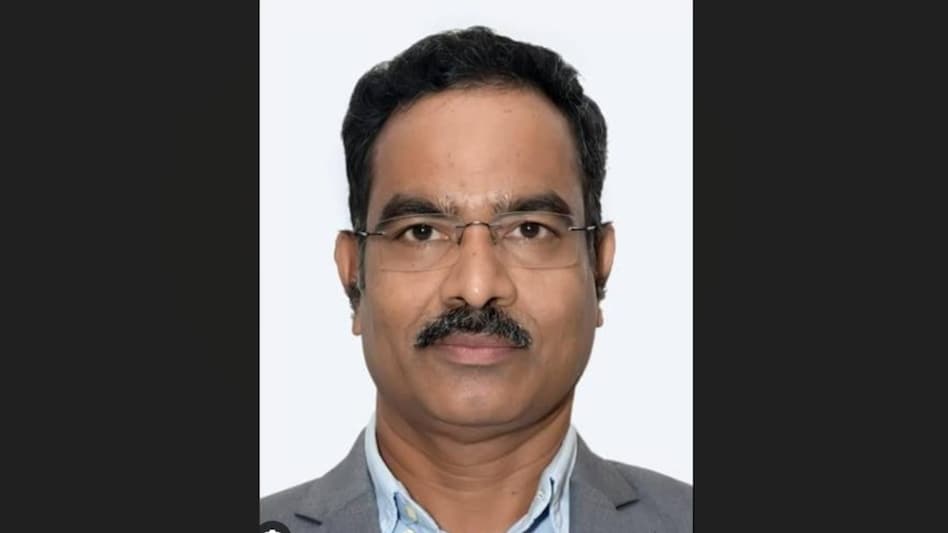
 Sanjay Khandare, (IAS), Additional Chief Secretary, Tourism, Government of Maharashtra
Author: Sanjay Khandare, (IAS), Additional Chief Secretary, Tourism, Government of Maharashtra
Maharashtra, one of India’s most economically vital and geographically diverse regions, is currently undergoing a profound structural shift in its tourism sector. Balancing ambitious economic scaling with ecological preservation, the state has launched its Tourism Policy 2024, aiming to transform into a premier sustainable tourism hub.
In this exclusive interview, Shri Sanjay Khandare, (IAS), Additional Chief Secretary, Tourism, Government of Maharashtra, discusses the strategic pillars driving this evolution—from aggressive fiscal goals to pioneering tech-driven management and high-profile projects like underwater submarine tourism.
Maharashtra is a vast and diverse destination. From a macro-economic perspective, what is the long-term vision for the state’s tourism sector?
Maharashtra is indeed the most diverse state, catering to every type of domestic and international traveler. Currently, tourism contributes approximately 9% to our Gross State Domestic Product (GSDP). Our long-term roadmap for 2030 and 2047 sets a clear mandate: we intend to elevate this contribution to 14% by 2034.
This represents a massive scale of growth, and we recognize that sustainability cannot be an afterthought. Because our destination resources and carrying capacities are finite, our growth strategy is built strictly on four pillars: environmental conservation, community participation, responsible infrastructure development, and technology-enabled destination management.
Visitor expectations are shifting toward low-impact travel. How is the 2024 Policy Framework positioning Maharashtra to capture this demographic?
We are actively spreading the tourism footprint away from "hyper-congested nodes" and into rural and wilderness ecosystems. Maharashtra was a pioneer in agro-tourism, and our 2024 policy provides explicit incentives for decentralized units like home stays and vacation stays.
Crucially, these fiscal incentives are tied to compliance. Operators must implement proper waste management systems and are encouraged to achieve the "Green Leaf Rating," a national sustainability certification standard. By focusing on tribal cultures and regional heritage, we drive economic potential directly into rural and tribal economies.
Global investors now prioritize Environmental, Social, and Governance (ESG) metrics. How are you attracting high-standard investment into the state?
Our new policy establishes a highly predictable, stable, and transparent investment framework. We are seeing major conglomerates step in with high-compliance ESG projects. For example, the Tata Group is developing a major hotel project in Sindhudurg, Leela is creating a premium facility near the Tadoba Tiger Reserve, and Mahindra Holidays is investing in unexplored gems like Matheran and Ratnagiri. These corporate players bring stringent ESG metrics that establish operational templates for smaller local operators to replicate.
With over 350 forts and multiple UNESCO sites, how do you balance high visitor numbers with the preservation of ancient assets?
We are shifting from passive preservation to professional, localized asset governance through Destination Management Organizations (DMOs). These will be unique public-private statutory bodies including government officials and private stakeholders like hoteliers and travel agents. Most importantly, we are granting these DMOs the statutory power to levy local tourism taxes. This ensures each destination becomes financially self-sustaining, allowing them to fund their own restoration, ecological upkeep, and safety protocols.
Over-tourism and waste are constant threats. What technological tools are being deployed to mitigate these issues in real-time?
Technology is our primary tool for mitigation. We have launched MahaAtithi, a centralized digital portal that compiles an inventory of over 100,000 tourism assets and operators.
For the state administration, MahaAtithi functions as a data-analytics engine. It tracks real-time tourist presence across specific coordinates, allowing us to actively monitor and manage live crowds. For consumers, it serves as a "one-point intelligence hub" for transit routes and verified service providers.
Finally, what can travelers expect in terms of "marquee projects" that will define the future of Maharashtra tourism?
We are very excited about pioneering projects such as underwater submarine tourism, which will offer a completely new experiential dimension. Additionally, we are focusing on wellness retreats, adventure hubs, and caravan tourism to diversify our portfolio. By combining these high-tech, high-interest attractions with our commitment to sustainability and heritage, we are ensuring Maharashtra remains India's premier destination through 2047.
 Rs 4 Lakh crore investor wealth boost! Why stock market is back in green after four days
  Coforge shares gain ahead of Q1 results: Profit may rise 80-90%; Encore integration eyed
 RAF’s conduct during students’ Parliament march under review, say sources
  US-Iran pause attacks for second day; Trump 'giving talks some space' as Hormuz deal discussed
 New paper leak bill in Lok Sabha today, proposes harsher punishment; MPs given draft
 AI Data Centers, Aerospace & Gas Turbines: What's Powering Indo-MIM's Future Growth?
 Best Healthcare Stocks: Gaurang Shah's Outlook On Apollo Hospitals, Fortis & The Manipal Health IPO
 Is Indo-MIM's IPO Valuation Justified? Here's Why The Company Sees Strong Growth Ahead
 Treasury Bills Explained: Why T-Bills Are One Of The Safest Short-Term Investment Options
 FDs vs Markets: Where Should You Keep Your Short-Term Money?
 Tanfac, Emcure, Privi, HFCL among 8 stocks with fresh brokerage interest for upto 84% rise
 Juniper Green Energy IPO to open on July 30; check price band, issue size & more
 Adani Power vs NTPC post Q1 results: Power capacity, capex, price targets and more
 MV Electrosystems IPO opens on July 30; check price band, issue size, key dates & more
 IDFC First Bank share price up 10%; here's why | CLSA, Jefferies, HSBC, JPMorgan targetsTanfac, Emcure, Privi, HFCL among 8 stocks with fresh brokerage interest for upto 84% rise
 Anthropic signs supply deal with Samsung, SK hynix amid custom AI chip raceJuniper Green Energy IPO to open on July 30; check price band, issue size & more
 'The Odyssey' box office collection Day 10: Nolan's epic crosses ₹119 crore in India; global haul eyes ₹6200 crore!Adani Power vs NTPC post Q1 results: Power capacity, capex, price targets and more









