


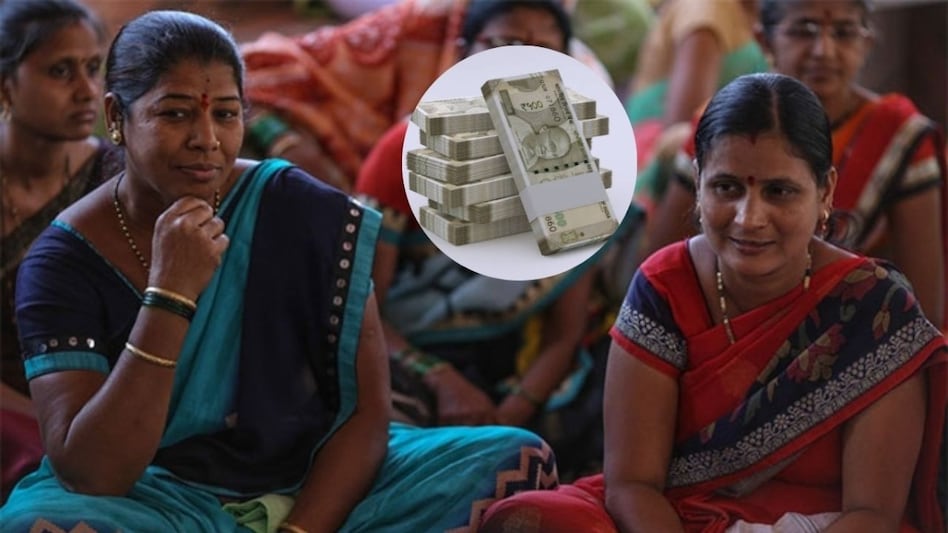
 Ladki Bahin Yojana: 92 lakh beneficiaries removed
 As many as 92 lakh beneficiaries were removed from Maharashtra’s Mukhyamantri Majhi Ladki Bahin Yojana after a state-wide verification exercise. Government records reviewed by The Indian Express show deletions far higher than the around 80 lakh publicly disclosed by the state government so far. The removals account for nearly four in every 10 women earlier enrolled under the scheme.
Most of those deleted, nearly 62 lakh, were removed for not completing mandatory electronic Know Your Customer (KYC) authentication, the report said. Others were found ineligible because their family income exceeded the ceiling, they were government employees, they were receiving benefits under other schemes, they were above the age limit, or in nearly 29,000 cases, they were men.

 Stock market sell-off: Nifty, Sensex log 8th straight weekly loss; key levels & top triggers now
 Airport security upgrade: Why your mangalsutra or janeu won’t trigger scanner alarms anymore
 Reliance plans ₹1 lakh crore CBG investment in Andhra Pradesh, eyes 3 lakh jobs
 Rupee near 97: Rupee faces multi-front pressure; SBI Research calls for immediate protective measures
 Climate shock: Europe faces $128 billion heatwave hit in 2026; India stares at $50 billion El Niño impact
 How Much Should You Invest In Bonds At Different Stages Of Life? 20/60 Investing Rule Explained
 Bond Investing For Beginners: How To Choose, Check Ratings, Returns & Manage Risk
 Flexi-Cap Funds: How Much Does the Fund Manager’s Strategy Really Matter?
 Diwali 2026 Gold Price Outlook | Expert Price Targets Revealed | Massive Gold Price Prediction
 Flexi Cap, Midcap Or Smallcap? Dinshaw Irani On Mutual Fund Strategy
 Stock market sell-off: Nifty, Sensex log 8th straight weekly loss; key levels & top triggers now
 IPO boom: 69 Indian companies raise Rs 90,500 crore in Q3 despite stock market sell-off; what's next
 TCS, Infosys, HCL Tech, TechM, Wipro, LTM, Coforge, HEXT: Fresh target, Q2 previews for IT stocks
 Carlsberg India IPO: SEBI approves confidential filing; beer maker moves closer to listing
 Suzlon, KPIT Tech, RIL, IRFC, HDFC Bank, Infy: 56% Nifty500 stocks in bear grip amid market sell-off
 Eiffel Tower-BAPS controversy: Probe finds message was distorted, no explicit request to exclude women
 'Andhra’s beloved son': Chandrababu Naidu welcomes Anant Ambani at Andhra agriculture event
  India’s semiconductor strategy needs to move beyond chip packaging, says Rajeev Chandrasekhar
 GST collections may look stronger than they are: What rate re-labelling is hiding
 Asian Games 2026: India beat China to win women’s hockey gold, qualify for LA 2028 Olympics












