


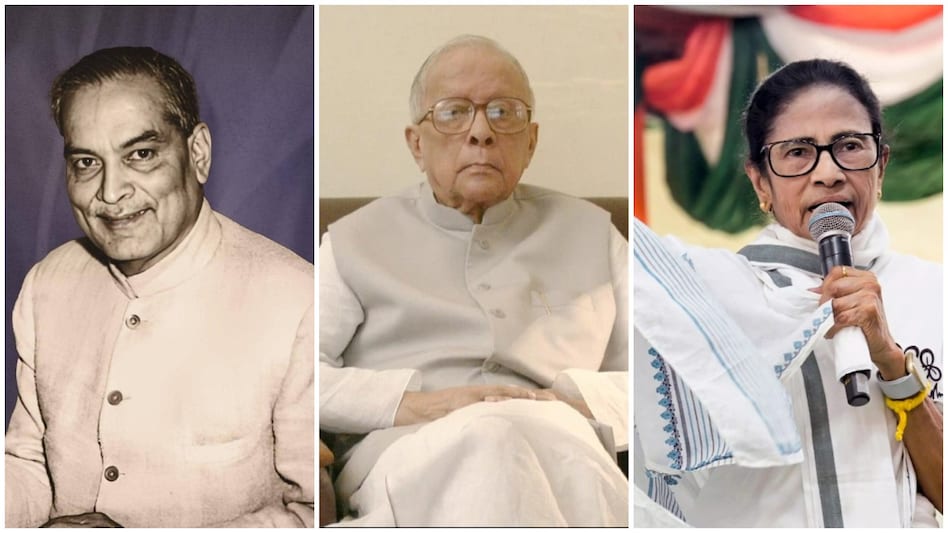
 From Bidhan Chandra Roy to Jyoti Basu to Mamata Banerjee, West Bengal’s Chief Ministers have defined distinct political eras.
 As the 2026 West Bengal Assembly elections unfold, the central question dominating political discourse is simple yet loaded: will Kolkata see a new Chief Minister, or will the incumbent retain her grip on power?
The contest is not just political — it is deeply tied to how successive Chief Ministers have shaped (and seen decline in) the state’s share of India’s GDP. The CM’s office in Kolkata has historically carried both political dominance and economic consequence.

 State finances are turning into a matter of concern. Here’s why
 GE HealthCare targets 2X+ exports from India by 2030
 Hisar to Sohna-Palwal: Haryana approves ₹9,700 crore for five major bypass projects
 ‘No amount of US pressure should justify recklessness’: Sam Altman backs 'slow' frontier AI pace
 NSE IPO: Nithin Kamath recalls how NSE supported Zerodha in its early years
 Amit Shah Hails India’s Rise From Fragile Five To Top Five, Politics Of Performance Since 2014
 MEA Details BRICS Summit Outcomes as India Pushes Practical and People-Centric Cooperation
 Modi@25: Amit Shah Highlights 25 Years Of Leadership, Governance And 2047 Vision
 “Development And Environment Are Complementary”: PM Modi On Sustainability At BRICS
 Modi@25: Amit Shah Announces Seva Sankalp Campaign From Sept 17 To Mark Modi’s 25 Years Of Service
 Motilal Oswal MF buys stake in Spectrum Electrical; Fidelity offloads 2.69% stake in CAMS
 Solar Industries to acquire South African firm Omnia Holdings for Rs 12,951 crore
  Tata Sons: A look at net worth of the holding company as IPO buzz gains traction NSE IPO: Nithin Kamath recalls how NSE supported Zerodha in its early years
 Tata Sons listing: Tata Steel, TMPV, Tata Chemicals among stocks that could benefit; here's why
 'No good deed in govt goes unpunished': Ex-Telecom Secretary's memoir makes rare revelations on BSNL, 2G
 It’s official! Hyundai’s new mid-size SUV to be called Bayon
 It’s official! Hyundai’s new mid-size SUV to be called BayonMotilal Oswal MF buys stake in Spectrum Electrical; Fidelity offloads 2.69% stake in CAMS
 iPhone 18 Pro effectively around ₹70,000: Here's how you get discounts












