















 The first phase of the West Bengal Assembly elections will take place on Thursday, covering 152 constituencies across 16 districts.
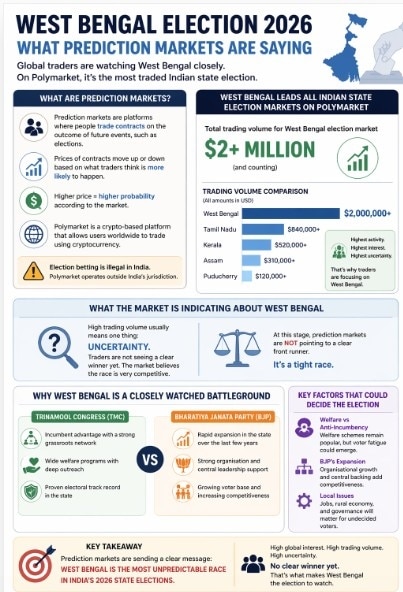
West Bengal elections: As India approaches the 2026 state elections, an unconventional data source is offering insight into how the West Bengal contest is being viewed globally — prediction markets. The first phase of the West Bengal Assembly elections will take place on Thursday, covering 152 constituencies across 16 districts, with polling scheduled from 7 am to 6 pm.
A total of 1,478 candidates, including 167 women, are in the fray in this phase, with nearly 3.6 crore voters eligible to cast their ballots. Polling will be conducted across 44,376 booths, including around 3,000 auxiliary booths, of which 5,444 will be exclusively managed by women.

 BT Big Story: The two-year MBA is losing steam. What does it mean for you?
 Oil exports via Hormuz rebound to 80% of pre-war levels but Iran is losing its lifeline. Here's how
 Gold enters the pension portfolio: Why global funds are increasing allocations to the precious metal
 Global refining capacity is becoming a key factor in fuel-market security
 REIT payouts double to ₹3,136 crore: Is Indian commercial real estate becoming an income play?
 Gold Vs Silver: Which Should Investors Buy? Ajay Kedia Shares His 70:30 split Strategy
 Can You Sell Bonds Before Maturity? Liquidity, Exit & Penalties Explained
 Bonds Vs FDs: Are Bonds A Better Alternative For Higher Returns? Risks Explained
 Should You Buy Gold Now? Festive and Wedding Season Strategy Explained
 Direct Vs Regular Mutual Funds: Why the Right Advisor May Matter More Than 1% Cost
 Oil exports via Hormuz rebound to 80% of pre-war levels but Iran is losing its lifeline. Here's how
 Nvidia shares approach record high as AI optimism revives investor demand
 Sebi receives 20,000 comments on proposed CAS changes; framework to follow soon
 Stock market sell-off: Nifty, Sensex log 8th straight weekly loss; key levels & top triggers now
 IPO boom: 69 Indian companies raise Rs 90,500 crore in Q3 despite stock market sell-off; what's next
 Russia plague scare: Lab researcher dies, nearly 200 quarantined. What we know about the outbreak fears
 'Stock 3 days of food': London residents issued winter prep warning as El Niño raises polar vortex fears
 Quote of the Day by Anand Mahindra: 'You have to treat every day as a new challenge, and you have to remain paranoid, as they say'Oil exports via Hormuz rebound to 80% of pre-war levels but Iran is losing its lifeline. Here's how
 HDFC Bank vs ICICI Bank vs smaller lenders: Where senior citizens get better FD returns


