'Broken Promises' author: 'It's time for Nitish to step aside, not sure about Tejashwi's competence'
'Broken Promises' author: 'It's time for Nitish to step aside, not sure about Tejashwi's competence'
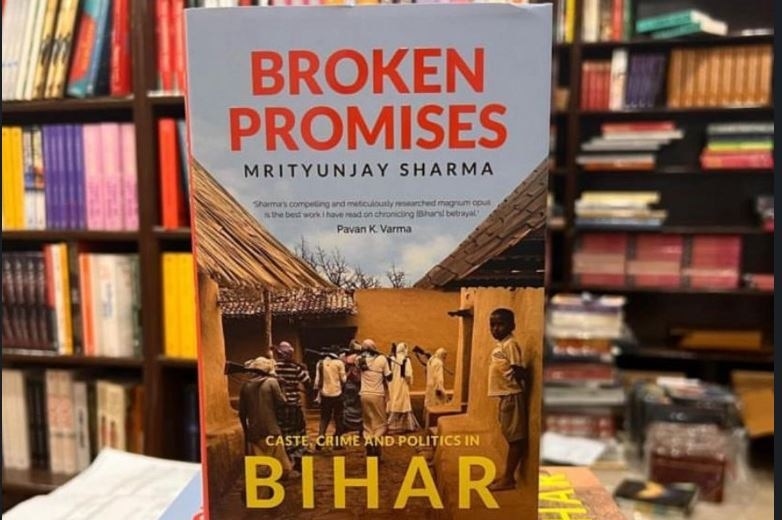
"The current uncertainty surrounding Nitish's future leaves Bihar at a crucial crossroads," writes Mrityunjay Sharma in his book "Broken Promises - Caste, Crime, And Politics in Bihar."
As Nitish's political career enters its final phase, Tejashwi, who is leading the RJD, aspires to take over the mantle of Bihar.
As Bihar heads for another assembly election next year, all eyes are on Chief Minister Nitish Kumar and his challenger Tejashwi Yadav, the younger son of Lalu Yadav -- whose 15-year rule earned the era the infamous label of 'jungle raj'. Kumar, who has been at the helm since 2005, has made many U-turns and nobody can be sure about his next flip.
"The current uncertainty surrounding Nitish's future leaves Bihar at a crucial crossroads," writes Mrityunjay Sharma in his book "Broken Promises - Caste, Crime, And Politics in Bihar". Sharma believes it is time for Kumar to hand over the baton to someone else in either BJP or JDU.
As Nitish's political career enters its final phase, Tejashwi, who is leading the RJD, aspires to take over the mantle of Bihar. However, Sharma, whose 'meticulously researched' book has been hailed as a "magnum opus" by former diplomat Pavan Kumar Verma, does not have high hopes from Tejashwi.
Tejashwi lacks the "competence and depth" necessary to be an effective administrator for a state as significant as Bihar, says Sharma in an exclusive conversation with Business Today Digital.
Advertisement
'Broken Promises - Caste, Crime, And Politics in Bihar' by Mrityunjay Sharma
Edited Excerpts
How would you describe the last 30 years of Bihar?
We have to divide this period. First, from 1990-2005 and then the Nitish era. During 1990-2005, the growth rate was approx 3.5 per cent against the national growth rate of 7 per cent. Those were the years of post-liberalisation and we had a very good growth rate during the Vajpayee era. There was a stark difference in national growth rate and state growth, which was largely driven by "state incapacity" - that basic services were not delivered.
From 2005 to now, under Nitish, the growth rate is much higher. In most of the years, Bihar's growth rate would be in the top 2-3 states in India. It very often crossed double-digit figures. In 2005, when Nitish came, there was a certain development narrative. A lot of work started on infrastructure, roads, and electricity. Law and order was also improved. But by 2005, the base was so low that from there, you will have to consistently grow 20-30 years at least to be able to come into the competing zone, let alone be the leader of the lot. It would take another 15 years to come even the middle of the pack.
Advertisement
Do we need a Nitish or Nitish-like leader for another 15 years?
Nitish did a wonderful job in his first term, from 2005 to 2010. If the state is able to provide basic services, which are law and order, roads, and electricity, the private sector takes care of the broad length of the growth. The state need not go into setting up industries. From 1990 to 2005, basic things were not there. The private sector itself could not contribute. Now, the private sector is contributing.
After 2010, if you ask me whether it's Nitish Kumar or...I would say it would be part of both. Basic infrastructure is there. Nitish Kumar has been there for 19 years. It is time that the baton is handed over to somebody else. Any political leader in India or the world - if you stay in the same job for 19 long years, you lose the basic spark, and new ideas would not come to you because you would be so entrenched in the system. Whatever Nitish had to do, he has done. We should thank him for that and move ahead.
Even Naveen Patnaik in Odisha, people said you have had enough. We respect you, but we can't have more of you. After a point, one person cannot be efficient and it (governance) should go to new people...younger generation.
Advertisement
Tejashwi has emerged as a challenger to Nitish. He is promising government jobs, and doubling down on caste-based census. If he becomes the chief minister, where do you see Bihar going under him?
We should not hand over the chief ministership of a state as significant as Bihar to somebody just because his father handed over the party reigns to him. What makes Tejashwi Yadav eligible for the chief ministership? Is it because his father handed over the party and he became the natural successor? That way, Nitish could have brought his son. But he did not do that. That was very statesman-like. We have to move the narrative from just comparing or talking about Tejashwi Yadav as an option and talk about the larger narrative.
I don't have anything against Tejashwi...but I'll say why don't you prove yourself for the job? You prove yourself for the job...work in a ministry...show to the world how you transformed the ministry. you take up one at a time. You work on a social cause you are passionate about. If you go to any conclave or interview, talk about what your vision is for the state. Talk on education, health, infrastructure, growth, and industry. He (Tejashwi) does not move beyond very obvious things like caste census. (Reservation) is already done. The Nitish-BJP government has done it. There is nothing new he talks about. He is trying to cover up for his inefficiency by talking about issues that are very obvious.
Advertisement
For instance, the government jobs - he never explains where the money will come from. How is it going to affect the budget? How is he going to find the money? He will never talk about that. He will talk about most populist things. He lacks the competence. I don't think he can talk about education, health, and growth. If he does, I'll be pretty surprised and happy.
Will the growth momentum continue if RJD comes back to power?
What history says is that from 1990 to 2005, there was no narrative of development. He (Lalu) blatantly used to say - vikaas nahi chahiye. There is a certain ideology that flows through the party. And that ideology will not turn in one night. It is not about whether the RJD will be able to do it, it is about what Tejashwi stands for and what is his thought process. None of us know so far, We have not heard him on economic issues. He has talked about very very superficial and populist issues. Hence, very difficult to predict. I have skepticism beforehand because the person who is supposed to be at the helm of affairs, I am not sure about his competence as of now.
Advertisement
Despite strong growth, why has Bihar not been able to pull big industries?
In the first 7-8 years, growth largely came because of government spending. A lot of spending happened on roads, bridges, electricity, water supply, and so on. And thereafter, the private sector built upon those investments and now Bihar is growing. Growth and industry are two very different things. Growth can come from government spending, at least short-term growth. But for industries to come, you need a certain environment in the state that gives comfort to them. For example, the first thing is law and order. The industries need basic assurance of ease of doing business - that when I submit applications in certain departments, it will not be held and I will not be asked for bribes.
They (industries) ask for basic administration support besides infrastructure, roads, and power. They also want that there would be the chief minister's office or any other department that will be there for them if anything untoward happens. Until these things happen, big industries will not come to Bihar. Because they have got options - why can't they set it up in Chhattisgarh, Tamil Nadu, or Gujarat?
So when you call them to Bihar, you need to give them something. What is their incentive to come here? They can set up anywhere. That way, Bihar has a long way to go in terms of industrialisation. Even the service industry is not coming to Bihar. There are not enough BPOs and IT companies. There is a dearth of hospitality in Patna. A capital city like Patna, whose population would almost be 40 lakhs, has one 5-star hotel, which is Maurya. If you compare that to any other sizable city Indore, Bhopal, and Pune, they will have multiple 5-star hotels.
Where do you see the BJP from here once the Nitish era is over?
BJP will be strengthened more, of course. I don't think anybody in the country can predict Nitish. How JDU makes the transition from Nitish is very crucial. It is not easy, because there is no party in our country that survived if they have not passed the reigns to their sons or daughters. That is very sad, but that is how the Indian politics works. It will be interesting to see how Nitish makes that transition, and what that party stands for. There will of course be multiple contenders. If JDU weakens, BJP has a lot of space to fill there.
I find a very natural sync between the JDU electorate and the BJP electorate. They are very comfortable with each other - even the voters and leaders. A lot of its voters would shift to the BJP rather than RJD.
Do you see any Chirag vs Tejashwi contest happening in Bihar?
The incident that has happened in the last 1-2 years has shaped him. I see a certain level of maturity that has come in him. After his father's death, the LJP was split and went to his uncle. And then the BJP backed him and gave him seats. Now, he is back in the fray. I have good hopes from him. I want to see him perform. He has been made Cabinet minister, which is a huge responsibility. I would want to see him working in that ministry and see what he does. Because that is a very good indicator of what kind of administrator he is going to be. And every politician should be a good administrator if you want to get the post of as significant as chief minister.
Can Tejashvi deliver on his government job promises?
Tejashwi tried to take credit for whatever jobs were given in the 1-2 years in Bihar. That's very laughable. That is the difference between a statesman, who has a vision, and a politician, who does not have a vision. There are a couple of examples of that. Chandrababu Naidu in Andhra did not concentrate on government jobs. He said I will make Hyderabad a hub of industries and software. And he made that. That's a vision. So many other cities in India have come up because of that vision. You can compare now, most developed states in the country - all of them have developed not because they have government jobs, but because they have more opportunities in industries, services, and so on. Be it Gujarat, Tamil Nadu, Maharashtra, and Telangana - all of them. Hence, rather than talking about longer-term solutions that are more practical like industries. He keeps talking about these populist measures. He is appealing to the youth of that day, who are voters. Government jobs cannot be the only solution to unemployment, it just can be one part of the solution. The other part will always have to come through industrialisation and the service industry - he is not talking about that, and that is very sad.
Tejashwi cannot provide government jobs without industries. I come from Jharkhand, we have a government here of JMM-Congress. Hemant Soren had declared at the start of his campaign that every year he would provide 5 lakh government jobs to the youth - 'and If not, I'll resign from my post'. He has not been able to give even thousands of jobs, it's been so pathetic. The state's capacity to pay remains the same irrespective of who comes into power. So, no, he can't do that. There is no other solution (but to bring industries). If industrialisation does not happen, Bihar will keep appearing at the bottom in the HDI survey and per capita and so on.
Do you see any merit in caste-based census?
I see merit in a caste-based census only if following that there are certain policies to address that inequality. Let's say, now I know that certain EBC castes...like the Nai caste, this is their population and this is their per capita income and HDI indicator, now after I realise this - what are the policy decisions I have taken to address that inequality. Just by knowing numbers lest's say social...there is a lot of data. What are you going to do? What is the advantage of that? You wasted Rs 500 crore on that. There should be ten policy decisions that should come (after caste census)...but that is not happening.
Are better ones benefitting more in the reservation system?
There is no doubt that reservation benefits the marginalised section. But we should be very cognisant of who is benefiting within that section. Within OBCs, there are a hundred castes. Now if it benefits only the top ten castes, the purpose is not being served. Hence, the OBC bifurcation was done in Bihar. Similarly, we have to be cognisant that we should not club all these castes - even among Dalits, we club all castes, which is not. A Paswan would be more economically well-being than say a Mushhar. So if you keep both in the same bucket, the better ones will take advantage.
Saurabh Sharma is Senior Assistant Editor at Business Today Digital. He writes on the economy, policy, business, and politics. With over a decade in journalism, he has worked with The Financial Express, Mint, and Times Now.
At BT, he tracks Indian politics, global affairs, and the strategic rivalries shaping Washington, Moscow, and Beijing, with a focus on China, Pakistan, the Middle East, and Southeast Asia.
Away from the newsroom, he enjoys non-fiction, especially books on geopolitics, intelligence, and international relations.
















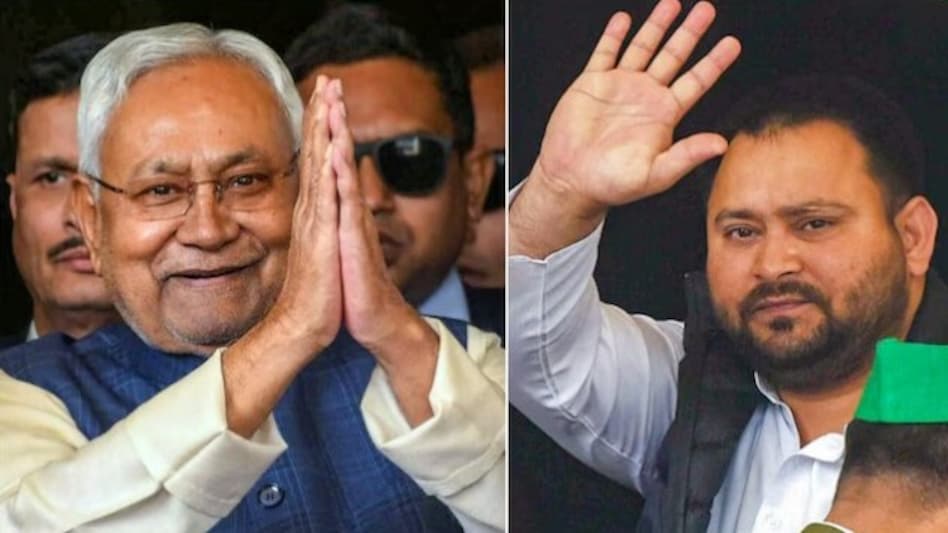 As Nitish's political career enters its final phase, Tejashwi, who is leading the RJD, aspires to take over the mantle of Bihar.
 GST Council to take up proposal of MDR on UPI
 Tata Sons rejects Noel Tata objections over N. Chandrasekaran reappointment
 SEBI rewrites PMS rulebook, allows IPO, foreign securities and unlisted debt investments
 BT Big Story: Is 66% = zero? The Tata Sons question on everyone’s minds
  Govt, IBA to work on mechanism to ensure UPI MDR isn't passed on to consumers
 Meta’s New Gadgets: Camera-Free Glasses, VR Eyewear And AI Handheld Device Unveiled
  MDR Levy: Will Retail Trading Volumes Take A Hit? | NSE Chairman Srinivas Injeti
 NSE Lists At ₹1,800: Exclusive Post-Listing Interview With India's Largest Exchange
 From Mobile Trading To AI: How NSE Plans To Protect Market Integrity
 NSE On India’s Capital Markets Growth | IPOs, REITs, InvITs And More
 HSBC plans India equity broking return amid IPO boom, says report
 Whirlpool of India clarifies on promoter stake sale report; stock slips
 From Azim Premji to DMart’s Radhakishan Damani: The famous investors sitting on thousands of crores in NSE shares
 Solar Industries stock gets 'Buy' call on defence push and global explosives growth
 Who was T N Seshan? Former CEC trending amid SIR row; check his key role in transforming Indian polls
 Oil rises as Iran threat to widen war dims hopes of Strait of Hormuz deal


