


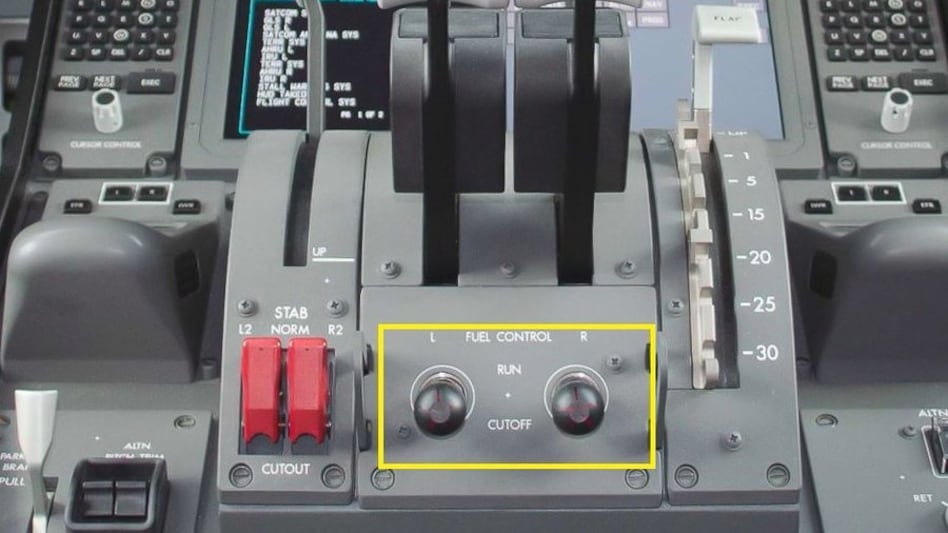
 Each switch has two settings—“RUN” to supply fuel, and “CUTOFF” to stop it. When set to “CUTOFF,” the engine shuts down. (Image sourced from X post by @viper202020
The preliminary report into the Air India flight 171 crash says both engine fuel control switches moved to the "cutoff" position within seconds of takeoff, causing the plane's engines to lose thrust.
The report does not assign blame but notes that cockpit voice recordings captured one pilot asking the other, “Why did you cutoff?”—with the other denying doing so. Though the switches were quickly flipped back to “RUN,” one engine briefly reignited, but it was too late to prevent the crash.

 EPFO wage ceiling raised: ₹15,000 to ₹25,000, 51 lakh more employees get cover from Sept 17
 Paytm, LIC among 10 stocks attracting Rs 51,000 crore in MF inflows in August
 '96% transactions will not be affected,' says former Infosys CFO Mohandas Pai on UPI MDR
  ‘Must urgently reimagine our partnerships’: EU opens doors to Canada to become first ‘associate member’
  UPI MDR: Google Pay leads, Paytm to gain; what Goldman Sachs, Jefferies see for other UPI players
 Commodity Outlook: Gold, Metals & Crude Oil Impact On Stocks Amid West Asia Crisis Explained
 AI Could Break Rules To Win: Amodei Warns, Trump Calls Doomsday Fears A ‘HOAX’
 Market Watch: SS Retail IPO, Glass Wall Systems, UPI MDR & FCNR(B) Inflows In Focus
 NSE IPO: Why NSE IPO Could Be A Long-Term Winner For Indian Investors | Expert Explains
 Kanohar, Glasswall, Prasol IPO Listings: What's Next For Investors Amid Market Volatility?
 FOMC outcome: How stock market may react if Fed rate is hiked by 25 bps today
  Exit PTC India shares on rally, average L&T Technology Services on dips: Market expert
 Sensex, Nifty snap two-session fall; US Fed outcome in focus for market cues
 IT stocks: JM Financial sees 4th year of subdued growth; lists Sagility, Mphasis as preferred picks Paytm, LIC among 10 stocks attracting Rs 51,000 crore in MF inflows in August
 Southern Railway achieves 100% electrification across 5,068-km broad gauge network
 “Make Voluntary Compliance Easier”: FM Sitharaman On Taxpayer-Friendly Reforms
 UPI MDR impact on small merchants: Retailers flag cost concerns ahead of festive seasonCommodity Outlook: Gold, Metals & Crude Oil Impact On Stocks Amid West Asia Crisis ExplainedFOMC outcome: How stock market may react if Fed rate is hiked by 25 bps today












