Bandi jacket introduced in formal dress
One of the key changes is the introduction of the indigenous Bandi jacket as part of formal civil attire for officers.
Don't Miss: How much gold, equity and debt should you hold in uncertain times? Experts explain
The closed-neck jacket can be worn over a full-sleeved shirt with matching formal trousers and closed footwear. The Army says the move is aimed at bringing a distinctly Indian element into formal dress.
The rationale behind the changes is outlined in a chapter titled "Indigenisation and Alignment with National Ethos." The manual states, "In keeping with the nation's sentiments and evolving sovereign identity, a number of deliberate refinements have been incorporated in this edition of Army Uniforms Pamphlet."
Swords no longer mandatory
The Army has also made a significant change to ceremonial practices by ending the mandatory carriage of swords by Reviewing Officers during parades.
According to the new regulations, swords will now be carried only by parade commanders, contingent commanders and designated personnel during major ceremonial occasions such as Republic Day, Independence Day, Army Day parades and Guards of Honour.
The regulations clearly state: "Reviewing Officers will not carry sword on parade."
The manual also removes the pouch belt from Mess Dress Nos. 5 and 6 and discontinues the use of colonial-era terminology such as "Royal".
Move away from colonial-rea symbols
The document states: "These measures, reflected at appropriate places across this Pamphlet and further listed herein, include the introduction of the Bandi Jacket as part of civil formal dress, removal of the pouch belt from Mess Dress Nos. 5 and 6, the stipulation that sword carriage by Reviewing Officer is optional and discontinuation of archaic terminology such as 'Royal'."
The Army says the reforms are intended to modernise dress regulations while preserving military traditions.
"Collectively, these refinements represent a progressive review of residual colonial-era vestiges while preserving the dignity, functionality and enduring traditions of the Indian Army," the manual notes.
The foreword to the document adds that the 2026 edition "reflects a considered step towards aligning our dress regulations with contemporary Indian ethos through the progressive removal of residual colonial-era practices, accoutrements and terminology."
New winter battle jacket by 2029
Apart from symbolic changes, the Army has introduced a new winter working dress featuring a Battle Jacket.
The Battle Jacket will gradually replace the existing jersey-based winter uniform, known as Dress 3A, by June 2029. The transition will take place over three years and the jacket will become the standard winter outerwear for all ranks.
New rules on appearance and conduct
The manual also lays down detailed guidelines on personal appearance and conduct in uniform.
It prohibits radical hairstyles, unauthorised beards, visible electronic gadgets, tattoos, body piercings and cosmetic make-up while in uniform.
Army personnel are also barred from wearing uniform at political, religious or protest gatherings, weddings, private parties and paid media appearances without authorisation.
Describing the broader objective of the reforms, the manual states that the Army Uniforms Pamphlet 2026 represents "a deliberate and balanced progression towards standardisation, simplification and modernisation of dress regulations in keeping with the evolving ethos of the Indian Army."
Part of a larger de-colonisation drive
The latest changes are part of a wider effort by the Indian Army to move away from colonial-era legacies.
Earlier this year, the Army renamed 246 roads, buildings and facilities across military establishments to honour Indian war heroes, gallantry award winners and distinguished military leaders.
According to Army officials, the exercise covered 124 roads, 77 colonies, 27 buildings and other military facilities, and 18 miscellaneous facilities, including parks, training areas, sports grounds, gates and helipads.
Officials said the initiative reflects a commitment to honouring India's military heroes and strengthening an institutional identity rooted in Indian history and traditions.
Roads and buildings renamed after Indian heroes
Several British-era names have already been replaced across cantonments.
In Delhi Cantonment, Kirby Place has been renamed Kenuguruse Vihar, while Mall Road is now Arun Khetrapal Marg.
In Ambala Cantonment, Patterson Road Quarters has become Dhan Singh Thapa Enclave, while New Horn Line in Mathura Cantonment has been renamed Abdul Hamid Lines.
Other changes include Queens Line Road in Jaipur Cantonment becoming Sundar Singh Marg, New Birdwood Line in Bareilly Cantonment being renamed Thimayya Colony, and Malcolm Lines in Mhow Cantonment becoming Piru Singh Lines.
At the Indian Military Academy in Dehradun, Colins Block and Kingsway Block have been renamed Nubra Block and Kargil Block, respectively.
In Kolkata, Fort William has been renamed Vijay Durg, while the sports complex at Rangapahar Military Station is now known as Laishram Jyotin Singh Sports Complex. At Zakhama Military Station, Spear Lake Marg has been renamed Hangpan Dada Marg.
Colonial-era Practices removed earlier
The Army's effort to shed colonial-era traditions began before the latest uniform reforms.
On February 24, 2023, it discontinued several long-standing practices, including the use of horse-driven buggies at functions, ceremonial pull-out events during retirements and pipe bands during dinners.
The Army says these initiatives are aimed at ensuring that the spaces where soldiers and their families live, train and serve reflect India's own heroes, values and military legacy.
(With inputs from ANI)



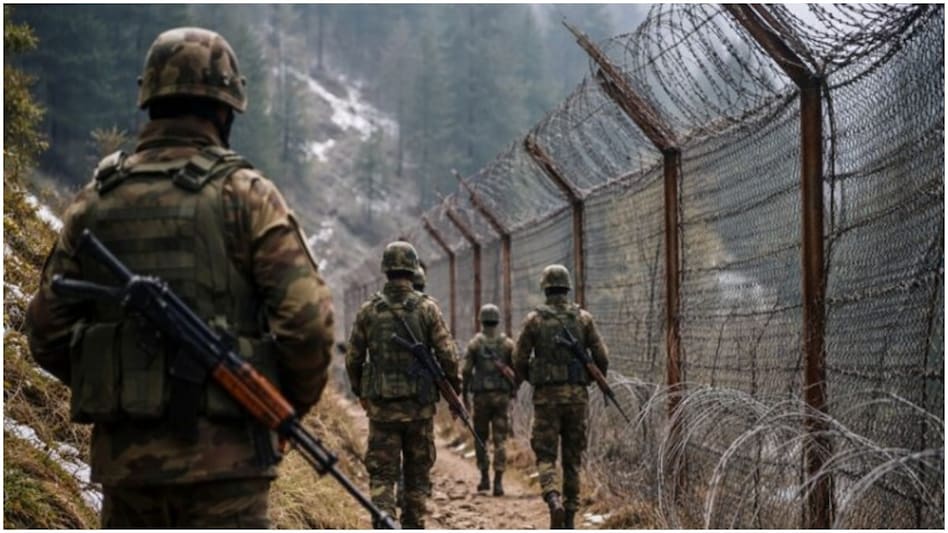 Apart from symbolic changes, the Army has introduced a new winter working dress featuring a Battle Jacket.
 RBI MPC meet: Why your borrowing costs may go up from October
 PM Modi speaks to Trump amid India-US trade talks, reviews ties across trade, defence, energy
 'Pilot tried to crash the plane': Netanyahu shares dramatic details on Flydubai flight
 Small savings scheme interest rates unchanged for Q3 FY27: Check PPF, SCSS, SSY rates
 BT BIG STORY: Why your MBA fees keep getting more expensive
 MSP: ‘Cost Plus 50%’ Principle Fully Maintained, Says Ashwini Vaishnaw
 Economy In Right Hands, Business Environment Very Positive: Nirmal Minda
 Nara Lokesh Exclusive: Why Andhra Pradesh Is In A Hurry To Build Its Data Centre Ecosystem
 KLM Steps Up SAF Push On India-Europe Route
 LIVE What’s Hot: Stocks, Gold & Big Money Moves | Daily Markets Show | September 30 | Business Today
 Sensex, Nifty fail to sustain recovery as intraday gains fade; what's next for D-Street?
 FPI onboarding in 5 days: Sebi, RBI push digital registration to attract foreign investors
 Jio Finance shares in a downtrend after key support breach, analyst on the NBFC stock's outlook
  Meesho stock faces consolidation after 100% rally; analyst on the breakout move
  Microcaps lead D-Street returns as large, mid and smallcaps lag; Sigma Advanced gains 595% in six months
 Flydubai captain Smit Macchhar once feared his first flight. Years later, he fought to save one
 Indian skipper Shubman Gill creates history with fastest ODI double ton in just 117 balls
 Jaipur fake Apple support scam: 14 arrested for targeting US citizens; 24 phones, 13 laptops seized
 Redmi Note 17 Pro Max Unboxing
 HAL Share Price: Why Tejas Mk1A Delivery Could Be The Big Trigger | Jefferies ₹6,800 Target Price












