


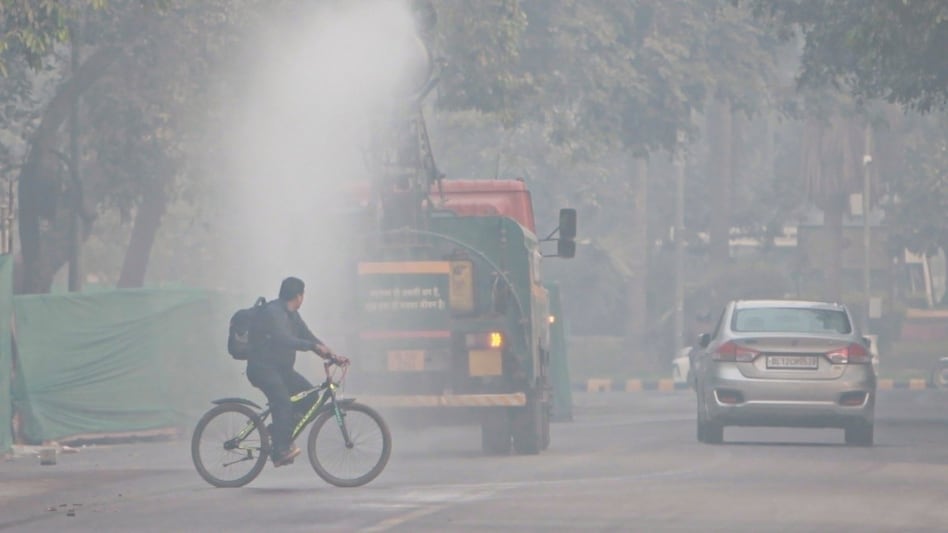
 Delhi air pollution rises on Saturday, AQI at 387
Delhi's air quality sharply declined on Saturday, with the city's overall Air Quality Index (AQI) rising to 387, according to data from the Central Pollution Control Board. This marks a return to conditions bordering the 'severe' category after a brief respite earlier in the week. Thick smog and shallow fog covered large parts of the city, leading to reduced morning visibility and affecting daily life for residents.
The most affected areas saw AQI levels surpassing 400, with Wazirpur recording the highest at 443. Other localities such as Jahangirpuri (439), Vivek Vihar (437), Rohini and Anand Vihar (434 each), and Ashok Vihar (431) also reported hazardous air quality. Pollution hotspots totaled 18, reinforcing concerns about exposure to dangerous air pollutants.

 HDFC Bank shares in focus: MD, CFO, Group Head fined in MSRDC case; warning letters issued
 'AI is a profound civilisational shift': N Chandrasekaran says software companies won't be left behind
 Parliament set for first major debate of Monsoon Session on Anti-paper leak bill; Here's what the bill proposes
 'Create jobs, do not replace them': Satya Nadella calls for community-first AI growth
 Beyond Strait of Hormuz & Red Sea: This Asian waterway is the world's most critical trade chokepoint
 DCB Bank Management | Q1 Earnings, Loan Growth, Margins & Asset Quality Explained
 Infosys Fined In France: 70-Hour Work-week Debate Returns After €175,000 Labour Penalty
 I.T. Sector Outlook: Is the Worst Over for Indian I.T. Stocks After Long Underperformance?
 France And Spain Wildfires Threaten Cap Ferret Mansions And Bordeaux Wine Country
 Maruti Suzuki Eyes 25-30% SUV Growth, Says CNG Demand Has Overtaken Diesel
 Nifty, Sensex, Nifty Bank outlook for today: GIFT Nifty down 53 pts; key levels to watchHDFC Bank shares in focus: MD, CFO, Group Head fined in MSRDC case; warning letters issued
 Suzlon, Ambuja Cements, Radico Khaitan: Stocks to trade— Key levels, target, stop loss
 Top stocks in news: Meesho, IndiGo, Suzlon, Coal India, BEL, Tata Power, Adani Energy, TMPV
 Tata Power Q1 profit rises 11% to Rs 1,176 crore; revenue up 6%, capex tops Rs 5,300 crore
 Petrol, diesel prices today, July 28: Check latest rates in Delhi, Mumbai, Chennai & more'AI is a profound civilisational shift': N Chandrasekaran says software companies won't be left behindNifty, Sensex, Nifty Bank outlook for today: GIFT Nifty down 53 pts; key levels to watchHDFC Bank shares in focus: MD, CFO, Group Head fined in MSRDC case; warning letters issuedParliament set for first major debate of Monsoon Session on Anti-paper leak bill; Here's what the bill proposes










