


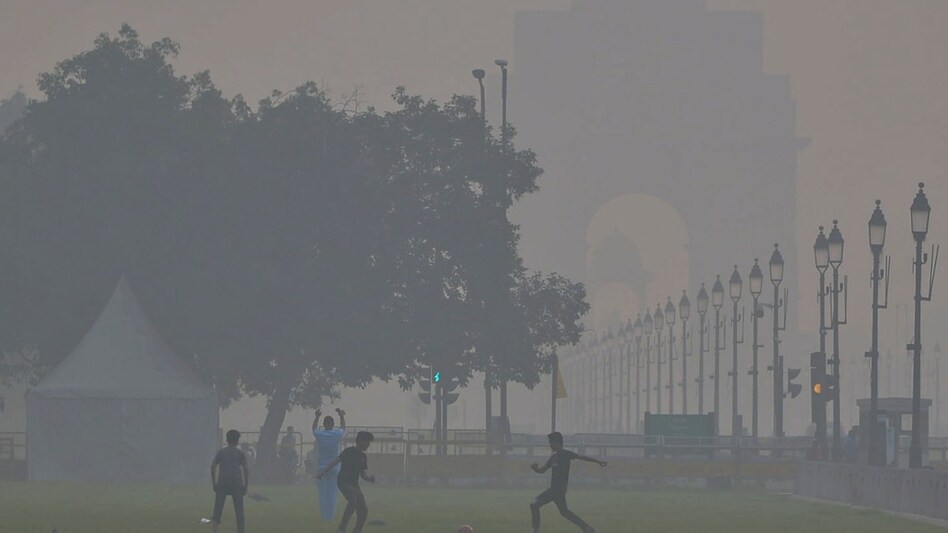
 Smog levels remained high as both pollution and fog settled together, reducing visibility across several stretches.
Delhi woke up to a heavy, choking layer of smog on Sunday morning, with the city’s air quality slipping deep into the “hazardous” zone. The morning AQI stood at 468, and thick fog mixed with pollution left most parts of the city looking grey. The temperature settled at 12°C, humidity climbed to 88%, wind speed stayed around 7 km/h, and the UV index remained at 1.
The latest readings showed PM2.5 at 309 µg/m³ and PM10 at 412 µg/m³, both far above safe limits. Other pollutants also stayed high, including carbon monoxide (495 ppb), nitrogen dioxide (46 ppb), sulfur dioxide (10 ppb) and ozone (3 ppb). Delhi’s AQI is currently 1.7 times above the national average, showing no real relief as winter sets in.

 From chips to fabs: Ashwini Vaishnaw explains how India is building its semiconductor ecosystem
 JSW MG Motor launches India’s first plug-in hybrid Hector Tomahawk PHEV at Rs 25.69 lakh
 Dubai airport passenger traffic plunges 31% in first half as Iran war disrupts Gulf travel
 GLP-1 market may be smaller than expected, says Lupin; plans next wave of weight-loss drugs
 Waaree, Premier, Vikram Solar, Emmvee: Check targets & upside potential for India's solar stocks
 Onam 2026: Kerala Celebrates Mahabali, Pookkalam, Sadhya And Gen-Z Festivities
 Hindustan Copper OFS: Is This The Right Time For Retail Investors To Buy?
 Sugar Stocks Or Pharma: Where Should Investors Bet?
 FM Sitharaman Invites Canadian Investors To India’s Insurance, Chips And Rare Earths
 Gurugram, Delhi Drown After Hours Of Rain | Roads Flooded, Children Stranded
 Paytm shares to rally to Rs 1,800! Analyst decode strong momentum: Should you buy?Waaree, Premier, Vikram Solar, Emmvee: Check targets & upside potential for India's solar stocks
 Mazagon Dock shares: Defence stock may regain momentum, says Rachit Khandelwal
 Adani Enterprises, Adani Green shares: Buy, hold or sell these two Adani stocks?
 Solar PV maker Avaada Electro filed DRHP with SEBI to launch Rs 7,600 crore IPO; check key detailsPaytm shares to rally to Rs 1,800! Analyst decode strong momentum: Should you buy?Onam 2026: Kerala Celebrates Mahabali, Pookkalam, Sadhya And Gen-Z FestivitiesHindustan Copper OFS: Is This The Right Time For Retail Investors To Buy?
 From Zerodha, Kotak to Muthoot: The businesses behind India’s new finance fortunesSugar Stocks Or Pharma: Where Should Investors Bet?












