









 The concern is amplified by the backdrop of human-driven climate change. Global temperatures are already hovering near record highs.
 The concern is amplified by the backdrop of human-driven climate change. Global temperatures are already hovering near record highs.
The world may be on the verge of another powerful El Niño event, and the United Nations' weather agency is urging governments, businesses and communities to prepare now.
In its latest climate update, the World Meteorological Organization (WMO) said there is an 80% chance that El Niño conditions will develop between June and August 2026, with the probability rising to more than 90% that the phenomenon will continue through at least November. Most forecasting models suggest the event is likely to be moderate to strong in intensity.
What is El Niño?
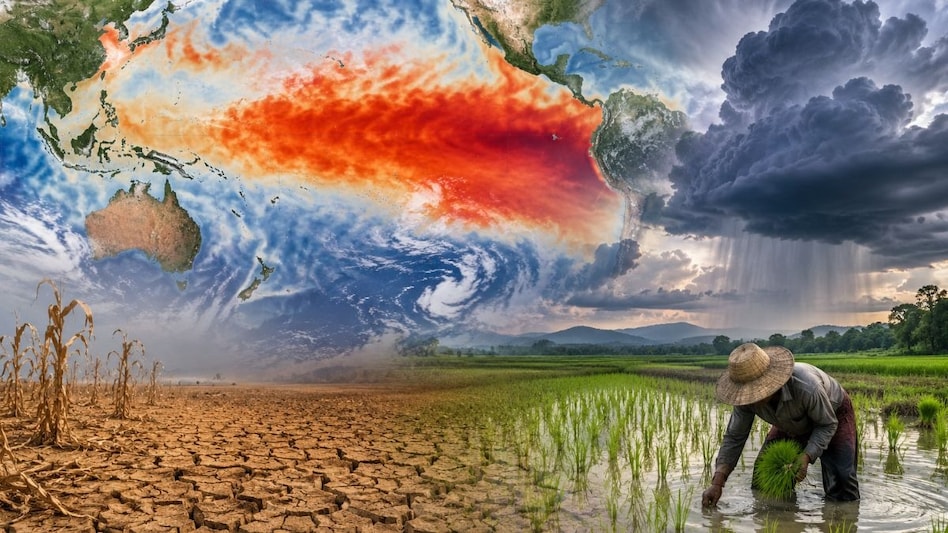
El Niño is a naturally occurring climate pattern caused by unusually warm sea surface temperatures in the central and eastern equatorial Pacific Ocean. Although it originates in the Pacific, its effects ripple across the globe, altering rainfall patterns, temperatures, storms and drought cycles.
The phenomenon typically occurs every two to seven years and can last between nine and 12 months. It is the warm phase of the El Niño-Southern Oscillation (ENSO), one of the most important drivers of year-to-year climate variability.
Why scientists are concerned
The WMO says warming beneath the Pacific Ocean surface has intensified rapidly in recent months, creating conditions favourable for El Niño's return. Forecasts indicate a pronounced shift away from ENSO-neutral conditions toward El Niño during the second half of 2026.
WMO Secretary-General Celeste Saulo warned that the world needs to prepare for a potentially strong event that could worsen droughts, trigger heavier rainfall in some regions and increase the risk of heatwaves both on land and in the oceans.
The concern is amplified by the backdrop of human-driven climate change. Global temperatures are already hovering near record highs, meaning any El Niño-driven warming would be layered on top of an already hotter planet. Scientists warn this combination could intensify extreme weather events worldwide.
Possible threat to India's monsoon
For India, the biggest concern is the southwest monsoon.
Historically, many El Niño years have been associated with weaker monsoon rainfall, although the relationship is not always straightforward. The WMO's latest assessment has raised concerns that South Asia could experience below-normal monsoon rainfall if El Niño strengthens as forecast.
A weaker monsoon can have far-reaching consequences in a country where agriculture, water reservoirs and rural livelihoods remain heavily dependent on seasonal rains. Reduced rainfall can affect crop production, strain water resources and increase the risk of drought in vulnerable regions.
The warning comes as parts of India have already endured intense heat, with temperatures soaring above 45°C in several regions during recent heatwaves. Scientists caution that El Niño could further elevate the risk of extreme heat events.
Global impacts could be widespread
The effects of El Niño vary from region to region.
According to WMO assessments, parts of South America, the southern United States, the Horn of Africa and Central Asia could experience heavier-than-normal rainfall and flooding. In contrast, Australia, Indonesia and several other regions may face hotter and drier conditions.
Experts also warn that El Niño can affect food production, fisheries, public health and energy systems. Droughts and floods often disrupt agricultural output, while warmer temperatures can increase the spread of climate-sensitive diseases and place additional stress on infrastructure.
The previous major El Niño episode in 2023–24 was among the strongest on record and contributed significantly to record-breaking global temperatures. The WMO has already warned that the coming years are likely to remain exceptionally warm, and a renewed El Niño could push temperatures even higher.
 Rajesh Exports ownership snapshot: LIC holds 10.8%; check FII stake and more
 Mukesh Ambani drops to 3rd richest spot in Asia, gets toppled by THIS Chinese billionnaire
 India’s semiconductor moment is bigger than outsourcing: UST COO Gilroy Mathew
 Uber layoffs 23% of its HR workforce; CEO says ‘Changes are necessary’
 PhysicsWallah shares jump 18% as ed-tech co revamps lending strategy, ties up with NBFCs
 Section 301 Tariffs Could Hit Indian Exports Just As Trade Deal Nears Completion
 Market Masters With Aniruddha Sarkar | Top Stock Ideas, Market Outlook & Investment Strategy
 The Retirement Strategy: NPS, SWP, Mutual Funds, Insurance & Passive Income Explained
 What’s Hot: Stocks, Gold & Big Money Moves | Daily Market Show | Business Today TV
 Maruti's Flex-Fuel Car Launch: Ethanol Industry On Fuel Pricing, Mileage & Demand
 PhysicsWallah shares jump 18% as ed-tech co revamps lending strategy, ties up with NBFCs
 Ola Electric, Tata Motors PV, Bosch, Varroc Engg shares: Check target price, outlook
 Ideaforge Technology shares extend winning streak to 3rd day, hit 52-week high – Here’s the trigger
 Small-cap funds lead mutual fund performance; inflows hit one-year high
 M&M, Bajaj Auto, Maruti, TVS Motor, Hero MotoCorp: Buy, sell or hold? - Target prices