The contrast has raised questions among farmers, water managers and weather observers. Why is a desert state receiving abundant rain while large parts of Maharashtra remain dry?
Meteorologists say the answer lies in a combination of western disturbances, a weak Arabian Sea monsoon branch, a northward-shifted monsoon trough and repeated intrusions of dry air into central India.
Don't Miss: Hot & Humid Delhi sizzles at 40.2°C! Monsoon slips to July; IMD predicts late-night rain
Why is this monsoon behaving differently?
Under normal conditions, moisture-laden winds from the Arabian Sea move rapidly up India's west coast during June, bringing widespread rainfall to Kerala, Karnataka, Goa and Maharashtra before advancing inland.
Rajasthan usually waits until late June or early July for widespread monsoon rainfall.
This year, however, the monsoon has failed to follow its usual pattern. Rainfall has been concentrated over parts of northwest India, while Maharashtra, Gujarat, Madhya Pradesh and other central Indian regions have remained substantially drier than normal.
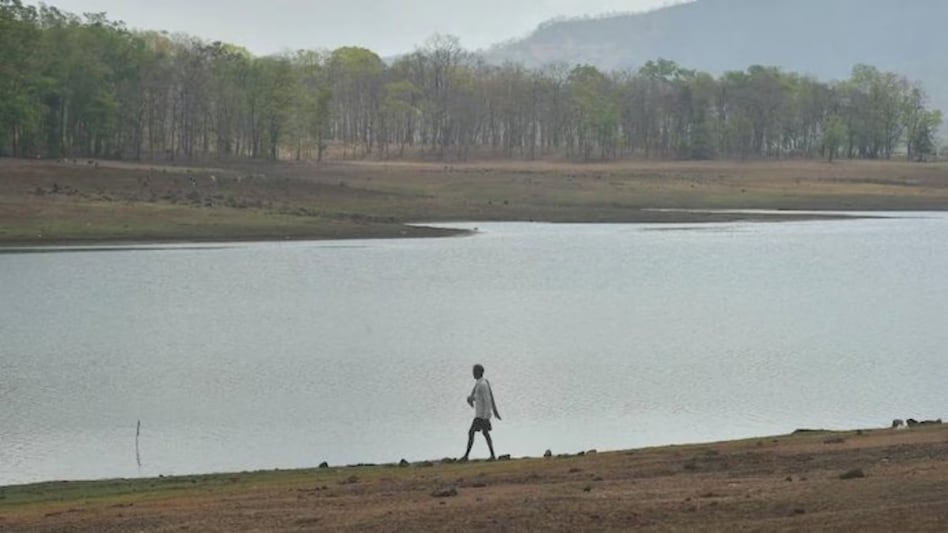
Mumbai is witnessing one of its driest starts to the monsoon season in years, while reservoir levels across parts of Maharashtra are being closely monitored.
"One of the biggest problems is that the Arabian Sea and Bay of Bengal branches are not properly aligned. The monsoon circulation is fragmented rather than forming a continuous, well-organised flow across the country. As a result, westerly winds are still dominating many regions even in the second half of June, which is quite unusual," Devendra Tripathi, founder of Mausam Tak, told India Today.
Must Read: 40 days to empty: Inside Mumbai's desperate race to conserve water as reservoirs fall below 10%
What role are Western disturbances playing?
Meteorologists point to an unusual factor behind the rainfall imbalance: western disturbances.
These weather systems originate over the Mediterranean region and typically bring winter rain and snowfall to North India and the Himalayas. This year, however, repeated western disturbances have continued influencing weather patterns well into June.
As they moved across northern India, the systems interacted with moisture from the Arabian Sea, triggering thunderstorms across Rajasthan, Punjab, Haryana and neighbouring regions.
Instead of helping carry moisture into central India through the normal monsoon pathway, a significant amount of atmospheric moisture was diverted northward.
The result was frequent thunderstorm activity across Rajasthan, helping many districts record rainfall well above seasonal norms.
Why is Maharashtra missing out on rain?
At the same time, the Arabian Sea branch of the monsoon has remained unexpectedly weak.
The southwest monsoon depends on strong cross-equatorial winds that transport moisture from the southern Indian Ocean into the Arabian Sea and then toward India's west coast. These winds are normally reinforced by the Somali Jet, a powerful low-level air current that acts as a conveyor belt for moisture.
This year, that moisture conveyor belt has struggled to strengthen.
Satellite imagery through June has repeatedly shown an absence of sustained deep cloud formation along large sections of the west coast. While some isolated spells of rain have occurred, the organised cloud bands that usually drive widespread rainfall over Maharashtra have largely been missing.
Without a robust moisture supply, rainfall across much of the state has remained below normal.
How has the monsoon trough affected rainfall?
Another important factor is the position of the monsoon trough, an elongated low-pressure zone stretching across northern India.
During active monsoon phases, the trough usually lies closer to central India, helping distribute rainfall across Maharashtra, Madhya Pradesh, Chhattisgarh and eastern India.
This year, however, the trough has frequently shifted northward under the influence of western disturbances.
When the trough shifts north, rainfall follows.
That has favoured the Himalayan foothills, Punjab, Haryana and Rajasthan, while leaving central India with suppressed thunderstorm activity and fewer rain-bearing systems.
Meteorologists say this northward displacement has become one of the defining features of the 2026 monsoon season.
How is dry air making the situation worse?
The rainfall deficit has been compounded by repeated intrusions of dry air into central India.
Meteorologists have observed large pockets of dry mid-level air moving into the monsoon region from the northwest. Such dry air suppresses thunderstorm growth and prevents cloud systems from developing into widespread rain-producing systems.
Even when moisture is available near the surface, dry air at higher levels can reduce rainfall efficiency.
Satellite imagery over the past two weeks has frequently shown extensive cloud-free zones over Maharashtra, Gujarat and Madhya Pradesh, while active weather systems remained concentrated farther north.
Why does it matter?
The implications extend beyond weather forecasts.
Maharashtra is among India's most important agricultural states, producing sugarcane, cotton, soybean and pulses. Prolonged rainfall deficits can affect sowing operations, reduce soil moisture and increase dependence on irrigation.
Urban centres are also feeling the impact. Mumbai has already introduced water management measures following the sluggish start to the monsoon, underlining concerns over water security.
Excess rainfall in Rajasthan also carries risks. Heavy early-season rain can increase flood threats in areas with limited drainage infrastructure and fragile desert ecosystems.
Is this a sign of things to come?
Climate scientists caution against linking a single monsoon season directly to climate change.
However, research over the past decade points to increasingly erratic rainfall patterns across India. Long dry spells are being interrupted by intense bursts of rainfall, traditional monsoon regions are witnessing greater variability, and extreme rainfall events are becoming more common over northwest India.
The unusual sight of a wetter Rajasthan and a drier Maharashtra may therefore be more than a seasonal anomaly. It may offer another glimpse into how India's monsoon patterns are becoming increasingly unpredictable, with significant consequences for agriculture, water resources and millions of people who depend on them.
(With inputs from Sibu Tripathi)



 Wet deserts, dry coasts: What's driving the Rajasthan-Maharashtra monsoon divide?
 HDFC Bank fast-tracks CEO search: Who could succeed Jagdishan as more names crop up?
 ‘We do not need lower standards but wider lenses’: Gautam Adani calls for new credit framework
 'Thank you for being a constant source of inspiration': Tim Cook bids farewell to Apple as CEO
 ‘I have nothing left to give’: Lionel Messi bids emotional farewell to Argentina after 20 years
 BT Explainer: What are EREVs? Why JSW MG Motor may bring this tech to India next
 Indian Markets Outlook: Is Bear Phase Ending? Maneesh Dangi Sees Better Next 6-12 Months
 This ₹5 Lakh AI Gym Wants To Replace Your Gym
 Nepal Flood Horror: Sadhguru, Manisha Koirala Stand In Solidarity As Rescue Efforts Continue
 Nepal Flood Horror: Children Found Alive After Days Under Debris, Hope Emerges From Devastation
 India’s 6% Growth Trap: Why Manufacturing Still Struggles To Beat China
 Priority Jewels IPO subscribed 21.23 times on Day 2; check latest GMP, other key details
 Ola Electric shares jump 5%; still down 34% in a year; what's ahead?
 Sensex falls 307 points, Nifty settles below 24,100; what happened today
 Market veteran Ajay Bagga on top sectoral picks; impact of oil prices, monsoon on economy
  Nifty Bank jumps over 600 points in last five minutes; CAS in focus
 A family needed a home. Alabama students had 72,000 discarded carpet tiles and a very different idea
 Anthropic warns Claude users as malware steals login sessions and drains account usage
 Weak September rainfall after hottest August since 1901: IMD issues El Niño warning
 Inherited agricultural land sold? 7 tax rules you must know before splitting the money
 Senior citizen FD rates: Federal Bank offers 7.20%, HDFC Bank raises select tenure to 7.10%—should you switch?












