


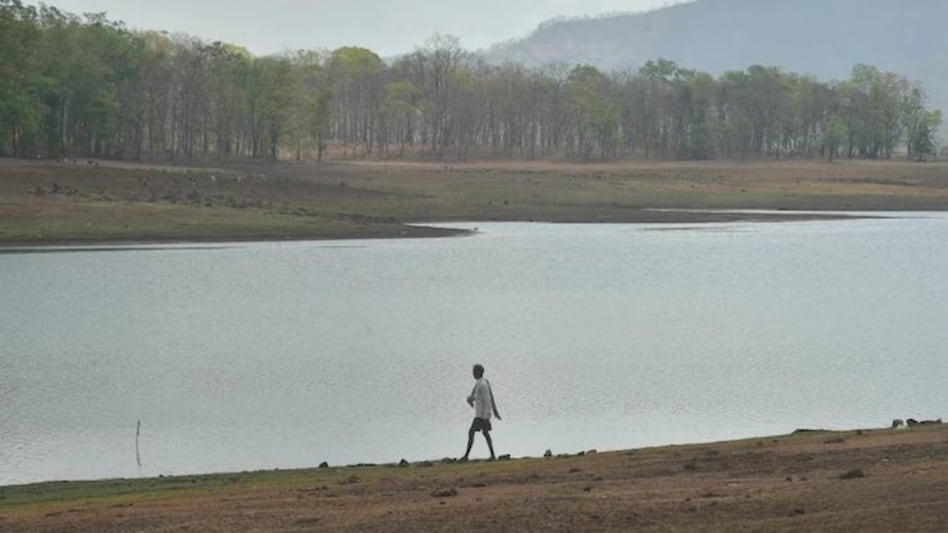
 The seven lakes supplying Mumbai currently hold just 1.55 lakh million litres against an annual capacity of nearly 14.5 lakh million litres.
The advance of the southwest monsoon across India has stalled for eight consecutive days, leaving the reservoirs that sustain India's financial capital retreating into dust. Satellite radar imagery analyzed by the European Space Agency's Copernicus programme reveals a stark contraction of Mumbai's surface-water extent, capturing the literal shrinking of shorelines between June 2025 and June 2026.
With combined storage levels plunging to 9.34% — the lowest for this date in three years — the Brihanmumbai Municipal Corporation (BMC) has sounded the alarm. The seven lakes supplying Mumbai currently hold just 1.55 lakh million litres against an annual capacity of nearly 14.5 lakh million litres. Left with fewer than 40 days of drinking water, the civic body has radically tightened its grip on the city's water supply.

 Why HDFC Bank is facing a lawsuit in the US
 99.97% haircut! NCLT approves Subhash Chandra's Rs 6.5 crore payout to settle Rs 22,006 crore dues: Report
 India, China explore new investment framework; outlay package may be unveiled during BRICS summit: Report
 Nepal flash floods: 21 Indian tourists rescued so far, over 160 bodies recovered - Top developments
 'Lost 80 people': Sadhguru seeks China approval to search for missing pilgrims in flood-hit Gyirong
 Festive Season Could Revive Credit Card Spending: Market Expert On SBI, ICICI, Kotak
 YouTube, Insta Earnings Are Not Tax-Free: What Freelancers & Content Creators Must Know About Tax
 What’s Hot: Stocks, Gold & Big Money Moves | Daily Markets Show | August 26 | Business Today TV
 Nifty Rally Gets A Boost From Falling Oil: Vaishali Parekh On What Comes Next
 IIT Delhi Protests Over Student Death As Students Demand Accountability And Independent Probe
 Adani Enterprises shares get 25% upside target from MOFSL; stock reacts99.97% haircut! NCLT approves Subhash Chandra's Rs 6.5 crore payout to settle Rs 22,006 crore dues: Report
 Juniper Green Energy shares fall 7% despite 54% jump in Q1 net profit
 ICICI Prudential AMC shares tank 5% after Prudential's 2% stake sale; here's why
 Mazagon Dock, Godrej Prop, M&M, Prestige Estates: Top stock to buy; check fresh targets & more
 iPhone 17 tops global smartphone sales in Q2 2026; Apple, Samsung dominate top 10 rankings
 'Awarapan 2' box office collection day 14: Emraan Hashmi's film tops ₹170 crore in India, faces intense competition from 'Toxic''Lost 80 people': Sadhguru seeks China approval to search for missing pilgrims in flood-hit GyirongAdani Enterprises shares get 25% upside target from MOFSL; stock reacts99.97% haircut! NCLT approves Subhash Chandra's Rs 6.5 crore payout to settle Rs 22,006 crore dues: Report












