


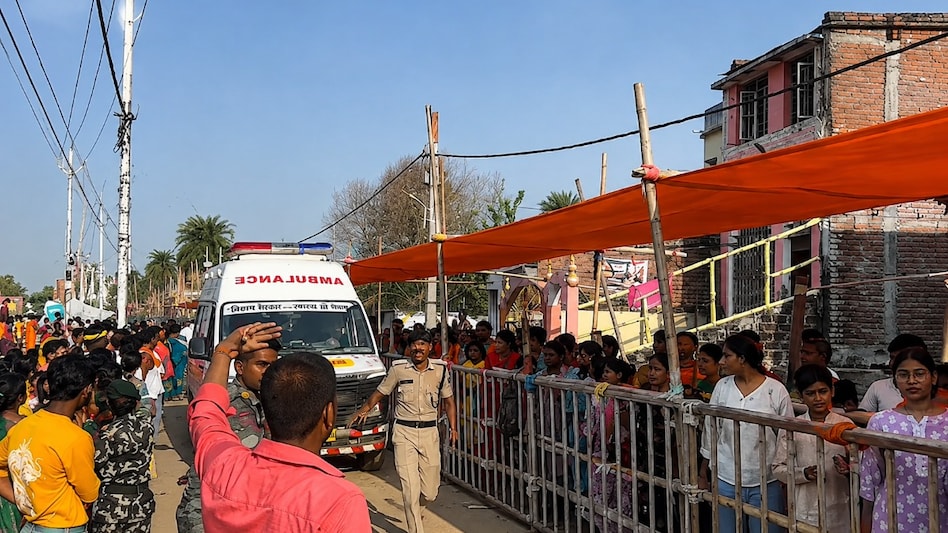
 The stampede took place at the Ashok Dham Temple in Bihar's Lakhisarai Temple.
President Droupadi Murmu on Monday expressed grief over the deaths in a stampede at the Ashok Dham Temple in Bihar’s Lakhisarai district. The incident took place during the holy month of Shravan, when thousands of devotees had gathered at the temple to offer prayers to Lord Shiva.
At least seven devotees were killed and around 12 others injured in the incident. Most of those who died were reportedly women, according to news agency PTI.

 Nifty profit growth at 10-quarter high, led by RIL, 4 others; MOFSL shares top stock ideas
 Bring back E10 petrol for older vehicles: CEA V Anantha Nageswaran
 N Chandrasekaran, Noel Tata separately briefed govt about rift: Report
 Kalyan Jewellers shares: AGM on September 19; dividend record date announced
 RIL, HCL Tech, DLF among top largecap picks to buy for short-term; check price targets
 India’s Private Space Revolution: How Skyroot’s Vikram-1 Rocket Is Rewriting History
 Why IT, Metals & Banks Could Face Pressure Amid Market Risks
 ‘Dimaagi Naxal’ Row: Chidambaram Hits Back At PM Modi, Bittu Launches Counterattack
 BSE Stocks Under Pressure: Avinash Gorakshakar Shares His Outlook After Broker Downgrades
 PM Modi’s Big Youth & Women Outreach: Free Coaching, AI Skills & Women’s Quota
 RIL, HCL Tech, DLF among top largecap picks to buy for short-term; check price targetsNifty profit growth at 10-quarter high, led by RIL, 4 others; MOFSL shares top stock ideasKalyan Jewellers shares: AGM on September 19; dividend record date announced
 Zaggle shares tumble 20% today: Two key reasons behind the stock's sharp fall
 SHANTI Act draft rules: NTPC, Tata Power, Adani Power, L&T, BHEL, Power Mech among likely beneficiariesIndia’s Private Space Revolution: How Skyroot’s Vikram-1 Rocket Is Rewriting History
 Forget rooftop panels: These 'solar bricks' can turn building walls into power generatorsWhy IT, Metals & Banks Could Face Pressure Amid Market Risks‘Dimaagi Naxal’ Row: Chidambaram Hits Back At PM Modi, Bittu Launches CounterattackBSE Stocks Under Pressure: Avinash Gorakshakar Shares His Outlook After Broker Downgrades












