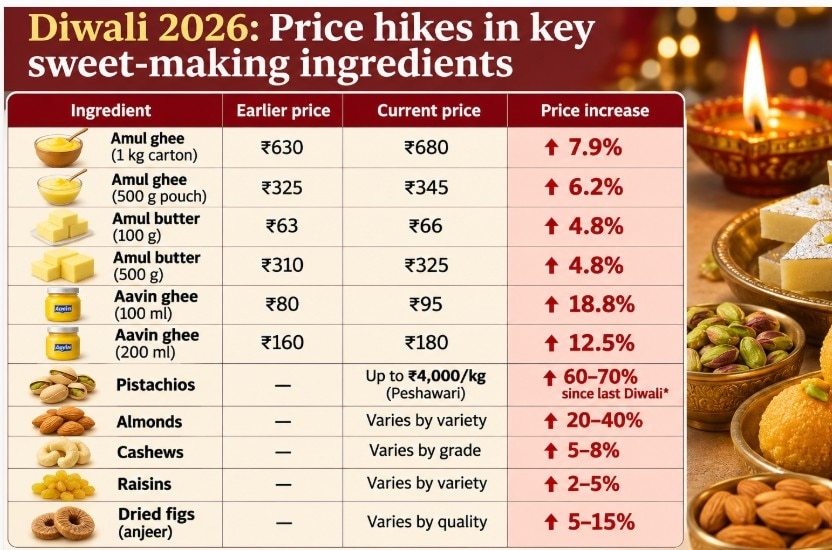



 Amul ghee costs ₹680/kg, Nandini ₹850/litre, while pistachios and almonds are up 60–70% and 20–40%.
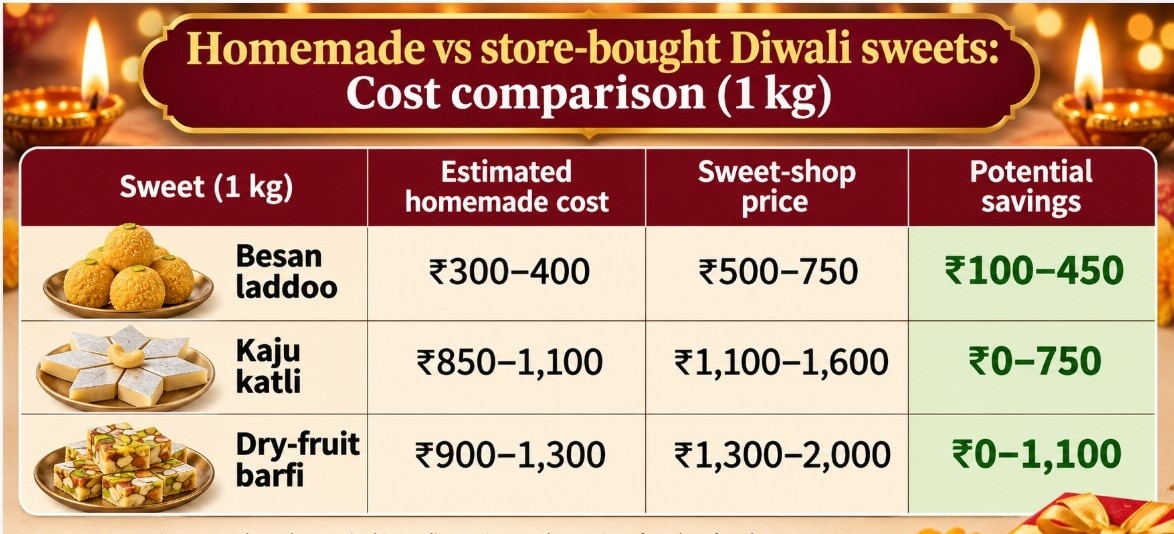
Diwali 2026 celebrations could become more expensive as rising prices of ghee, sugar and dry fruits push up the cost of traditional sweets. But with ingredients becoming costlier, is preparing laddoos, kaju katli and barfi at home still cheaper than buying them from sweet shops?
For households planning festive treats, the answer depends on the type of sweet, ingredient quality and quantity prepared.

 'Democrats sceptical of Trump's Pakistan tilt': US expert sees stronger India ties after midterms
 Anti-Indian rhetoric may have backfired on MAGA candidates in US elections, says Congressman
 BT Explainer: Intel is diverting chip-making capacity to meet AI demand. What does it mean for PC buyers?
 Why US midterm elections may not change the tariff equation for India
 Adani Ports to acquire Europe's second-largest liquid storage operator Evos, add 8 European terminals
 Crowded Markets, Empty Shopping Bags? Delhi Traders Feel The Diwali Pinch
 Is The Democratic Sweep A Double-Edged Sword For India’s Trade Deal?
 Trump, Tariffs & India-US Ties: What Changes After US Midterms? | Davinder Sandhu
 US Midterms: Will American Companies Increase Bets On India Now? | Vinay V. Singh
 #Podcast | #Episode 19 | Real State Of India's Economy: Dr. Shamika Ravi On Poverty, Jobs & Rupee

 Nasdaq plunges nearly 4%, enters correction territory as AI stocks crash after Democrats' US midterm victory
 Dhanteras 2026: Titan, Kalyan Jewellers, TBZ among jewellery stocks to watch
 Titan Company Q2 earnings: Net profit rises 54%, revenue at Rs 17,830 crore
 Bharti Airtel Q2 net profit rises 31% to Rs 8,888 crore; ARPU climbs to Rs 271
 Solar Industries: Management sees FY27 guidance beat; Goldman Sachs, Jefferies retain bullish stance
 Financial Horoscope Today, November 6, 2026: Aquarius Will See an Increase in Money on Dhanteras, Know the Fate of Other Signs
 Around 240 million adolescents worldwide missed out on regular exercise: WHO
 Gold prices could hit ₹1.80 lakh by next Dhanteras: How much can investors earn from current levels?
 Centre amends passport rules for Pakistani nationals, minority refugees and Tibetans
 Punjab-based Nalwa Aero wins national award for research on Box-Wing electric aircraft