


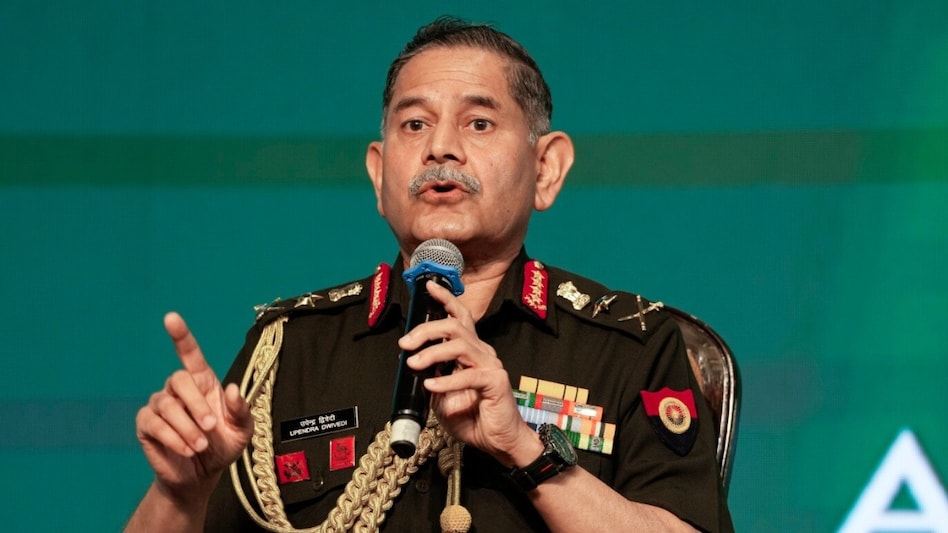
 He also urged Pakistan to end state-sponsored terrorism.
Army chief General Upendra Dwivedi issued a stern warning to Pakistan on October 3 over its Sir Creek provocation saying India will not exercise the same restraint it did during Operation Sindoor.
Speaking at Anupgarh in Rajasthan, Dwivedi declared, “This time we will not maintain the restraint that we did in Operation Sindoor 1.0… this time we will do something that Pakistan will have to think whether it wants to be in geography or not.” He also urged Pakistan to end state-sponsored terrorism.

 'Kolkata has become a city of old age pensioners': FM Swapan Dasgupta on Bengal's decline and skill shortage
 Trump made 1,000-plus trades in June: Here's what he bought and sold
 Escalating Hormuz crisis: Boris Johnson sees India as key to US exit strategy in Iran
 Gold jewellery to property: Radhika Gupta on what actually counts as an investment
 Delhi H1N1 outbreak: No cause for panic, currently circulating strain not a new one, says ICMR
 Commuted Vs Uncommuted Pension: Know The Difference And How Each Is Taxed After Retirement
 Motor Insurance Add-Ons You Actually Need Explained: Zero Depreciation, RSA & Return-To-Invoice
 No Claim Bonus Explained: When Should You Claim Or Pay For Repairs Yourself?
 Motor Insurance Premium: What Factors Determine How Much You Pay?
 How Is Retirement Income Taxed For Senior Citizens? Key Rules Explained
 Hold YES Bank, Federal Bank; buy HDFC Bank, Kotak Mahindra, Axis: ICICI SecuritiesTrump made 1,000-plus trades in June: Here's what he bought and sold
 ABH Healthcare IPO: Check key dates, price band, issue size, latest GMP, listing details & more
 India stocks lag global markets in 2026: BofA data shows 9.1% decline in USD terms
 'FOMO, fixed return': SEBI proposes revamped ad code for bond portals from misleading investors
 Private banks vs PSU banks: Goldman Sachs sees a major shift in the next two years
 EPF vs stock market: EPFO explains why they should not be viewed as substitutes
 Greenland is losing ice at a rapid pace. Could its meltwater be supercharging Europe’s heatwaves?
 UP factory test-fires first 100% indigenised AK-203 rifle, Army trials set for September
 Tariff, technology & FDI: India Inc flags key concerns in draft nuclear rules












