

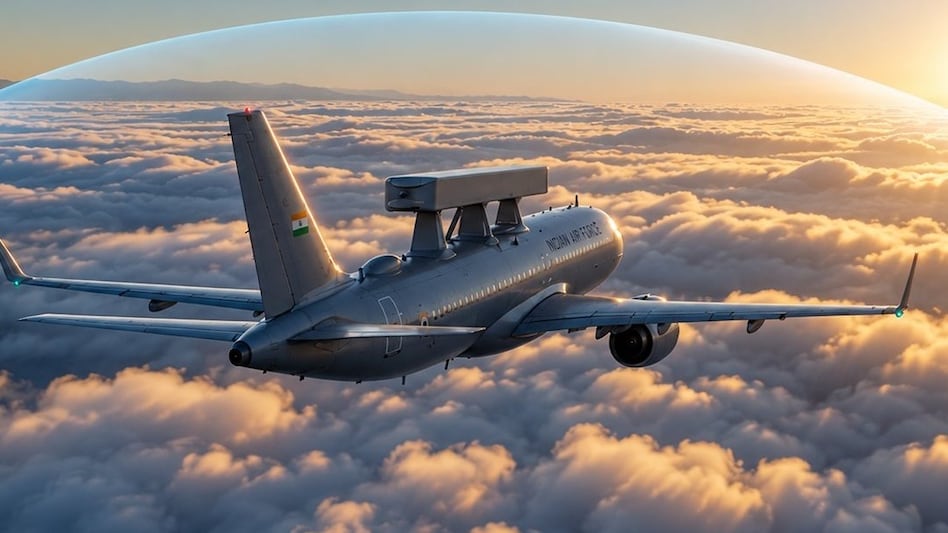
 Unlike ground-based radars, whose range is limited by the Earth's curvature, AEW&C aircraft operate at high altitudes, allowing them to spot low-flying aircraft, cruise missiles and other threats much earlier.
 India has taken another major step towards building a fully indigenous airborne surveillance network, with Adani Defence & Aerospace and the Defence Research and Development Organisation (DRDO) signing a landmark agreement to jointly develop the Airborne Early Warning and Control (AEW&C) Mk-II system for the Indian Air Force (IAF).
The programme, one of the country's most ambitious airborne defence projects, will see the two partners develop, manufacture and integrate advanced mission systems on six modified Airbus A321 aircraft. The deal also covers integrated logistics, maintenance, repair and overhaul (MRO), and technical support for up to 30 years, with induction into the IAF planned between 2032 and 2033.
 Hyundai, Kia parent Hyundai Motor Group to invest $15.5 billion in India till 2032
 Apple unveils 'HomeView' Smart Home Hub with a 7-inch display, Siri AI and competitive price: All details
 GST’s next big push: More taxpayers, better compliance and higher revenue
 Sanjeev Sanyal warns: Chasing GDP growth above 7% could push inflation past 6%
 LTCG, STT debate: FM Sitharaman to 'tread cautiously' on taxation ahead of Budget
 TCS, HCLTech Rally Amid Global AI Jitters: What's The Next Market Move?
 How Aditya Birla Group Navigates Tariff Uncertainty & Builds Global Competitiveness
 Kumar Mangalam Birla on Why Businesses Must Think Twice Before Rushing Into AI
 Delhi’s Jantar Mantar No Longer A Protest Hub: 3 New Sites, Costs And Rules Explained
 Exclusive: Shashi Tharoor On SIR, Voter Deletions And BJP’s Charge Against Opposition
 Persistent, Coforge, Mphasis: Analyst shares midcap picks amid IT rally
  Tata Steel, Vedanta or Lloyds Metals? Analyst shares top stock pick
  BEL discloses additional orders worth Rs 533 crore, check details
  Investors gain Rs 5 lakh crore as Sensex, Nifty gain over 1% each; key factors behind the rally
  Tonbo Imaging IPO: Akash Bhansali, SBI Funds among investors buying shares worth Rs 413 crore
 Tata dispute has created anxiety in family businesses, firms reviewing independent directors: Harsh Goenka
 Amit Shah's Sharp Attack On Rahul Gandhi: 'You Can't Become The Voice Of The Nation'TCS, HCLTech Rally Amid Global AI Jitters: What's The Next Market Move?Sanjeev Sanyal warns: Chasing GDP growth above 7% could push inflation past 6%Hyundai, Kia parent Hyundai Motor Group to invest $15.5 billion in India till 2032












