


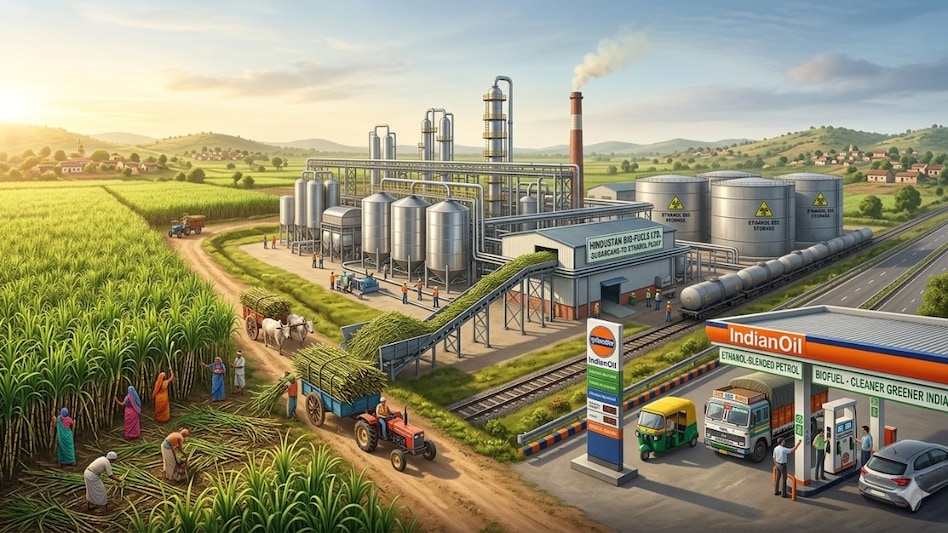
 But before ethanol reaches a petrol pump, it passes through a 10-step journey that begins in India's sugarcane fields.
As India pushes to reduce its dependence on imported crude oil, a growing share of the fuel powering vehicles is coming from an unlikely source — sugarcane. Through a carefully structured production chain, sugarcane is converted into ethanol, a biofuel that is blended with petrol as part of the government's ambitious ethanol blending programme.
The initiative is aimed at strengthening energy security, creating additional income opportunities for farmers, and lowering carbon emissions. But before ethanol reaches a petrol pump, it passes through a 10-step journey that begins in India's sugarcane fields.

 LIC weighs NSE IPO strategy: CEO says market conditions, valuation to decide final move
 FCNR(B) windfall lifts NBFCs, small private banks: Why these stocks may be the bigger winners
 APL Apollo, GNFC, Apar, Force Motors among stocks to turn ex-dividend next week; big payouts in focus
 Jio at 10: Akash Ambani marks milestone with a vision for global expansion
 Govt won't step into Singapore Airlines' Air India call, says Singapore minister
  Couples & Tax Planning: How Smart Expense Planning Can Help Reduce Family Tax Outgo
 Mutual Fund Allocation: How Much Should Investors Allocate To Large, Mid & Small Cap Funds?
 LIC CEO On Sustaining Blockbuster Q1 Growth Amid Market Uncertainty
 Travel Insurance Mistakes: Sub-Limits, Pre-Existing Conditions & Medical Evacuation Explained
 Home Loans & Insurance: How Couples Can Structure Them For Tax Efficiency
 APL Apollo, GNFC, Apar, Force Motors among stocks to turn ex-dividend next week; big payouts in focusLIC weighs NSE IPO strategy: CEO says market conditions, valuation to decide final move
 IHCL, LemonTree, Chalet among 5 hotel stocks to buy; analysts see up to 49% upsideFCNR(B) windfall lifts NBFCs, small private banks: Why these stocks may be the bigger winners
 20 Asia-Pacific stocks with up to 145% upside: Full ‘Going For Glory’ list, no Indian stock includedJio at 10: Akash Ambani marks milestone with a vision for global expansion
 MEA clarifies UN map vote does not alter official depiction of Jammu, Kashmir, Ladakh
  Thousands of OpenAI agents made 15,000 edits on German programming wiki
 Delhi rain this week: IMD predicts more showers and cooler days, with waterlogging a concern for commutersAPL Apollo, GNFC, Apar, Force Motors among stocks to turn ex-dividend next week; big payouts in focus












