


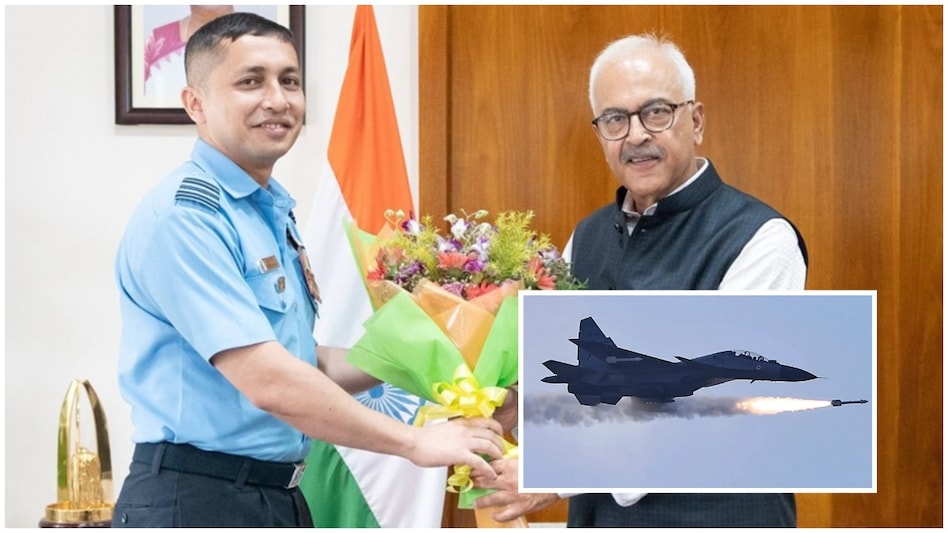
 According to reports, Rizwan Malik flew a Sukhoi Su-30MKI as part of an unescorted strike package tasked with penetrating heavily defended Pakistani airspace.
 A year after Operation Sindoor reshaped India’s counter-terror doctrine, one name has emerged from the classified layers of the mission into public memory — Indian Air Force Squadron Leader Rizwan Malik, the fighter pilot from Manipur who flew deep into hostile airspace during one of the most sensitive military operations carried out by India in recent years.
Operation Sindoor was launched on May 7, 2025, in response to the Pahalgam terror attack that killed 26 civilians. Indian forces carried out precision strikes on terror infrastructure in Pakistan and Pakistan-occupied Kashmir, targeting camps linked to Jaish-e-Mohammed, Lashkar-e-Taiba and Hizbul Mujahideen. The operation marked one of the most significant military escalations between India and Pakistan since Balakot.

 Gold at $5,000 by mid-2027? The forces behind the longer-term outlook
 Anthropic says Claude now leads 26% of its AI R&D work: How fast is AI development accelerating?
 100% tariffs immediately? What Trump’s new Russia sanctions law means for India
 2026 Skytrax World Airline Awards: Air India secures gets Best Airline in India award
  H-1B visa: Trump admin extends $100,000 employer fee till Sept 2027, tightens job-replacement rules
 Corporate Vs Personal Health Insurance: Which Is Better On A Budget?
 Gold Price Outlook: Why Gold Could Rise Despite Global Interest Rate Hikes | Silver Market Update
 Health Insurance: Why Claim Settlement Ratio Is Not Enough When Choosing The Right Insurer
 “Unacceptable And Unprofessional”: MEA Rejects Pakistan’s Claims Over INS Kolkata Collision
  Commodity Trading For Beginners: How MCX & NCDEX Work | Trading Basics | Money Today
 Jindal Supreme, SS Retail, Hero Motors IPOs subscribed up to 181 times on final day; details here
 Sensex, Nifty post sixth weekly loss; TCS, Titan among top laggards, slip up to 4%
 How AI collapse could benefit Indian equity market; Jefferies' Christopher Wood explains
  Banks are no more secular growth story, prefer NBFCs: Chris Wood
 Jefferies' Christopher Wood sees gold at $10,000 'sooner or later'; likes India's small, midcaps
 Best Premium Mattresses in India (2026): Luxury Comfort Picks
 IndiGo CEO eyes fleet revamp in aggressive push to transform Delhi into global mega-hub: Report
 7%+ FD Rates: SBI vs BoB vs PNB vs Canara Bank — How much will senior citizens earn on ₹5 lakh, ₹10 lakh, ₹15 lakh and ₹20 lakh?
 Samsung Galaxy Z Fold8 Ultra, Fold8 get 25% lower EMIs under Galaxy Forever plan
 Uday Kotak seeks panel on rising gold imports as FY27 bill threatens to touch $90 billion: Report












