


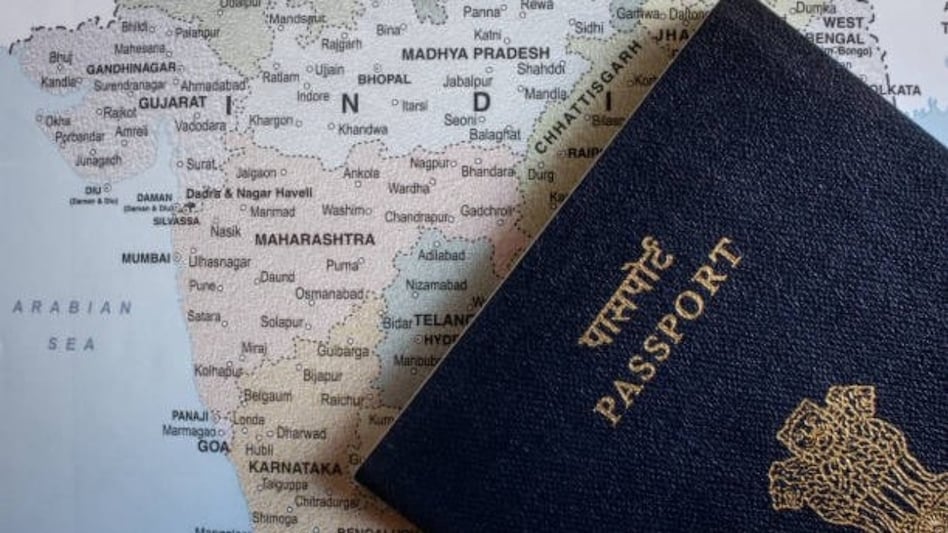
 Passport is a travel document, not proof of citizenship, clarifies government
A routine clarification from the Ministry of External Affairs has turned into a full-blown debate over what it actually means to prove Indian citizenship, and the government is pushing back hard against what it calls a misreading of settled law.
PMO source: 'The passport has never been proof of citizenship'

 Festive rush: Flight fares soar for domestic routes on Diwali weekend
 Retail inflation climbs to 4.82% in August as food prices rise
 Jefferies sees CAS proposals easing uncertainty for brokers, exchanges; maintains 'BUY' on Groww, 'Underperform' on BSE
 India to export power to Nepal till Dec 31 after devastating flash floods
 Tata Sons: A look at net worth of the holding company as IPO buzz gains traction
  BRICS Summit 2026: Modi’s Big Diplomatic Win As New Delhi Declaration Gets Backing
 Dario Amodei, Sam Altman, Elon Musk Back AI Slowdown Call Amid Growing Safety Concerns
 Amit Shah Hails India’s Rise From Fragile Five To Top Five, Politics Of Performance Since 2014
 MEA Details BRICS Summit Outcomes as India Pushes Practical and People-Centric Cooperation
 Modi@25: Amit Shah Highlights 25 Years Of Leadership, Governance And 2047 Vision
 Varun Beverages shares slip 25% from 52-week high; more downside ahead?
 Uno Minda gets 'IND A1+' credit rating for commercial papers from India Ratings
  Karnataka Bank, Pondy Oxides, ITDC, Blue Dart among stocks to turn ex-dividend on September 15
 Stock market outlook: Crude oil prices, US Fed's policy decision among key factors to watch out for this week
 Raghav Productivity Enhancers' subsidiary bags patents for quartz processingBRICS Summit 2026: Modi’s Big Diplomatic Win As New Delhi Declaration Gets Backing
 Gold, IT or MFs: where should investors put their money now? 360 ONE’s Mayur Patel decodes the outlook
 Airtel’s ₹3,999 yearly prepaid plan now offers 150GB extra bulk data: Check benefits and validityDario Amodei, Sam Altman, Elon Musk Back AI Slowdown Call Amid Growing Safety Concerns
 Who is Anupriya Nagar? The economics student who invested one-third of Hanuman Ansh’s reported ₹2-crore budget












