


 Sanjiv Kapoor calls out Gurugram’s poor upkeep with before-after street image
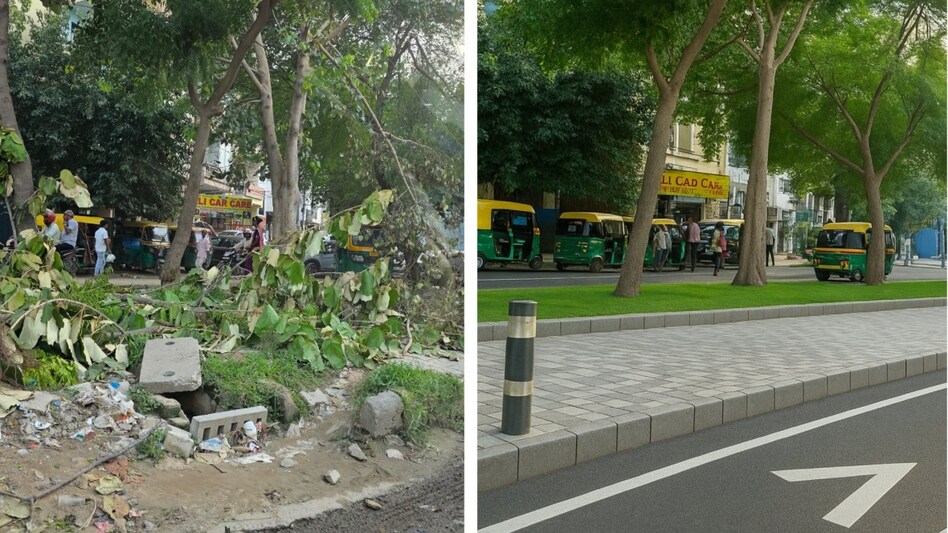
Former Jet Airways CEO Sanjiv Kapoor has once again highlighted Gurugram's deteriorating urban conditions, this time using a stark visual contrast to make his point. Sharing a before-and-after image of a sidewalk on Bhagwan Mahaveer Marg in Sector 44, Kapoor wrote, "What it is, and what it could be if the Municipal Corporation Gurugram wants to really drive change. This is not rocket science (which India is ironically good at)! This is basic urban planning and upkeep, seen all over the world."
The image he shared shows the same stretch of road in two conditions. On the left, the sidewalk is strewn with garbage, broken concrete, fallen branches, and an exposed drain—virtually unusable for pedestrians. On the right, the redesigned version features neatly paved tiles, bollards, manicured lawns, and a clearly marked pedestrian lane, showing what clean, safe public infrastructure can look like with the right intent.

 GST Council to take up proposal of MDR on UPI
 Tata Sons rejects Noel Tata objections over N. Chandrasekaran reappointment
 SEBI rewrites PMS rulebook, allows IPO, foreign securities and unlisted debt investments
 BT Big Story: Is 66% = zero? The Tata Sons question on everyone’s minds
  Govt, IBA to work on mechanism to ensure UPI MDR isn't passed on to consumers
 Meta’s New Gadgets: Camera-Free Glasses, VR Eyewear And AI Handheld Device Unveiled
  MDR Levy: Will Retail Trading Volumes Take A Hit? | NSE Chairman Srinivas Injeti
 NSE Lists At ₹1,800: Exclusive Post-Listing Interview With India's Largest Exchange
 From Mobile Trading To AI: How NSE Plans To Protect Market Integrity
 NSE On India’s Capital Markets Growth | IPOs, REITs, InvITs And More
 SEBI rewrites PMS rulebook, allows IPO, foreign securities and unlisted debt investments
 HSBC plans India equity broking return amid IPO boom, says report
 Whirlpool of India clarifies on promoter stake sale report; stock slips
 From Azim Premji to DMart’s Radhakishan Damani: The famous investors sitting on thousands of crores in NSE shares
 Solar Industries stock gets 'Buy' call on defence push and global explosives growthGST Council to take up proposal of MDR on UPISEBI rewrites PMS rulebook, allows IPO, foreign securities and unlisted debt investments
 Who was T N Seshan? Former CEC trending amid SIR row; check his key role in transforming Indian pollsGovt, IBA to work on mechanism to ensure UPI MDR isn't passed on to consumers
 Oil rises as Iran threat to widen war dims hopes of Strait of Hormuz deal












