


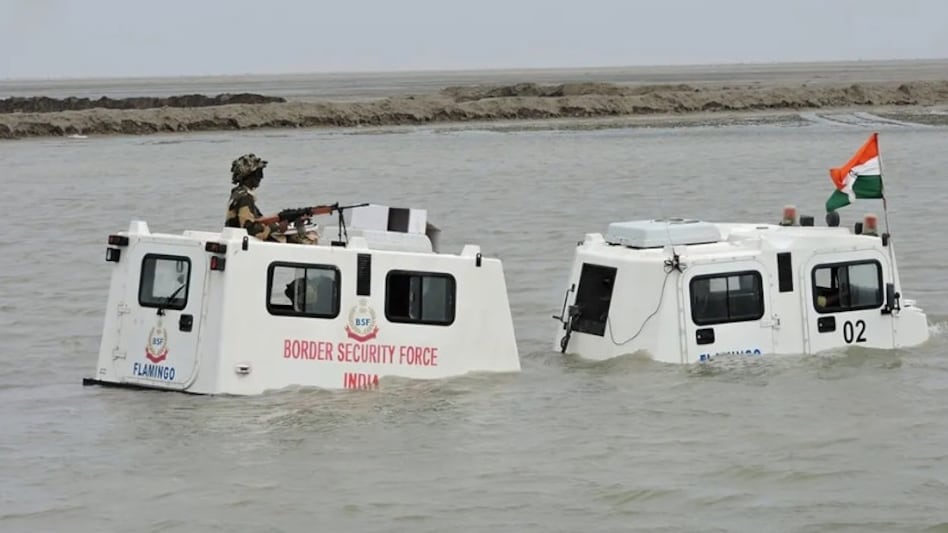
 Sir Creek is among Asia’s richest fishing grounds, sustaining thousands of families.
Defence Minister Rajnath Singh on Thursday issued a stern warning to Pakistan, cautioning that any “misadventure” in the Sir Creek sector would invite a “decisive response” strong enough to “change both history and geography.”
Singh flagged Pakistan’s “ill intent” in expanding military infrastructure in the region, adding that the neighbour continues to provoke disputes despite 78 years of India’s independence.

 SEBI settles proceedings linked to Hindenburg report against 5 Adani firms for ₹1.51 crore
 'No positive response on 5-day banking': Bank unions to go ahead with 3-day strike
 LIC emerges as biggest bidder in NSE IPO, applies for shares worth Rs 4,500 crore: Report
 NSE IPO listing on September 24: How 5 largest IPOs fared on market debuts
 UPI MDR GST: NPCI says small merchants and 96% of transactions remain unaffected from October 15
 Karnataka’s Welfare Schemes Under Pressure As Finance Department Flags New Challenges
 Family Disputes Can Hold Businesses Back: Nirmala Sitharaman’s Message To Family Firms
 TRAI New Rules: Voice-SMS Only Plans Mandatory | What It Means For 20 Crore Non-Data Users
 Oil & Gas Capex Boom: Anshul Saigal Names Energy Stock He Owns | Saigal Capital Advisors
 Small Caps Too Expensive? Anshul Saigal On Valuations, Earnings & Upside
 Sansera Engineering shares rise 7%; Goldman Sachs raises target; sees further upside
 US-Iran talks today? Oil slips to $98 a barrel; will Sensex, Nifty rebound?
  Borosil Renewables shares rise 3% as board approves revised Rs 1,100 crore expansion cost
 L&T, DRL, Vijaya Diagnostic, M&M Financial: Buy, Hold or Sell? Here are target prices
 HAL, BEL, BDL, BEML: Defence stocks to buy for 13-24% upsideKarnataka’s Welfare Schemes Under Pressure As Finance Department Flags New Challenges
 How passing on assets requires considerable thought
 Why crypto is a favourite investing option in India despite the lack of clear regulations
 All You Need To Know About Varmora Granito IPO
 Railway tickets above ₹2,000: The ₹5 UPI charge passengers may never see












