


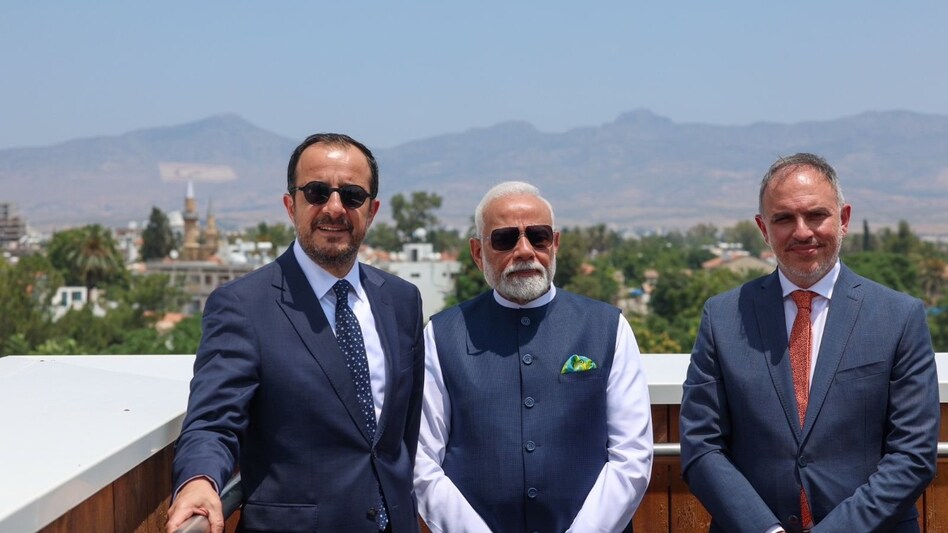
 Abhishek Singhvi on Modi's Cyprus visit: "Better late than never...Stand with Cyprus"
Prime Minister Narendra Modi's visit to Cyprus — the first by an Indian Prime Minister in over two decades — has drawn strong support from Congress leader and Rajya Sabha MP Abhishek Singhvi, who said India must back the sovereignty of Cyprus and push back against Turkish expansionism.
"Welcome step by PM Modi to look over illegally occupied land of Cyprus by Turkey. Have been advocating this since a long time. However, better late than never. Enough is enough. Stand with Cyprus: demand sovereignty, oppose expansionism!" Singhvi posted on X.

 Nestle faces FSSAI crackdown over over baby food formula claims, shares take a hit
  ‘Welcome the decision wholeheartedly’: Shapoorji Pallonji on RBI’s decision on Tata Sons listing; full text
 NSE IPO: India's largest exchange gets 55% subscription on Day 2 so far; NIIs, employee portions fully booked
 NSE IPO, Hero Motors IPO, SS Retail IPO, Jindal Supreme IPO: GMP of four ongoing issues rises up to 32%
 Noel Tata at the centre of Tata Sons board tussle: A look at his 40-yr career, educational qualification and more
 Shapoorji Pallonji Welcomes RBI Nod On Tata Sons Listing | SP Group
  UPI MDR Fees: Why Fintech Stocks Like Paytm Could See A Revenue Boost | Market Expert Explains
 Gold, Stocks Or Mutual Funds? Investment Strategy For Retail Investors Amid Market Volatility Explained
 Indian Stock Market Outlook: Fed, BOJ Rate Hikes And FII Selling Put Nifty Under Pressure
 Dr Reddy’s Qdenga Vaccine Deal: India’s Dengue Vaccine Market Opens Up | Pharma Stocks In Focus
 Tata Chemicals, TCPL, Uno Minda, Welspun Living, Bandhan Bank, E2E Networks: Expert shares outlook
 Nestle India shares tank 3% as FSSAI initiates legal action over infant products
 Coforge share price: Brokerages bullish on its enterprise autonomy and AI strategy; check targets
 Soach Global set for nearly 25x gains in partial exit from NSE; to sell 20% stake in IPO
 Gold prices: Weak dollar, central bank buying may trigger next big move, says Vandana BhartiShapoorji Pallonji Welcomes RBI Nod On Tata Sons Listing | SP Group Nestle faces FSSAI crackdown over over baby food formula claims, shares take a hit Tata Chemicals, TCPL, Uno Minda, Welspun Living, Bandhan Bank, E2E Networks: Expert shares outlookUPI MDR Fees: Why Fintech Stocks Like Paytm Could See A Revenue Boost | Market Expert ExplainsNestle India shares tank 3% as FSSAI initiates legal action over infant products












