


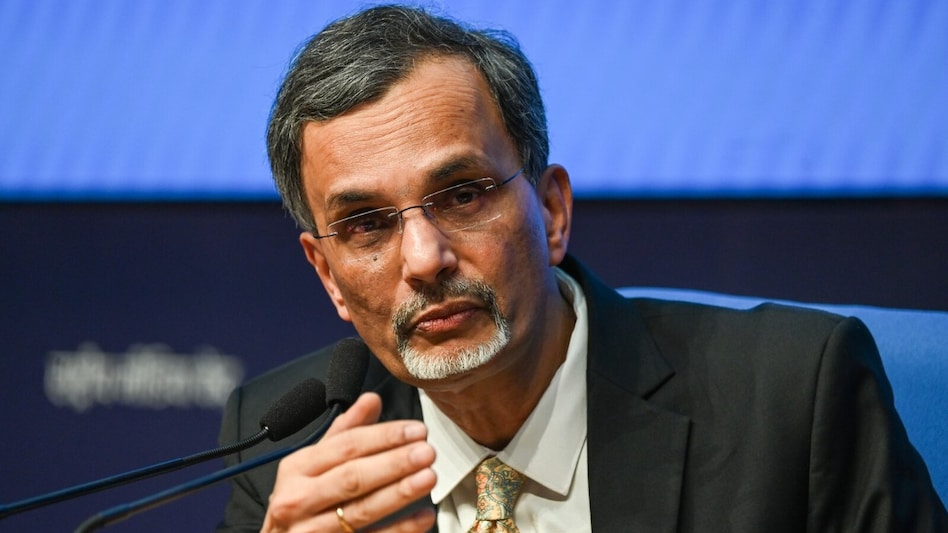
 He argued that adding a single elective on technology to business school curricula will be insufficient. (File photo)
Artificial intelligence (AI) could pose a existential challenge to management education over the next two to three decades by eliminating the entry-level roles that traditionally serve as training grounds for young professionals, Chief Economic Adviser V Anantha Nageswaran warned.
Speaking at the 16th Indian Management Conclave in Noida, Nageswaran outlined how automation threatens the long-standing apprenticeship model.

 NSE IPO fully subscribed on Day 2; QIB, NII quotas booked 1.3 times each
 Nestle faces FSSAI crackdown over baby food formula claims. What the regulator found
  STT collections jump 52.9% to Rs 40,214 crore in FY27 so far; key details
 ‘Welcome the decision wholeheartedly’: Shapoorji Pallonji on RBI’s decision on Tata Sons listing; full text
 India’s AI boom gets a massive boost: EQT plans $50 billion push with major Adani data centre bet, says report
 BTTV Exclusive | Jefferies’ Chris Wood On AI, US Bonds, Oil & India’s Market Outlook
 LIVE What’s Hot: Stocks, Gold & Big Money Moves | Daily Markets Show | September 17 | Business Today
 From NPAs To Infrastructure: CEA On How India’s Economy Has Changed Under PM Modi
  “PM Modi Is Architect Of Economic Policy”: CEA V. Anantha Nageswaran On India’s Growth Journey
 iPhone Sale Sparks Overnight Rush As Buyers Queue Across Delhi, Mumbai, Bengaluru
 Jefferies' Christopher Wood sees gold at $10,000 'sooner or later'; likes India's small, midcaps
 NSE IPO: Applying for short-term gains from share sale? Analyst says thisSTT collections jump 52.9% to Rs 40,214 crore in FY27 so far; key details
 Kaynes Technology stock needs breakout confirmation; Moschip preferred semiconductor pick: Analyst NSE IPO fully subscribed on Day 2; QIB, NII quotas booked 1.3 times eachJefferies' Christopher Wood sees gold at $10,000 'sooner or later'; likes India's small, midcapsNSE IPO: Applying for short-term gains from share sale? Analyst says this
 Apple Pay may finally come to India next month; Axis bank tie-up reportedBTTV Exclusive | Jefferies’ Chris Wood On AI, US Bonds, Oil & India’s Market Outlook
 Semicon 2.0 draws investment commitments of ₹1 lakh crore, says IT minister Ashwini Vaishnaw












