









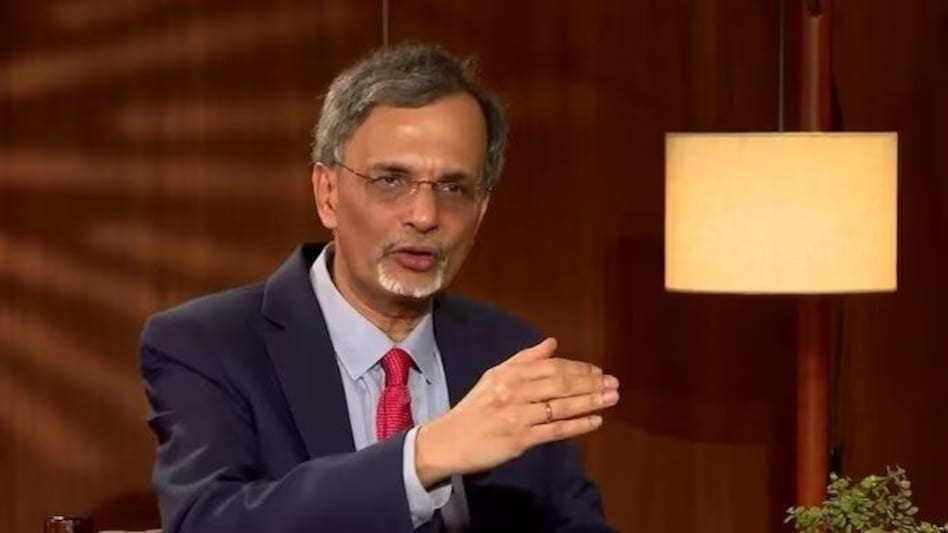
 Chief Economic Adviser V. Anantha Nageswaran

 Chief Economic Adviser V. Anantha Nageswaran
When fears of a wider Gulf conflict sent shockwaves through global energy markets, many expected India to be among the worst-hit economies. As a major importer of crude oil, any disruption in the Strait of Hormuz, a key artery for global oil shipments, typically raises concerns about inflation, fuel shortages, and pressure on the rupee.
Chief Economic Adviser V Anantha Nageswaran in an editiorial in The Economic Times highlighted that the country's resilience was the result of deliberate policy choices and years of economic preparation rather than good fortune.
"This was not an accident. And it was not luck alone," Nageswaran wrote. "It was the work of a government that chose to act as it had during the pandemic, deliberately and gradually, building resilience upon another rather than reaching for a single dramatic lever."
MUST READ: Crude Above $70: What It Means For Indian Markets?
Government’s priorities
One of the government's priorities was protecting households from the immediate impact of rising global energy prices. Nageswaran noted that authorities absorbed part of the fuel price increase instead of passing the entire burden on to consumers.
"On the fuels that power the wider economy, the government chose to absorb the shock rather than pass it on," he wrote, adding that domestic fuel availability remained stable despite heightened geopolitical tensions. The government also implemented targeted support measures, including assistance for airlines facing higher aviation fuel costs and credit guarantees for micro, small and medium enterprises.
Diversified energy sourcing
India's ability to respond quickly was supported by a more diversified energy sourcing strategy. Domestic refiners increased output while importers secured supplies from alternative markets to offset disruptions.
"India quickly widened its sources, deepening purchases from the United States and Russia and adding new suppliers," Nageswaran explained. He added that long-term measures such as expanding natural gas networks and increasing ethanol blending also helped strengthen India's energy security.
India's broader economic fundamentals
Beyond energy management, India's broader economic fundamentals helped cushion the impact. The country entered the crisis with healthy foreign exchange reserves, a manageable current account deficit, and strong foreign investment inflows.
"The headline numbers reassure," Nageswaran wrote. "Gross foreign direct investment in the last financial year reached $95 billion, breaking out of the $70-80 billion band of the post-pandemic years." He also highlighted that India's current account deficit was only 0.6% of GDP in FY26 and is expected to remain modest in FY27.
ALSO READ: Will flights become cheaper as crude goes below $75?
A test of resilience
While the conflict underscored India's continued dependence on imported energy, it also demonstrated the benefits of long-term economic planning. Nageswaran argued that the episode was ultimately a reminder that resilience is built over time.
"These tasks will demand persistence and speed," he wrote. "India must continue what it can produce competitively and do what it does best."
 HAL shares: Defence PSU's board recommends Rs 10 dividend; record date, dividend payment, history
 China's Arunachal incursion? Tribal body alleges PLA's silent march into grazing grounds
 ₹2–2.5 crore for a 2BHK? Delhi resident's reddit post sparks housing affordability debate
 Multimodal logistics company Pristine Logistics files confidentially with Sebi for IPO
 Heatwave in Europe: More than 1,300 excess deaths recorded since June 21
 Crude Above $70: What It Means For Indian Markets?
 "We Meet As Old Friends": PM Modi Returns To Seychelles To Strengthen Deep-Rooted Maritime Bonds
 Strong Rupee, Weak Oil, Gold & Silver Can Boost Stock Prices On Dalal Street
 Ram Mandir Donation Case: CCTV Raises Questions Over Trust's Response To Theft Claims
 N K Singh: India Can Lead Global Climate Action Without Waiting For The U.S.
 Multimodal logistics company Pristine Logistics files confidentially with Sebi for IPOHAL shares: Defence PSU's board recommends Rs 10 dividend; record date, dividend payment, history
 Alcoholic beverages stocks: Jefferies on price targets of Radico Khaitan, Allied Blenders, United Spirits
  DCB Bank, Eternal shares: Check target prices, outlook
 REC-PFC merger approved: What happens to the stake held by shareholders