


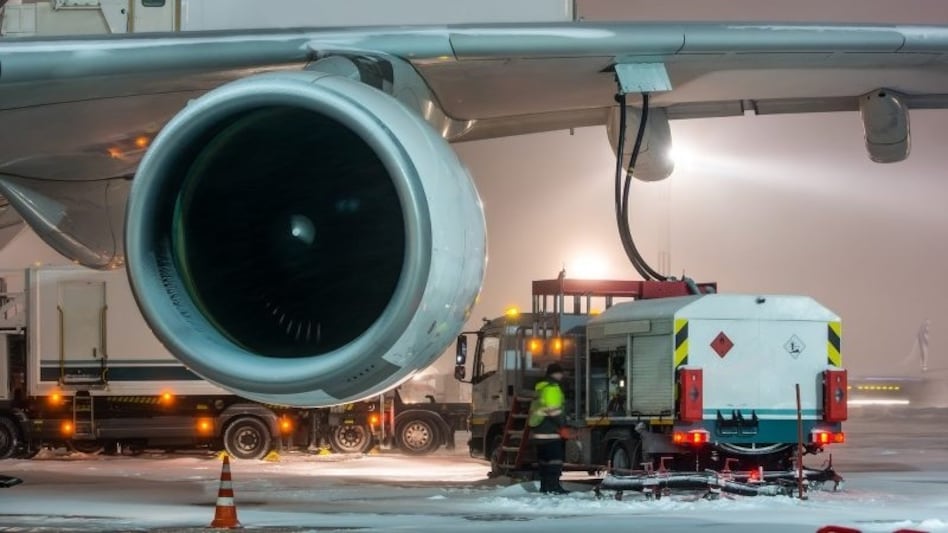
 Experts say that jet fuel constitutes 40% of the operational costs for airlines, while other factors, such as a rising dollar against the rupee, softening demand and supply chain issues, remain against other constraints.
Airfares are likely to remain elevated for a while, as airlines are unlikely to pass on the falling crude prices to passengers immediately.
In a relief, crude prices have fallen below $75 per barrel after staying in the range of $120 between February and May this year. The jet fuel prices also doubled during the war, making IndiGo, Air India and Akasa introduce fuel surcharges on both the domestic and international sectors to address the rising operational costs.
There have been reports that airlines are mulling about the withdrawal of fuel surcharge, which was based on distance brackets, but industry players said that it is unlikely to be implemented immediately. Keeping in mind the geopolitical situation, there is a level of uncertainty on the deal US–Iran memorandum of understanding (MoU), say industry experts.
Airfares on the domestic sector are high, 15-20%, while around 35-40% on the international sectors, making them cut their capacity on several routes to optimise the operational costs.
Experts say that jet fuel constitutes 40% of the operational costs for airlines, while other factors, such as a rising dollar against the rupee, softening demand and supply chain issues, remain against other constraints.
The government has come up with a few measures, including an emergency credit line and fixed jet fuel charges for three years, to cushion operators from volatility due to the geopolitical situation.
Impact on other sectors
The reopening of the Strait of Hormuz following a tenuous US–Iran memorandum of understanding (MoU), if enduring, can materially ease the profitability pressure on India Inc. for the rest of this fiscal year versus what was envisaged earlier.
Energy markets have responded swiftly to the respite, with crude prices softening. However, the availability of crucial inputs such as gas and urea is expected to improve only gradually as structural supply-side disruptions that occurred during the conflict are sorted. At present, the number of ships transiting the Strait is well below the pre-conflict levels, according to Crisil Ratings.
“The correction in crude oil prices and the gradual easing of both shipping-related costs and gas supplies provide timely relief to India Inc. While supply-side pressures are expected to abate, the geopolitical situation in West Asia remains fluid, and escalation risks persist,” said Somasekhar Vemuri, Senior Director, Crisil Ratings.
He further said that softer crude prices would support the government’s ability to sustain its capital expenditure push and respond to any demand-side impact, and this becomes particularly relevant as El Niño poses risks to the monsoon and, in turn, domestic rural demand.

 Exam reforms: Tech titan Nandan Nilekani picked by PM Modi to fix national public examination system
  'Tax officers struggled for own land': Nirmala Sitharaman slams laidback attitude of govt depts
 CBDT issues new crypto reporting guidance: No new tax, but exchanges must track and report all transactions
 Did Cockroach Janta Party's 'Chalo Sansad' 2.0 threat trigger Dharmendra Pradhan's resignation? What we know so far
 'Will discharge my responsibilities with complete humility': Pralhad Joshi after being appointed Education Minister
 AI Data Centers, Aerospace & Gas Turbines: What's Powering Indo-MIM's Future Growth?
 Best Healthcare Stocks: Gaurang Shah's Outlook On Apollo Hospitals, Fortis & The Manipal Health IPO
 Is Indo-MIM's IPO Valuation Justified? Here's Why The Company Sees Strong Growth Ahead
 Treasury Bills Explained: Why T-Bills Are One Of The Safest Short-Term Investment Options
 FDs vs Markets: Where Should You Keep Your Short-Term Money?
 Gland Pharma stock: Price target of Rs 3,250 likely in medium term, says analyst
  Metal recycling stocks to buy: Gravita, Pondy Oxides, Jain Resource among top picks
 TRIL shares: Should you average the falling stock? Here's 'fixed and final' stop loss
 Adani Power: 45 GW target, Rs 2 lakh crore capex plan among conference call highlights
  ITC Hotels, Chalet, Ventive, IHCL, SAMHI: Hotel stocks to buy despite travel disruptions
 'Ashamed of it...': Manoj Muntashir calls Adipurush his biggest mistake, seeks country's forgiveness Exam reforms: Tech titan Nandan Nilekani picked by PM Modi to fix national public examination system 'Tax officers struggled for own land': Nirmala Sitharaman slams laidback attitude of govt depts
 Delhi targets traffic bottlenecks on Aruna Asaf Ali Marg with ₹1.97 crore elevated road studyAI Data Centers, Aerospace & Gas Turbines: What's Powering Indo-MIM's Future Growth?









