


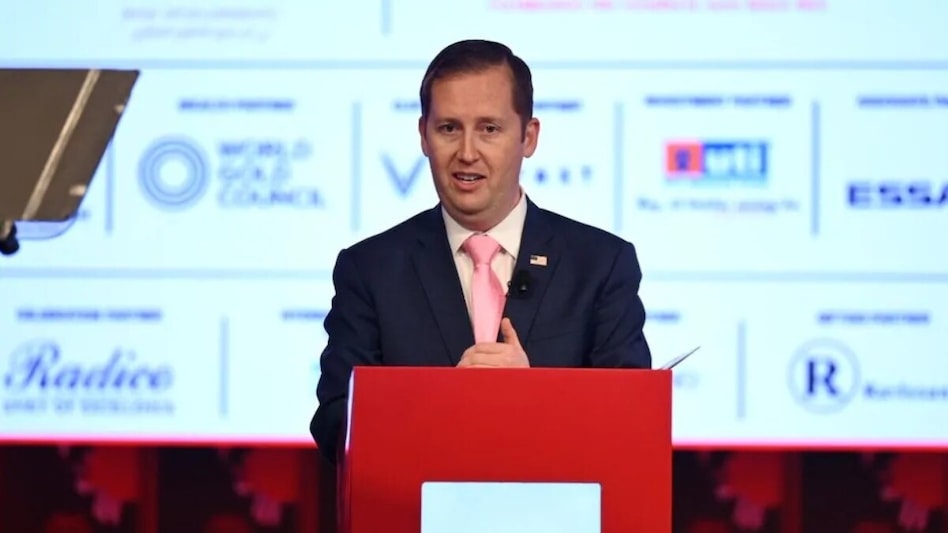
 US ambassador Gor confident of India trade deal soon as Rubio visit, delegation talks set for next month
The United States and India are closer to finalising a landmark bilateral trade deal before their negotiations, US Ambassador Sergio Gor said on Thursday, and he put a timeline on it.
Speaking at the Annual Leadership Summit of the American Chamber of Commerce in Delhi, Gor said he was confident the deal would be concluded "in the coming weeks and months," a framing that sets the pace of progress against a striking benchmark. "Negotiations have been ongoing for a year and a half, but to put it in perspective, the European Union took almost 19 years. We are confident that in the coming weeks and months, this trade deal will be finalised," he said.

 'No country should help Iran evade sanctions': Marco Rubio on Modi-Pezeshkian meet at SCO summit
 ‘Ill-educated, egregiously wrong…’: Neelkanth Mishra says ‘2.6% GDP growth’ claim is obviously incorrect
 Buyback tax: How India changed the rules three times in 18 months and what investors need to know
 Nifty, Sensex, Nifty Bank outlook for today: GIFT Nifty up nearly 90 points; key levels to watch
 'Stay away or...': After Marco Rubio's SCO ultimatum, Scott Bessent warns Iran's allies
 U.S. May Tighten Child Passport Checks Under Trump, Indians And Birth Tourism Families Face Scrutiny
 Market Commentary | Deven Choksey On Buying Opportunities & Market Trends
 “India Is Certainly Not In Crisis”: Arvind Panagariya On Growth, Investment And Reforms
 Daily Calls: Ask Your STOCK MARKET TODAY QUERIES | Market Update | Share Market News Today
 What’s Hot: Stocks, Gold & Big Money Moves | Daily Markets Show | September 02 | Business Today
 Inox Wind shares in focus after Rs 755 crore repeat order from IOC; key detailsBuyback tax: How India changed the rules three times in 18 months and what investors need to know
 SBI, Coal India, HAL: Top PSU stocks to trade — Check key levels, target prices & stop loss
 Hexaware Tech shares in focus as CEO resigns; read full resignation letterNifty, Sensex, Nifty Bank outlook for today: GIFT Nifty up nearly 90 points; key levels to watch
 ₹600, AC cabin and a Taj Mahal trip: Dutch couple shares the good and bad of India train rideInox Wind shares in focus after Rs 755 crore repeat order from IOC; key details
 Earth nearing climate red line: World set to cross 1.5°C warming threshold, warns UN bodyBuyback tax: How India changed the rules three times in 18 months and what investors need to know‘Ill-educated, egregiously wrong…’: Neelkanth Mishra says ‘2.6% GDP growth’ claim is obviously incorrect












