












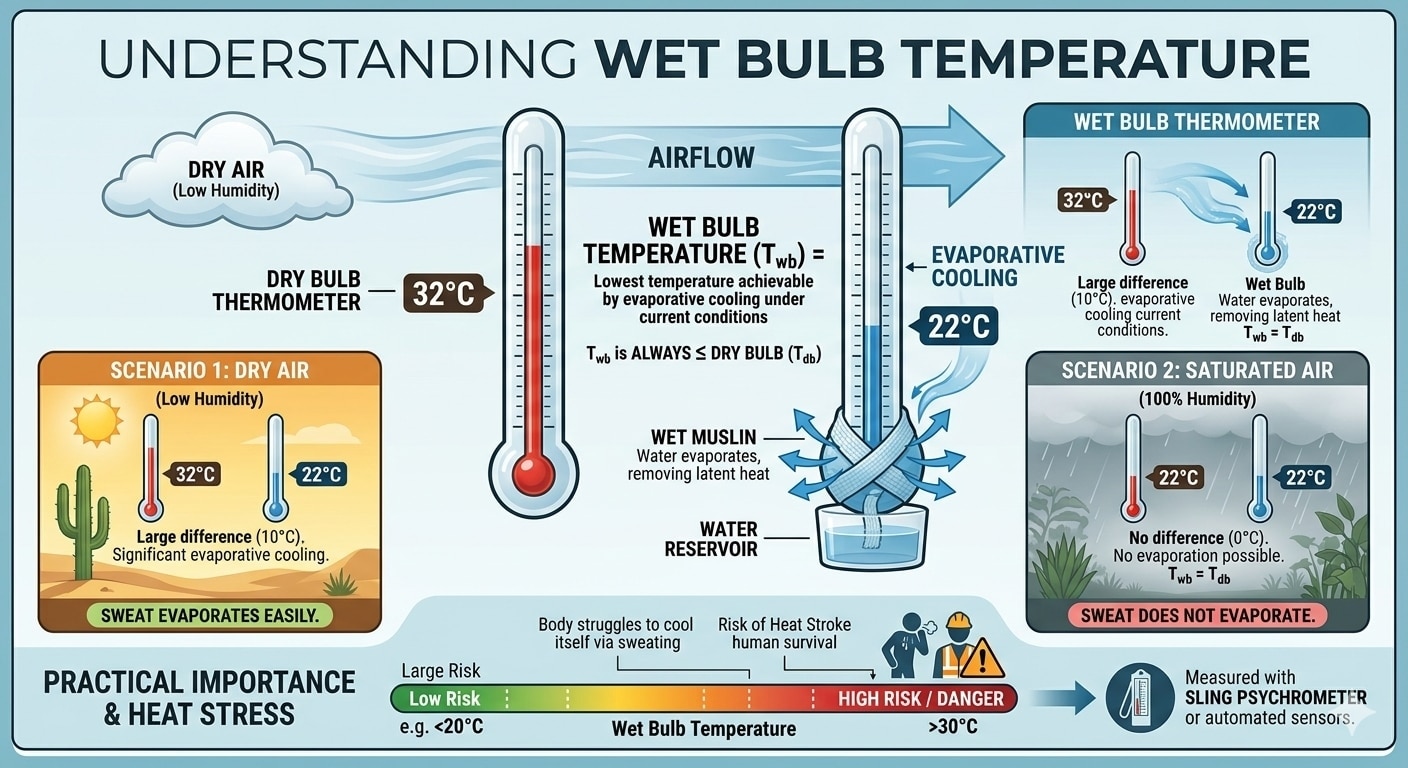



 When sweating stops working: The science behind wet-bulb temperature and why it matters now
The thermometer reading outside your window may not be telling you the whole story. When humidity enters the picture, even a temperature that seems manageable can become genuinely dangerous, and that is where wet-bulb temperature comes in.
Wet-bulb temperature measures how well the human body can cool itself through sweating. When humidity is high, sweat does not evaporate easily, stripping the body of its primary defence against heat. As India faces increasingly brutal summers, this metric is becoming one of the most important and least understood indicators of heat risk.

 Delhi internet curbs: 24-hour mobile internet block ahead of CJP rally near Jantar Mantar
  Jio Platform IPO price to be set at Rs 1,065-1,119, says report; check details
 'Navi' triumphs over Trump! Indian-origin Navanethem Pillay wins 2026 Nobel Peace Prize
 JSW Motors to launch its first SUV in India on December 4. Here's what to expect
 Two years on without Ratan Tata, the war for control rages on in the empire
 Silver Investment Outlook: Why Gen Z Should Watch This Metal's Long-Term Growth Potential
 Gold Price Outlook: Is This the Right Time to Invest? Expert Sees Potential for New Highs
 India Slams US PERM Suspension, Says JD Vance’s ‘Indentured Servants’ Remark Is Offensive
 Govt Plans Tighter Rules For Prescription Drug Ads, Pharmacies And Wholesalers In Focus
 Apple May Unveil Touchscreen MacBook, OLED iPad Mini In October: What To Expect
 Market on the back foot, opportunities ahead: where should investors put their money?
 Poonawalla Fincorp Q2 earnings: Net profit zooms 405%, NII at Rs 1,589 crore
  Vedanta, TCS shares to turn ex-dividend; Ola rights issue; 2 stock splits next week
 IPO rush: Rs 50,000 crore worth IPOs to hit Street by Diwali; Jio, Avada to lead fundraise
 Adani Ports, GMR Airports rise up to 5% amid block deal reports; check details
  Starlink India approval: Rajeev Chandrasekhar cites security concerns, asks Elon Musk to be patient
 India’s LPG imports shift back to UAE as US supplies plunge 58%; Oman leads LNG imports in SeptDelhi internet curbs: 24-hour mobile internet block ahead of CJP rally near Jantar Mantar JSW Motors to launch its first SUV in India on December 4. Here's what to expectSilver Investment Outlook: Why Gen Z Should Watch This Metal's Long-Term Growth Potential


