


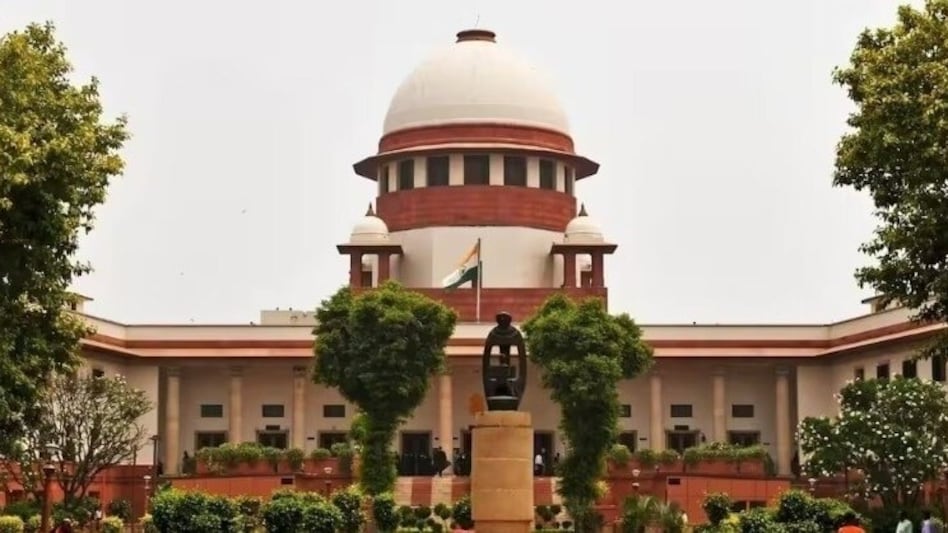
 Live-in partners can now invoke India's anti-cruelty law, Supreme Court rules
Women in long-term live-in relationships "in the nature of marriage" can now seek protection under Section 498A of the Indian Penal Code, the Supreme Court has ruled, even if the couple never legally married. The court, however, drew a firm boundary, the expanded interpretation applies strictly to Section 498A and cannot be read into other criminal or civil law provisions.
Law can't be limited to formal marriage

 'Losing every step of the way': 25 states challenge Trump's latest 10-12.5% import tariffs on 60 nations including India
  Mumbai's Dharavi is getting a 3.3-km riverfront: Here's how it could transform everyday life
 Sensex opens higher, Nifty in the red; Asian Paints, Tata Steel, Kotak Bank top gainers
  Setback for DMK: Tamil Nadu police detains Udhayanidhi Stalin over 'obscene' remarks against Trisha
 BT EXPLAINER | Why Sikkim is exempt from income tax, which residents can claim exemption
 Walsh Is Here To Wash Away IndiGo's December Fiasco?
 How To Build The Right Investment Portfolio In Today's Market | Aditya Pagaria
 MV Electrosystems' IPO Comes With A Strong Order Book And Growth Plans
 "India Grew 7.7%": CEA V Anantha Nageswaran Hails India’s Economic Resilience
 Rainbow Children's Q1 Revenue Grows 33%; Eyes Mumbai Entry, Expands Andhra Footprint
 Juniper Green Energy IPO: How to check allotment status, latest GMP, listing date & more
 Why are Nifty and Sensex moving opposite? NSE explains Closing Auction Session
 Dhoot Transmission IPO opens on August 10; check price band, issue size & key details
 MV Electrosystems IPO GMP tanks — How to check allotment status on NSE, BSE; odds below 1%Sensex opens higher, Nifty in the red; Asian Paints, Tata Steel, Kotak Bank top gainers
  Govt mulls tax changes to attract foreign investments, cuts for overseas investors: Report
 PM Modi Chairs Key NDA Mangal Milan Meeting To Finalise Monsoon Session Strategy
 Tamil Nadu CM Vijay Visits Renault Plant, Drives New Duster Amid Huge Crowd GatheringJuniper Green Energy IPO: How to check allotment status, latest GMP, listing date & more
 Meta May Lose Safe Harbour Over PM Modi Content Row










