









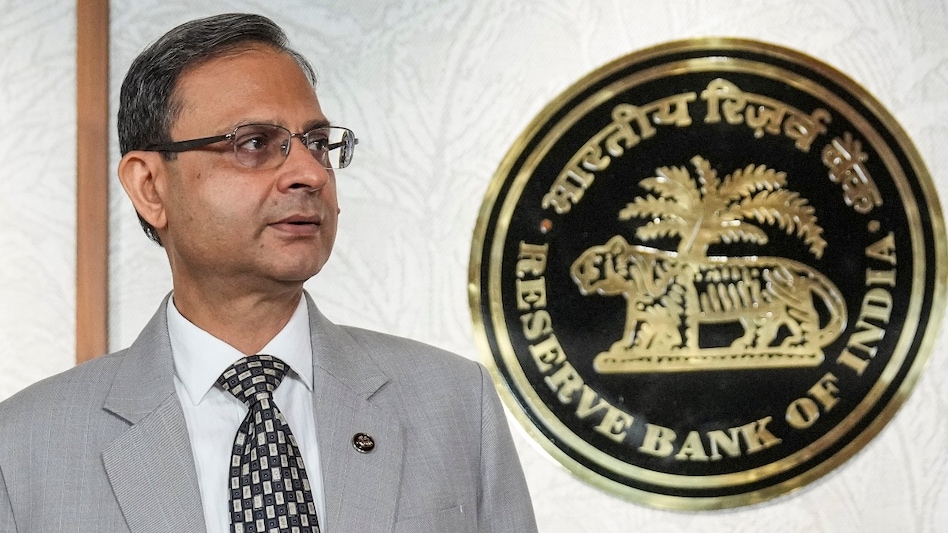
 RBI Governor Sanjay Malhotra

 RBI Governor Sanjay Malhotra
 One year ago on December 11, Mint Street got a new chief when Sanjay Malhotra took charge as the 26th Governor of the Reserve Bank of India, taking over from Shaktikanta Das. A 1990 batch officer of the Indian Administrative Service, Malhotra had till then been Revenue Secretary in the Finance Ministry, in charge of carving out crucial tax policies after an eight-month stint as Secretary, Department of Financial Services.
In the past year, Malhotra has elegantly moved on from New Delhi, carving a distinct place for himself at the RBI and setting forth a slew of key reforms and regulations that reflect his understanding of macroeconomics, real economy and challenges of the financial sector. His tenure till now has been marked by robust economic growth, easing inflationary pressures, rate cuts, reforms and a falling rupee.
He joined the RBI at a crucial time when growth had been slowing down, inflation was high and policy rates had remained elevated. GDP growth was at a seven-quarter low of 5.4% in the second quarter of 2024-25 (which was later revised upwards to 5.6%), retail inflation in October 2024 came in at 6.21%, led by a surge in food prices and the repo rate was at 6.5%—unchanged for nearly five years.
Since Malhotra has taken over, the RBI has cut the policy repo rates by 125 basis points, starting with a 25-basis-point cut in February this year and the most recent one again in the December policy of another 25 basis points. The RBI has also urged banks to cut rates in line with the policy rates. In a surprise move, the Monetary Policy Committee also cut the cash reserve ratio by 100 basis points in June and ensured ample liquidity in the system.
But while the RBI’s rate cut action has been a high point for the markets, Malhotra has also taken forward several reform measures such as the Draft Directions 2025, proposing a shift to the Expected Credit Loss (ECL) framework that introduces a risk-sensitive approach to provisioning as well as the risk-based deposit insurance premium.
Under Malhotra, the RBI has also overseen and addressed the problems at IndusInd Bank and discrepancies in its derivatives portfolio and swiftly stepped in to ensure that the bank’s operations remain unaffected while ensuring accountability of the top management.
A key development under Malhotra has also been the RBI’s signal that it is comfortable with more foreign investment in domestic banks, be it transactions like Sumitomo Mitsui Banking Corp picking up 24.2% stake in Yes Bank or the proposed 60% acquisition in RBL Bank by Emirates NBD. Another key transaction – the disinvestment in IDBI Bank is also underway and is likely to near completion soon.
With the rupee under pressure since the start of the year amidst worries of the US reciprocal tariffs, the RBI under Malhotra has also monitored its movement but does not seem to have actively intervened during its fall. The rupee breached 90 against the US dollar in recent weeks and has hit a new low of 90.46 on Thursday.
The RBI governor also underlined this stance at the recent post-policy press conference. “The central bank does not target any band for the rupee in the forex market, and allows the domestic currency to find its own correct level,” he had said.
Starting his post-MPC meeting statement on December 5, Malhotra had said, “We are in the last month of an eventful and a challenging 2025. We look back at the year so far with satisfaction. The economy witnessed robust growth and benign inflation; the banking system further consolidated and the regulatory framework was refined to strengthen the financial system, enhance ease of doing business, and improve consumer protection. At the same time, we approach the new year with hope, vigour and determination to further support the economy and accelerate progress.”
This, perhaps, also sums up his first year in office and his priorities for the year ahead!
 India's monsoon runs on a double engine: The hidden weather tag team deciding where the rain falls
 Same 43°C temperature, different reality: Why Europe's heatwave is more deadly than India's
 'Think of yourselves like stocks': WhatsApp chief Kunal Shah's advice for youth - what he means
 Dixon Technologies shares: Four factors why JM Financial upgraded the EMS stock
  From engineers to product managers: Here's how much Anthropic pays, with salaries up to ₹13.02 crore
 HP EliteBook X G2a Review: An AI PC in 2026 With 64 GB RAM And A Price To Match
 China’s Modern Inequality System | Akshita Nandgopal Unpacks The Brutal Reality Of The Hukou System
 India Food Label Scam Explained By Sneha Mordani | FSSAI Issues Strict Action
 Should You Get Your Heart Check Before Gym? Sneha Mordani & Dr Devi Shetty Explain
 Biggest Water Dispute In Asia | India-Pakistan Indus Crisis Update
 Dixon Technologies shares: Four factors why JM Financial upgraded the EMS stock
  Coforge, KPIT Tech, Cyient among top IT stocks to buy for upto 44% upside amid AI recovery
 Infosys, Hindalco, Redington: How FPI-heavy stocks fared in June as outflows hit ₹53K crore
 Last chance next week to buy four Bajaj Group stocks for dividend; check payout, record dates
 Coforge, Mphasis, Persistent, LTIMindtree: Share price targets as IT stocks under pressure