












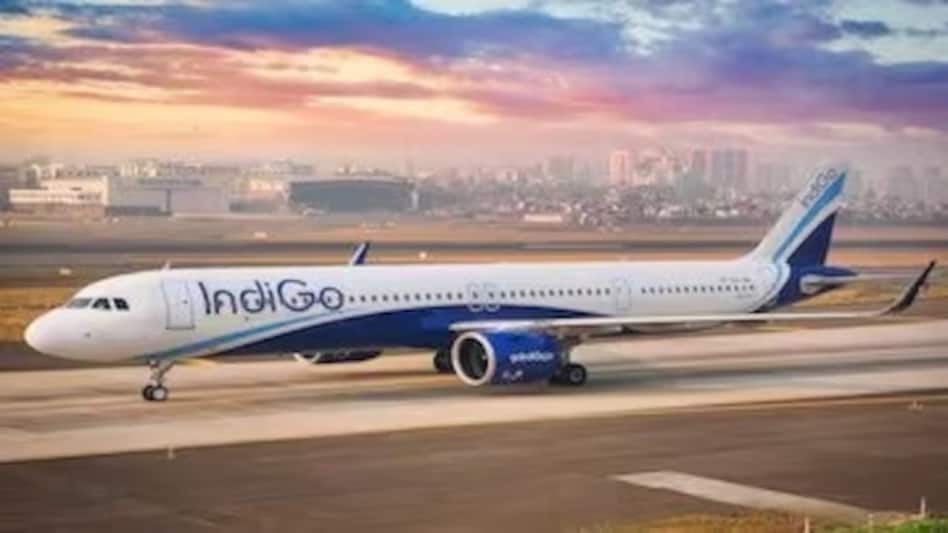
 If IndiGo scales back operations on high-frequency routes for longer period, rival airlines may gain temporary access to its slots.
  If IndiGo scales back operations on high-frequency routes for longer period, rival airlines may gain temporary access to its slots.
 India’s major carriers will outline their fleet and network expansion plans to the Directorate General of Civil Aviation (DGCA) by tomorrow, amid shifting capacity dynamics triggered by the aviation ministry’s directive asking IndiGo to cut 10 per cent of its schedule, sources tell Business Today TV.
Akasa Air and Air India Express, both expecting steady Boeing 737 Max deliveries over the next few months are likely to stick to their existing induction pipelines rather than leasing additional aircraft. Together, the two airlines are set to receive about 10–11 aircraft by March, all part of long-planned orders. Akasa, which took delivery of its 31st Max this week, will use the upcoming aircraft to begin operations from Navi Mumbai and Jewar airports.
Air India Express, currently flying around 110 aircraft, will add a few more planes over the next quarter. While the airline has indicated a broader plan to induct 20–24 Max aircraft, sector watchers say it may phase out additions depending on how long IndiGo’s curtailed schedule remains in place.
Air India, the full-service carrier of the Tata Group, is expected to brief the regulator on its own expansion roadmap. The airline is navigating a multi-year fleet overhaul, with new narrowbody and widebody aircraft entering service alongside cabin upgrades for older jets. Air India’s first line-fit B787-9 is scheduled to arrive by the end of 2025. By end-2026, the airline expects delivery of six new wide bodies: A350-1000s and B787-9s, and at least 20 new narrow bodies.
SpiceJet, meanwhile, is charting a more aggressive course. The airline has already activated 17 aircraft recently through damp leases and re-inductions and plans to introduce 100 additional winter flights while adding more aircraft where possible.
If IndiGo scales back operations on high-frequency routes for a longer period, rival airlines may gain temporary access to its slots. However, the industry's limited spare capacity could constrain how much of this opportunity can be utilised, potentially pushing fares higher in the near term, unless the fare caps exist.
As per the latest communication, IndiGo is expected to operate 1,950+ flights today, carrying over three lakh customers. Early this week, the Civil Aviation Ministry had ordered a 10 per cent reduction in IndiGo’s schedule for its inability to manage operations.
 Coinbase layoffs: Brian Armstrong says AI is reshaping work, trims 14% workforce
 Biocon gets a successor: Why Kiran Mazumdar-Shaw has chosen Claire Mazumdar
 'Won't resign, haven't lost election': Mamata Banerjee after Bengal defeat
 US-Iran war: Govt may have prevented a consumer shock for now but every buffer has a cost
 Inside the political rise of 'Lottery King' Santiago Martin’s family
 M&M Q4FY26 Results: Profit Jumps 42%, SUV Leadership & Strong Revenue Growth
 Sparky Jeans – Building India's Next Denim Brand
 The Vijay Storm: How TVK Ended The DMK-AIADMK Era To Become Tamil Nadu’s Top Party In 2026!
 Anti-Incumbency Warning: Shashi Tharoor Explains Why Bengal’s Verdict Is A Lesson For The BJP!
 Market Strategy Now: Where Should You Invest? | Shweta Rajani Explains
 CreditAccess, Titagarh Rail, Quess Corp shares surge up to 17%; check targets, stop-loss levels and outlook
 Rupee closes at all-time low on renewed US-Iran tensions; analysts see more downside
  Jio Financial, Inox Wind, Indus Towers: How to trade these stocks? Expert strategy | Daily Calls on BTTV
 Kissht IPO subscribed 9.5 times on final day of bidding; GMP rises
 L&T Q4 FY26 results: Profit slips 3% to Rs 5,326 crore; announces final dividend, sets record date