BT: What will drive HCG's growth over the next five years?
MM: Growth will come from expanding capacity, improving utilisation across centres and adding more specialists across the network. We have already added around 200 beds this financial year. Revenue growth has increased to 15%, while EBITDA growth has reached 22% year-on-year.
BT: India's cancer burden is rising. What does that mean for specialised oncology providers?
MM: India recorded an estimated 1.56 million new cancer cases in 2024, according to the International Agency for Research on Cancer (IARC)'s GLOBOCAN 2024 estimates. HCG consults about 500,000 patients annually and treats around 100,000 new patients each year, yet we are still serving only a small part of the overall burden. Demand for specialised oncology care continues to grow across both metro and non-metro markets.
BT: HCG operates in 19 cities today. How do you view your footprint and expansion pipeline?
MM: We have 25 hospitals across 19 cities and hold market-leading positions in 16 of those markets. Many of our centres operate in cities where demand for specialised cancer care continues to grow. In Mumbai, we are currently the second-largest player and expect to become the largest after expansion.
Our strategy is built around regional hubs. Mumbai will support growth into Pune, Aurangabad, Nashik and Nagpur, while Kolkata and Ahmedabad will anchor expansion across eastern and western India.
The pipeline includes greenfield projects, brownfield expansion and acquisitions. We are evaluating opportunities in 10-12 cities, including Pune, Coimbatore, Hyderabad, Chennai, Delhi and Lucknow. At any point, we evaluate five to six acquisition opportunities. Bengaluru, Mumbai and Ahmedabad are all under expansion. Delhi, Hyderabad and Chennai are also markets of interest.
BT: HCG plans to add 1,000 beds. How will that expansion be funded?
MM: The overall capex requirement is expected to be around ₹600 crore over five years. About 40% of the expansion will come through greenfield projects, while 500-600 beds will be added through brownfield expansion.
Greenfield projects typically cost around ₹1 crore per bed, compared with ₹30-35 lakh per bed for brownfield expansion. Brownfield projects are more capital efficient, while greenfield projects help us enter new markets.
BT: Multi-specialty hospital chains are investing heavily in oncology. How do you maintain your advantage?
MM: Creating a cancer block does not make a hospital an oncology specialist. Our advantage comes from more than 35 years of focus on cancer care. We have built expertise across medical oncology, surgical oncology, precision oncology and bone marrow transplantation, supported by a protocol-driven and research-led model.
BT: Revenue has scaled up significantly. What will drive margin expansion from here?
MM: EBITDA has grown broadly in line with revenue, but operating leverage has been affected by investments in digital capabilities, clinical talent, and sales and marketing. There has also been a higher share of institutional business and a shift towards medical oncology, which affects margins at the contribution level. Most of those investments are now behind us. Once a centre crosses around ₹10 crore in monthly revenue, EBITDA margins generally move from 12-15% to around 23-24%. At a centre level, EBITDA break-even typically takes 18-24 months. As utilisation improves and the payor mix normalises, we expect stronger operating leverage.
Mature centres typically deliver EBITDA margins of about 25% and return on capital employed above 20%.
BT: How important are government programmes such as Ayushman Bharat and cancer screening partnerships to your business?
MM: They are important, particularly in screening and early detection. We are in discussions with the Karnataka government on screening programmes for cervical and breast cancer and have similar conversations underway in Gujarat around head-and-neck cancers.
We are also empanelled under Ayushman Bharat in many states because cancer treatment is expensive and many patients depend on government support. The challenge is not only reimbursement rates but also delays in payments.
BT: Diagnostics is becoming a strategic area for many hospital chains. What are your plans?
MM: We currently operate around 20 diagnostic centres and plan to increase that number to 40 over the next three to four years. Diagnostics complements our oncology offering, helps improve patient acquisition and supports earlier diagnosis, which remains critical in cancer care.
BT: Precision oncology is becoming a bigger part of cancer care. How is HCG using genomics and technology?
MM: We have built capabilities across PET-CT, CyberKnife, LINACs, surgical robotics and genomics. Through comprehensive genomic profiling and next-generation sequencing, oncologists can better understand tumour biology before treatment begins, enabling more personalised treatment decisions.
Digital pathology, teleradiology and telemedicine help extend these capabilities across the network. We also operate a large installed base of LINACs and are bringing an MR LINAC to North Bengaluru, which will be the first in Karnataka.
BT: What is the biggest opportunity for HCG over the next five years?
MM: India remains underserved in specialised cancer care. The opportunity lies in expanding access while maintaining quality outcomes. As the cancer burden grows, we see significant scope to build capacity across both metro and non-metro markets.



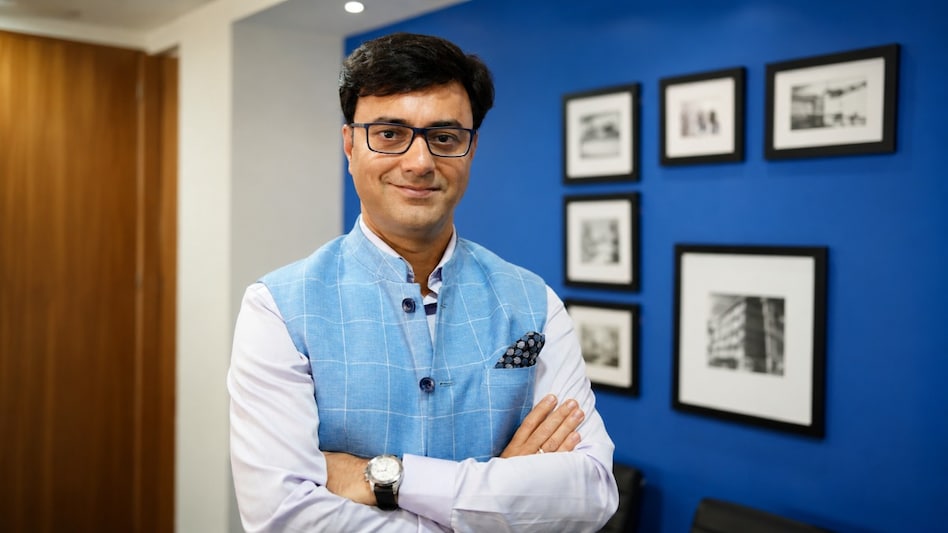 Dr Manish Mattoo, CEO & Executive Director, HCG
 'Don't break it': Trump announces immediate 'energy ceasefire' between Russia and Ukraine
 UPI MDR should be cut from 0.4% to 0.08%: IIT-Bombay report proposes new fee structure
 Hyderabad man injured in Saturday's Riyadh airport attack dies, two sons injured
 How Elon Musk's Starlink could interfere with sovereign nations. Ukraine war reveals the risks
 Riyadh International Airport on fire after second missile strike in two days
 REITs & AI Boom: Can Data Centres And AI-Ready Offices Drive Future Real Estate Growth?
 Should You SIP In REITs During A Market Downturn? Key Risks & Asset Allocation Explained
 REIT Returns Explained: Income, Capital Gains & Risks Investors Need To Know
 REIT Risks Explained: Key Factors Investors Must Check Before Investing In Commercial Real Estate
 Will IRDAI’s Broker Commission Crackdown Make Insurance Cheaper For Consumers?
 BT Market Outlook: The drivers, risks and opportunities for the week ahead
 Market on the back foot, opportunities ahead: where should investors put their money?
 Poonawalla Fincorp Q2 earnings: Net profit zooms 405%, NII at Rs 1,589 crore
  Vedanta, TCS shares to turn ex-dividend; Ola rights issue; 2 stock splits next week
 IPO rush: Rs 50,000 crore worth IPOs to hit Street by Diwali; Jio, Avada to lead fundraise
 Starlink vs Jio vs Airtel vs BSNL: Why India's broadband economics could be hard to crack
 China’s battery profit boom exposes India’s toughest EV manufacturing challenge: Why it matters












