


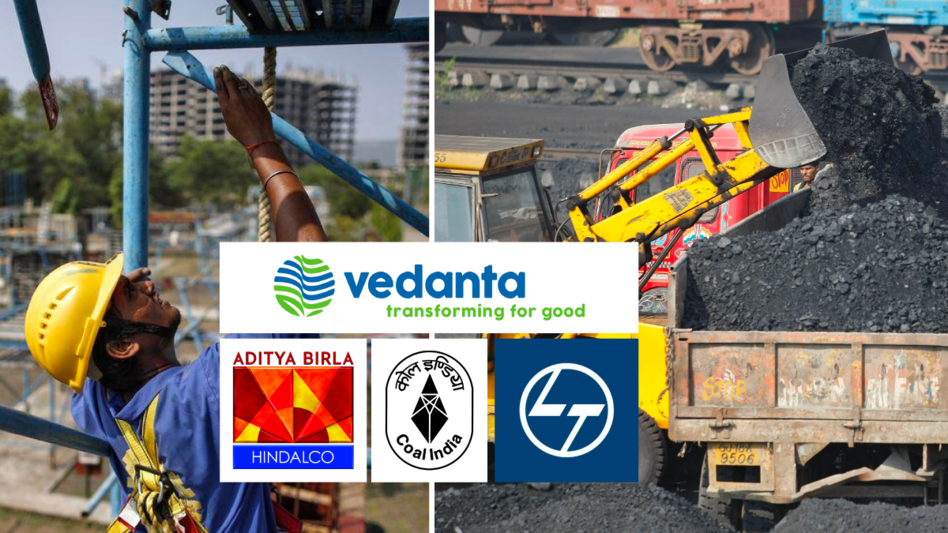
 Having made the right moves, legacy companies are perfectly placed to leverage the government’s infrastructure push. This inherent strength of their business is reflected in the mark these companies have made on the bourses
Mind-boggling valuations. Much-awaited listings. Stocks getting pummelled. Ask anyone tracking the Indian stock markets and they will say that this has been the usual story for the new-age companies that got listed for the past year or so. While the listing gave the start-ups’ existing investors a chance to sell their holdings at astonishingly high returns, the stock price crash thereafter left retail investors frustrated.
In the midst of this, old-economy or legacy companies provided the perfect salve. While they have been around for years, the recent surge in investor interest was on the back of factors such as commodity prices increasing, the uncertainty on geopolitical issues or because these companies made some very smart moves. The revenue growth of these companies has been steady, and profitability often on expected lines. And in these uncertain times, their predictable story found favour with investors. Those leading this surge include names such as L&T, Hindalco Industries, Vedanta and Coal India, and most have improved their ranks on the BT500 list this year. The Rs 7.5 lakh crore in public investment announced in this year’s Budget, coupled with emerging opportunities like allowing the private sector in defence or companies spending more on engineering and construction are the other big positives for these companies. No wonder that they are back on investors’ radars.
 Five-day banking week never up for negotiation, say govt sources
 Google wants to build AI data centres in space: What Project Suncatcher's satellite test means
 Cabinet set to clear revamped Bilateral Investment Treaty as India woos foreign capital
 Insurance distribution under IRDAI lens: Why certified advisers can help consumers choose wisely
  Tata Sons boardroom tussle: The 4 clauses in AoA that could decide who runs the conglomerate
 Greater Noida Bus Fire Kills 9: Smoking, Safety Lapses And ₹60K+ Pending Challans
 4 IPOs Open Today: Orient Cables, Runwal, Ace Vector & German Green Steel In Focus
 Nifty Outlook: Key 22,500–22,800 Support Zone, SIP Strategy & Portfolio Allocation Explained
 Markets In Eighth Week Of Correction: Oil, Bond Yields & FIIs Selling Keep Pressure High
 Rahul Gandhi’s Big Attack On CEC Gyanesh Kumar: ‘Elections Are Rigged’ | BJP Hits Back
 Dove Soft IPO opens on September 30; check price band, issue size and other key details
 Sajjan Jindal-backed JSW One Platforms filed DRHP with SEBI to launch IPO; key details
 NSE chairman calls for reconsidering self-listing of exchanges: Report
 NSE regaining market share in equity options, commodities pick up: Ashish Chauhan
  Vodafone Idea shares rise after introducing free international roaming Greater Noida Bus Fire Kills 9: Smoking, Safety Lapses And ₹60K+ Pending ChallansDove Soft IPO opens on September 30; check price band, issue size and other key details
 PM Modi Invokes Mahatma Gandhi, Says Political Workers Must Keep Working For Social Reform
 Gucci's 'Made in China' sneakers raise questions: Can the luxury brand win back shoppers?
 India vs China manufacturing: Where India stands as Jefferies flags scale, energy and capex gaps












