


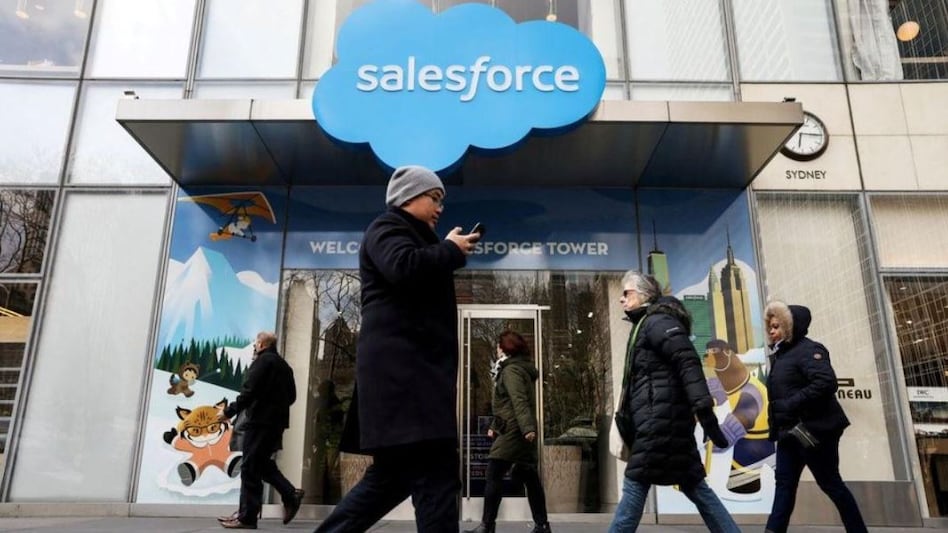
 Salesforce launched Hindi support for Agentforce Voice earlier this month to enable enterprises to support Hindi and Hinglish interactions across customer service channels.
Global CRM firm Salesforce is preparing to add seven more Indian languages to its enterprise voice platform and expand local data hosting infrastructure in India, as companies across sectors move AI and automation projects into production.
The additional Indian language capabilities for Agentforce Voice in Tamil , Marathi , Telugu are currently in beta testing and are expected to be rolled out in the coming weeks, Arun Kumar Parameswaran, EVP and Managing Director, Sales and Distribution, South Asia, Salesforce, told Business Today. Together with Hindi and English, the languages are expected to cover nearly 95-97% of customer language requirements in India, he said.

 Good news for India: Brent crude slips below $80 as hopes rise over US-Iran deal
 SEBI proposes Depository Receipts for REITs, listed InvITs to widen foreign investor access
 'We may have a deal today or tomorrow': US Treasury chief on breakthrough with Iran on Hormuz
 India's first 80-tonne FFSC rocket engine is coming. Here's why it's a big deal
 SIAM flags high chloride levels in E20 fuel, warns of permanent engine part damage, govt responds
  Why Wires & Cable Stocks Could Stay In Focus As AI, Realty & Energy Demand Accelerates
 Real Estate Stocks: Why Top Developers Continue To Offer Strong Long-Term Investment Opportunities
 India's New Tax Bill Seeks To Make Foreign Fund Management More Attractive
 Gold Vs Silver: Which Metal Could Deliver Better Returns In 2026? Vandana Bharti
 Oil Ministry Clarifies Fuel Contamination Media Reports | Only 2 Cases Found Across India
 LIC stake sale: Government exercises green shoe option after institutional book sees robust demand
 What will it take for a sustained bull run on Dalal Street? Kotak Life CIO weighs in
 Earnings recovery boosted market sentiment, rupee outlook improves: Kotak AMC CIO Harsha Upadhyaya
  LIC offer for sale for retail investors on August 5: Analyst decodes the opportunity
 Equities snap four-day gaining streak; late Nifty rally trims losses
 Passport renewal fees may be cut for Indians in UAE after Delhi HC intervention
 Could MDR revive credit and debit cards? Survey suggests higher-value UPI payments may decline
 Civil Aviation Minister visits injured after Air India Phuket-Delhi flight incident; DGCA begins investigation
 Hyundai says sunroof adoption climbs to 57% of sales in FY26LIC stake sale: Government exercises green shoe option after institutional book sees robust demand










