












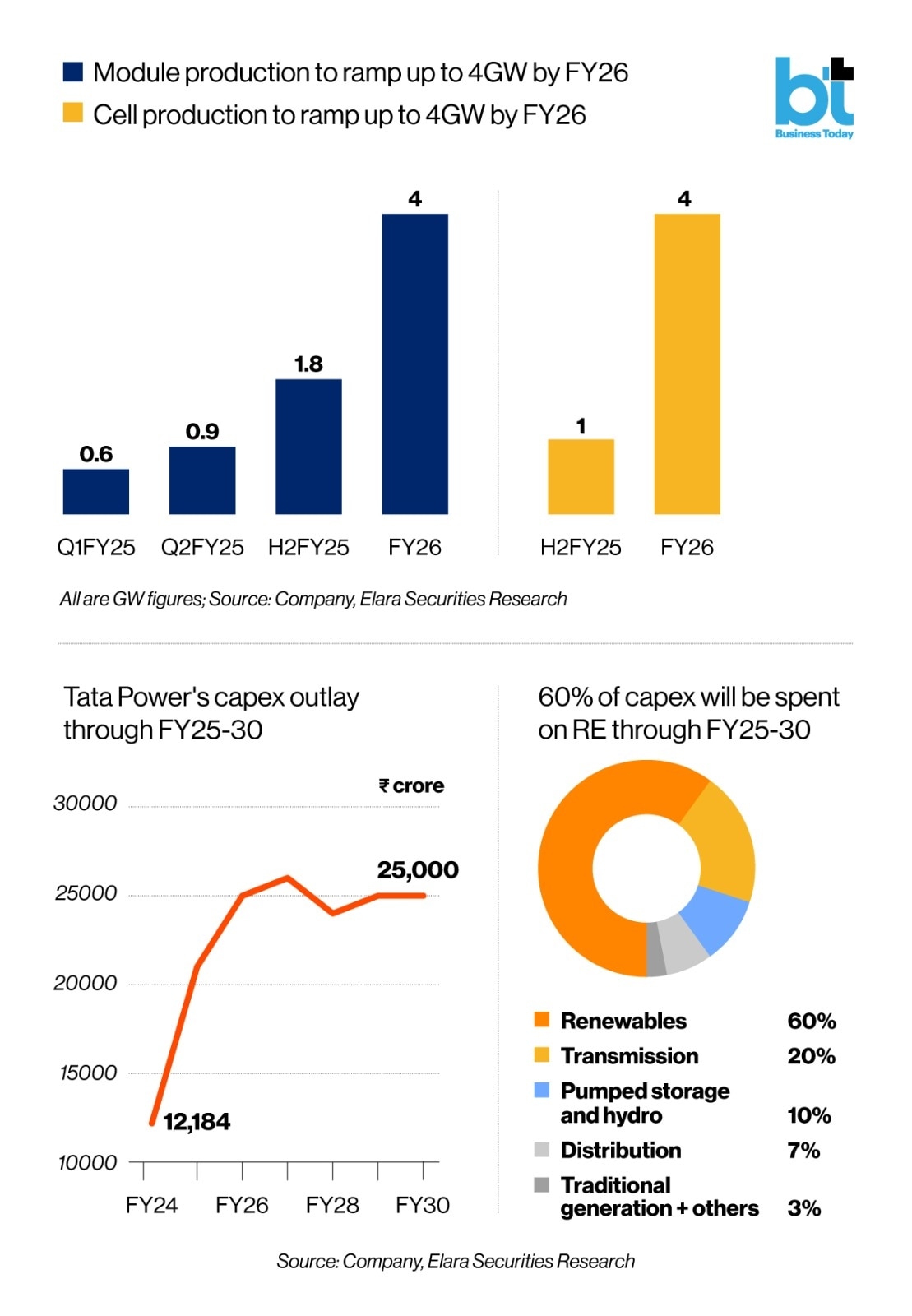



 For FY24, Tata Power reported a revenue of Rs 61,542 crore, up from Rs 56,033 crore in FY23, and a net profit of Rs 4,280 crore compared to Rs 3,810 crore the previous year.
 Tata Power is making a significant push into renewable energy, aligning with global trends that will shape both its investment objectives and capital expenditure (capex) plans.
In a recent media interaction, Praveer Sinha, CEO & MD of Tata Power, shared the company’s ambitious revenue target of Rs 1 lakh crore by 2030, with a net profit of Rs 10,000 crore.

 Sensex volatility spikes during CAS on F&O expiry day; here's what happened
 Nifty IT surges 3%: TCS, Infosys, LTM, HCLTech shares climb after Nvidia's strong results
 'Nothing’s Too Far': Tata Motors unifies all passenger vehicles under new TATA.CARS identity
 Big victory for Anthropic: US court strikes down Pentagon blacklist over 'illegal retaliation'
 179-year wait: Green Card backlog traps nearly 1 million Indians, making up 79% of total queue
 EV Insurance Explained: Battery Damage, Repairs & Insurance Coverage | Personal Finance
 Radhika Gupta On The Money Gap: Why Women Must Manage What They Earn
 IDV Explained: How It Impacts Your Motor Insurance Premium & Claim
 Nepal Flood Crisis: Massive Floods Leave Trail Of Destruction Across Rasuwa, Nuwakot And Chitwan
 Oseltamivir Shortage Explained: Why H1N1 Cases Are Driving Demand & Prices Are Varying Sharply
 Sensex volatility spikes during CAS on F&O expiry day; here's what happened
 Just Dial share price surged 10% today; here's why Nifty IT surges 3%: TCS, Infosys, LTM, HCLTech shares climb after Nvidia's strong results
 Ather Energy shares rise 7% after Rs 1,758 crore block deals; here's why
 Multibagger listing: Tempsens Instruments shares rally over 111% on debutRadhika Gupta On The Money Gap: Why Women Must Manage What They EarnEV Insurance Explained: Battery Damage, Repairs & Insurance Coverage | Personal Finance
 TVS Motor appoints Peyman Kargar as CEO to drive next phase of global expansion179-year wait: Green Card backlog traps nearly 1 million Indians, making up 79% of total queue
 Meet Raul John Aju, the 16-year-old Kerala teen who pays his father ₹2 lakh a month to work at his AI startup


