


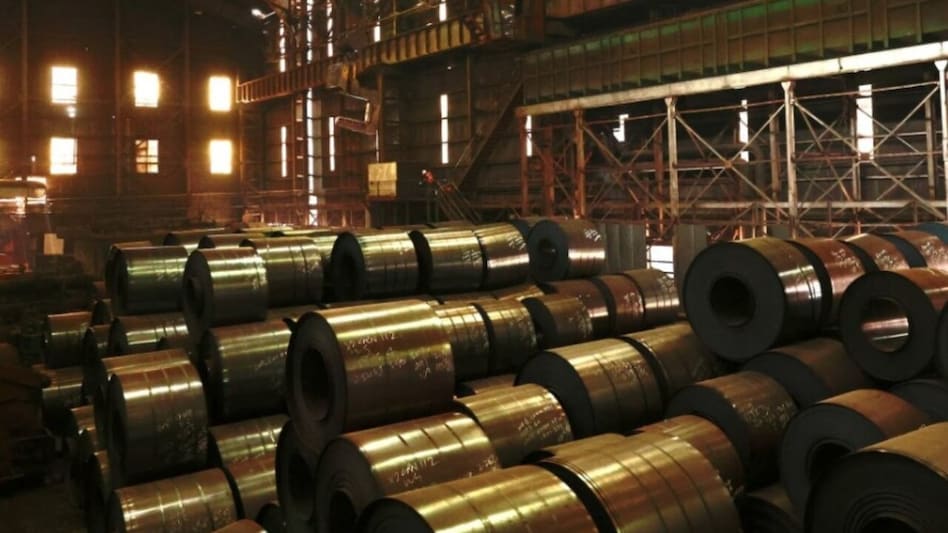
 India is the world’s second-largest steel producer, with demand rising sharply even as it plateaus elsewhere.
Emission intensity for most Indian steel companies has worsened over the last three years, at a time when global peers have achieved reductions, according to a report released Tuesday.
The report from the Institute for Energy Economics and Financial Analysis (IEEFA), ‘Decarbonisation readiness in India’s steel sector’, reveals that the Indian steel sector has embraced climate targets that align with the Paris Agreement. However, this ambition is not matched by corresponding progress in building the operational, technological, and financial infrastructure required.

 Vedanta Q1 profit rises 72% YoY; announces demerger of real estate business into VPPL
 US-Iran war: Trump, team under scrutiny over allegations of playing the stock market; here’s what’s happening
 Without ethanol, petrol could have hit ₹125/litre; no widespread engine failures from E20, says Gadkari
 Indians spent Rs 65,000 crore more on gold in Q2 despite buying less. Here's why
 Here’s Hyundai’s new offering in the Creta segment for the festive season
 Q1 Earnings Show Slow Growth, But Devarsh Vakil Expects Stronger Recovery Ahead For Markets
 India Market Outlook: FII Flows May Fuel Large Cap Rally As Global Money Returns To Indian Markets
 Kia Syros EV First Drive Review | 526 KM Range, Premium Cabin | Better Than Tata Nexon EV?
 Asian Paints Exclusive: B2B Growth To Outpace Market, Competition Still Brutal
 M.P. Set To Become India's Next Telecom Manufacturing Hub | ₹2,000 Cr Investment Planned | Sources
 Sensex, Nifty extend gains as auto stocks shine; what's next?Vedanta Q1 profit rises 72% YoY; announces demerger of real estate business into VPPL
 Tech Mahindra, Coforge, Persistent shares top IT picks: HDFC Securities
  Swiggy Q1 earnings: Net loss narrows to Rs 791 crore, revenue rises 37%
 Can Fin Homes can hit Rs 870-880; buy Home First on dips, says Angel One's Osho Krishan
 From a Mumbai chawl to 2 homes: Here's how 'Musafir Cafe' actress Mahima Makwana turned childhood struggles into success by 26
 Salary doesn't decide your tax filing: Here's what really determines whether you file ITR-1, ITR-2, ITR-3 or ITR-4Here’s Hyundai’s new offering in the Creta segment for the festive season
 'If we don't reject Ramanujan's theorems...': Ex-CEA defends Kamakoti, questions Priyanka Gandhi
 'Have I taken this too far?': Bryan Johnson's quest to beat death hits a moment of doubt










