








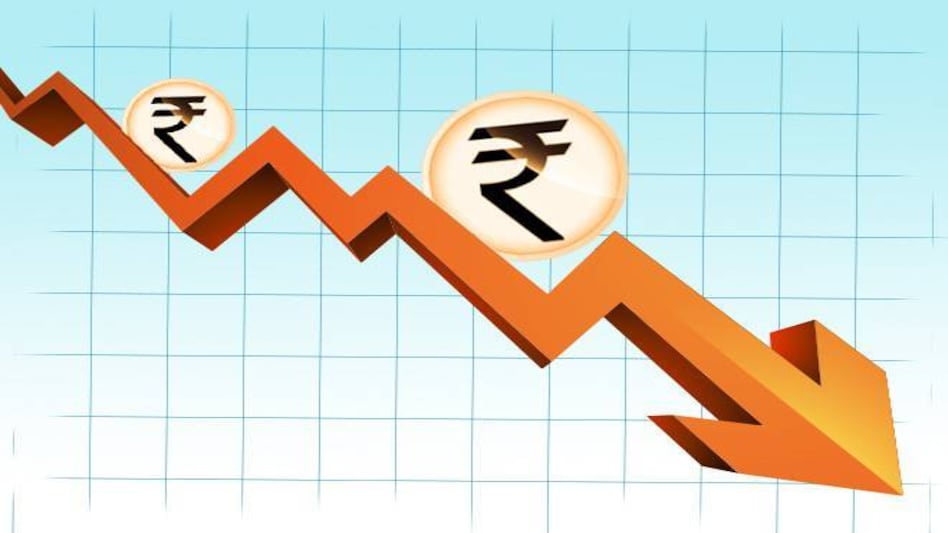
Continuing its intermittent fall against the US dollar, the Indian rupee dived to another all-time low of 72.98 on Tuesday. The currency has lost over 13 per cent in value against the greenback since the beginning of the year.
The rupee slid 47 paise to settle at a record low of 72.98 against the US currency due to surging crude oil prices and escalating trade war worries.
Meanwhile, the International Monetary Fund (IMF) said that the Indian rupee has 'effectively' depreciated only 6-7 per cent this year after adjusting it to inflation, almost half of the actual drop in the value of the currency this year.
The IMF, however, warned that the rupee depreciation would jack up the prices of imported goods such as oil and petroleum products, potentially putting an upward pressure on inflation.
Panic dollar demand from importers and speculative traders sent the home currency sinking to a historic low of 72.99 in late afternoon deals with very little chance of RBI intervention.A sharp spike in international crude oil prices weighed on the trading front towards the tail-end session even as the US dollar fell to seven-week lows after Donald Trump announced fresh 10 per cent tariffs on Chinese imports.
US President Donald Trump Monday night announced to impose additional 10 per cent duties on Chinese imports worth USD 200 billion.
Benchmark Brent crude futures were up USD 1.14 a barrel to USD 79.19 a barrel, after hitting a high of USD 79.37 in early Asian trade.
Since Monday, the rupee has plunged by 114 paise or more than 1.5 per cent as trade war concerns resurfaced and crude oil rebounded.
The stubbornly high global crude oil prices are opening up a can of worms to heightened inflation risks and likely to disrupt government's fiscal maths along with deteriorating global financial conditions.
Considering that India is a net importer of crude oil, the impact of this imported inflation is expected to be significant.
The benchmark 10-year sovereign yield also spiked to 8.14 per cent.
At the inter-bank foreign exchange (forex) market, the rupee opened weak at 72.51 against Monday's close of 72.55 on sustained dollar demand.
However, overcoming the initial volatility, the local unit rebounded to hit a session high of 72.35 before taking a big reversal.
Reeling under an unprecedented speculative sell-off, the rupee plunged sharply to hit an all-time low of 72.99 before ending at a record low of 72.98, showing a steep loss of 47 paise, or 0.65 per cent.
It shed a whopping 67 paise against the USD yesterday.
The Financial Benchmarks India private limited (FBIL), meanwhile, fixed the reference rate for the dollar at 72.3796 and for the euro at 84.7657.
IMF spokesperson Gerry Rice said the currencies of many of India's trading partners, including those in the emerging markets, too have depreciated against the dollar.
"As a result, so far this year the real effective depreciation of the Indian rupee compared to December 2017, by our estimates, is between six and seven per cent," Rice said.
The real effective exchange rate (REER) is the weighted average of a country's currency in relation to an index or basket of other major currencies, adjusted for the effects of inflation.
He was responding to a question on the fall of the Indian currency in the last few months.
Observing that India is a relatively closed economy, he said the contribution of the net exports to growth in April to June quarter was again stronger than expected and the real depreciation of the rupee can be expected to reinforce this trend.
"On the other hand, the depreciation will obviously raise the prices of imported goods such as oil and petroleum products, potentially putting an upward pressure on inflation," he said.
With PTI Inputs
 Vodafone Idea shares: Emkay doubles Vi target price, upgrades stock from 'Sell' rating
 SBI Q3 earnings stronger than private banks for 3rd quarter; price targets raised
 Are Indian refiners avoiding purchasing Russian oil? Here’s what we know
  India-US trade deal: No reprieve for Tesla despite tariff cuts for high-end American cars
 US visa bond: B1/B2 visitors from 38 countries to pay a $5,000–$15,000 fee on entry
  BT Golf 2025-26 Kochi, Kerala Awards Ceremony Marks A High-Energy, Successful Conclusion
 Golf Is An Addiction. We Eat And Sleep Golf!
 The Fairway Fixes Everything. Mindset, Life, Relationships
 BT Golf LIVE: Join AU Small Finance Bank Presents BT Golf 2025-26 For Its 4th Leg In Kochi, Kerala
 AI Will Change MBAs, Not Leadership: IMD President On India’s Global Education Rise
 Kalyan Jewellers: MOFSL retains 'Buy' rating, shares target price post Q3 results
 Stock market today: Gift Nifty rises over 200 points; key levels for Nifty, Sensex & Nifty BankSBI Q3 earnings stronger than private banks for 3rd quarter; price targets raisedVodafone Idea shares: Emkay doubles Vi target price, upgrades stock from 'Sell' rating
 Stocks in news: RIL, Tata Steel, IREDA, Kalyan Jewellers, BEML and more