








 SEBI allows exchanges to move to T+1 settlement
 SEBI allows exchanges to move to T+1 settlement
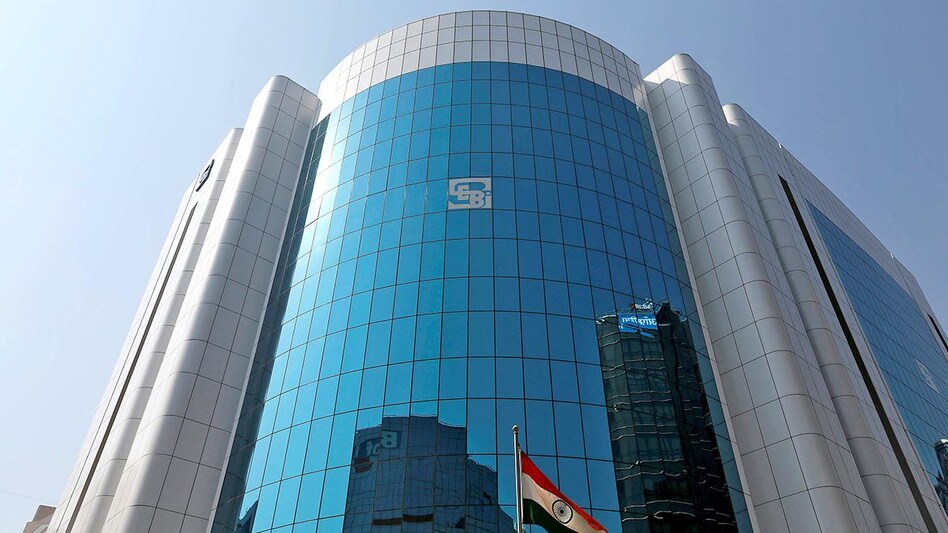
Capital market regulator Securities and Exchange Board of India (SEBI), on Tuesday, gave its go-ahead to shift to the T+1 settlement cycle from January 1, 2022. Here is all you need to know about settlement cycles and what changes with the proposed T+1 mechanism.
What exactly is a settlement cycle?
Stock market transactions work in a slightly different manner compared to a bank transfer or any instant fund transfer mechanism. When money is transferred from one account to another using any of the digital ways, the transfer happens instantly in most cases. There is no lag between the transaction and the actual money transfer. The stock market currently operates on a T+2 settlement cycle. This means that if an investor has initiated a buy transaction today, then the actual shares would be credited in his or her demat account on the second day from the day of trade or ‘T’ day. Similarly, in the case of a sell transaction, the seller would get the money credited on the second day. This is known as the settlement cycle i.e., the time taken to settle the trade.
What changes with the proposed T+1 settlement cycle?
Simply put, stock market trades will get settled in half the time that it takes currently. Under the T+1 cycle, if an investor has bought shares today, his demat account will be credited with the shares tomorrow. And, if shares have been sold, then the money would be credited the next day instead of the second day from the day of the transaction. A faster settlement cycle could lead to higher volumes as well since the turnaround time for selling shares or getting the sale proceeds gets shorter. To be sure, SEBI has not made it mandatory for exchanges to switch to T+1 cycle. Stock exchanges have been given the flexibility to choose between T+2 or T+1 but any switch can be made only with a month’s notice and once a switch has been made, it has to be continued for at least six months.
Are there any concerns regarding T+1 settlement cycle?
While on the face of it, T+1 means faster trade settlements leading to better efficiency levels, a section of market participants has expressed quite a few concerns especially those related to operational and compliance issues. The Association of National Exchanges Members of India (ANMI), which is the umbrella body of broking firms, had earlier written to SEBI that a switch to T+1 settlement cycle will pose a lot of operational and technical challenges. One of the issues it highlighted was that the banking system is not geared up to work in a T+1 system. It also said that foreign investors might face issues as they operate from different time zones and geographies and the shorter settlement cycle might pose a challenge at times.
Also read: SEBI gives exchanges option to move to T+1 settlement
 ‘No one can dictate our behaviour’: Iran rejects US demands on uranium enrichment despite talks
 Are Indian refiners avoiding purchasing Russian oil? Here’s what we know
  Stocks in news: RIL, Tata Steel, IREDA, Kalyan Jewellers, BEML and more
  Jeffrey Epstein's 'baby ranch' plan: New files detail disturbing plans tied to his New Mexico estate
 Claims of sovereignty loss in India-US trade deal ‘absolute nonsense’: Piyush Goyal
 BT Golf 2025-26 Kochi, Kerala Awards Ceremony Marks A High-Energy, Successful Conclusion
 Golf Is An Addiction. We Eat And Sleep Golf!
 The Fairway Fixes Everything. Mindset, Life, Relationships
 BT Golf LIVE: Join AU Small Finance Bank Presents BT Golf 2025-26 For Its 4th Leg In Kochi, Kerala
 AI Will Change MBAs, Not Leadership: IMD President On India’s Global Education Rise
 Stocks in news: RIL, Tata Steel, IREDA, Kalyan Jewellers, BEML and more
  RIL, SBI, Kotak Bank, Kalyan, HAL, BEML, BDL among stocks in focus next week; here’s why
 NSE IPO may unlock mega gains for billionaire investors RK Damani, Premji
 SBI Q3 Results: Profit jumps 24% to Rs 21,028 crore; asset quality improves
 IDBI Bank stake sale: Kotak Mahindra Bank says ‘has not submitted a financial bid’