


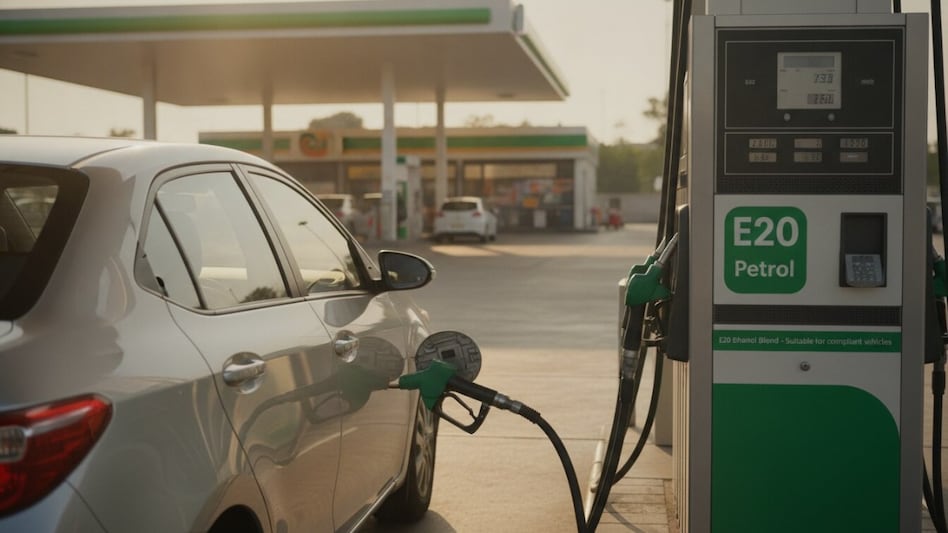
 For the current Ethanol Supply Year (November 2025 to October 2026), the government said OMCs are procuring ethanol at around ₹71 per litre
The Centre on Thursday defended its ambitious Ethanol Blended Petrol (EBP) Programme in the Lok Sabha, saying the initiative is aimed at strengthening India's energy security and supporting farmers rather than maximising profits for public sector oil marketing companies (OMCs).
The clarification came in response to a question on whether ethanol costs more than petrol and why the government continues to promote ethanol-blended fuel.

 Without ethanol, petrol could have hit ₹125/litre; no widespread engine failures from E20, says Gadkari
 'Discussions with Meta on policy matters in a week,' says MeiTY secretary after PM Modi's post removed temporarily from Facebook
 '3x leveraged single-stock ETFs...pure gambling': Capitalmind CEO on what fuelled Kospi crash
 N Chandrasekaran’s reappointment: Tata board believes veteran’s association would benefit the company immensely
  US-Iran war: Trump, team under scrutiny over allegations of playing the stock market; here’s what’s happening
 Why Financial Planning For Women Needs A Separate Playbook | Personal Finance | Money Today
 India-China Border Trade Resumes | Nathu La, Lipulekh & Shipki La Passes Reopen
 Syrma SGS Q1 Results: Net Profit Doubles | Management On Earnings Beat, QIP & Growth Outlook
 Daily Calls: Ask Your STOCK MARKET TODAY QUERIES | Market Update | Share Market News Today
 KPIT Management Sachin Tikekar & Priya Hardikar On Q1 Results, OEM Slowdown & FY27 Outlook
 Swiggy Q1 earnings: Net loss narrows to Rs 791 crore, revenue rises 37%
 Can Fin Homes can hit Rs 870-880; buy Home First on dips, says Angel One's Osho Krishan
 Bajaj Finance Q1 earnings: Net profit rises 27%, NII at Rs 12,571 crore '3x leveraged single-stock ETFs...pure gambling': Capitalmind CEO on what fuelled Kospi crash
 BTTV Exclusive | KPIT Tech co-founder, CFO on why clients' issues are structural, not cyclicalWhy Financial Planning For Women Needs A Separate Playbook | Personal Finance | Money TodaySwiggy Q1 earnings: Net loss narrows to Rs 791 crore, revenue rises 37%Can Fin Homes can hit Rs 870-880; buy Home First on dips, says Angel One's Osho Krishan
 Samsung Galaxy S24 Ultra, S25 Ultra users report battery drain after July update'Discussions with Meta on policy matters in a week,' says MeiTY secretary after PM Modi's post removed temporarily from Facebook










