


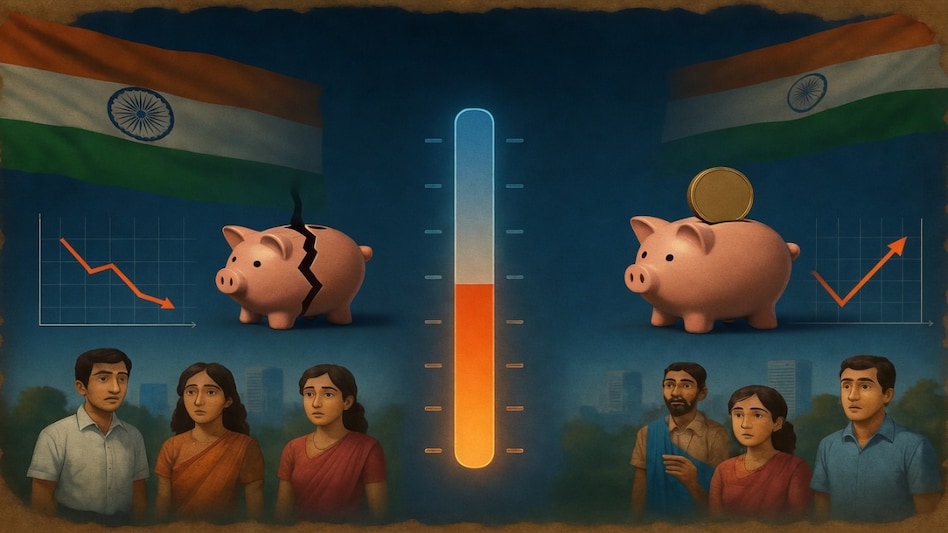
 While Gujarat had a financial maturity index of 33.6 on a scale of 100, Rajasthan had a reading of 32 on the index
A new report finds that financial maturity, including awareness, access and adoption, remains low and unevenly distributed in India. The study based on respondents across Gujarat and Rajasthan on their financial maturity showed that both states had an overall similar reading on the financial maturity index.
Don't Miss: Here’s what UNESCAP has to say about India’s growth

 FCNR(B) windfall lifts NBFCs, small private banks: Why these stocks may be the bigger winners
 India’s energy lifeline runs through the Indian Ocean: Why this maritime corridor matters
 20 Asia-Pacific stocks with up to 145% upside: Full ‘Going For Glory’ list, no Indian stock included
 Govt won't step into Singapore Airlines' Air India call, says Singapore minister
  Tax filing 2026: Missed crypto income in ITR? Why investors could receive an Income Tax notice
 Couples & Tax Planning: How Smart Expense Planning Can Help Reduce Family Tax Outgo
 Mutual Fund Allocation: How Much Should Investors Allocate To Large, Mid & Small Cap Funds?
 LIC CEO On Sustaining Blockbuster Q1 Growth Amid Market Uncertainty
 Travel Insurance Mistakes: Sub-Limits, Pre-Existing Conditions & Medical Evacuation Explained
 Home Loans & Insurance: How Couples Can Structure Them For Tax Efficiency
 APL Apollo, GNFC, Apar, Force Motors among stocks to turn ex-dividend next week; big payouts in focus
 LIC weighs NSE IPO strategy: CEO says market conditions, valuation to decide final move
 IHCL, LemonTree, Chalet among 5 hotel stocks to buy; analysts see up to 49% upsideFCNR(B) windfall lifts NBFCs, small private banks: Why these stocks may be the bigger winners20 Asia-Pacific stocks with up to 145% upside: Full ‘Going For Glory’ list, no Indian stock included
 Delhi rain this week: IMD predicts more showers and cooler days, with waterlogging a concern for commutersAPL Apollo, GNFC, Apar, Force Motors among stocks to turn ex-dividend next week; big payouts in focusCouples & Tax Planning: How Smart Expense Planning Can Help Reduce Family Tax Outgo
 Jio at 10: How Mukesh Ambani’s telecom bet transformed India’s digital economyLIC weighs NSE IPO strategy: CEO says market conditions, valuation to decide final move












