












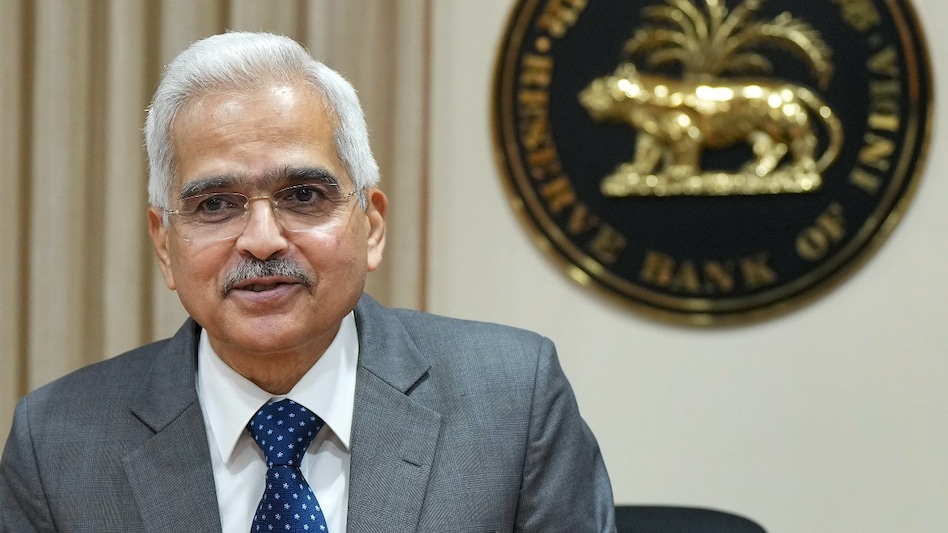
 Five out of six MPC members voted to maintain policy rates, external member Nagesh Kumar voted in favor of reducing the policy rate by 25 basis points.
 Five out of six MPC members voted to maintain policy rates, external member Nagesh Kumar voted in favor of reducing the policy rate by 25 basis points.
RBI Monetary Policy Committee's new member Nagesh Kumar, in the October meeting minutes, noted that despite the healthy balance sheets of companies and government reforms, private investment has yet to gain momentum. Kumar highlighted the ongoing demand deficits in both domestic and international markets.
Kumar highlighted that the primary driver of the current slow pace in the manufacturing and industrial sectors is the low demand. This decrease in demand is reflected in India's export numbers, which dropped by 9.3% in August, and is also apparent in key domestic industries such as cement, iron, steel, and chemicals, all of which have seen negative growth.
“Given that inflationary expectations have been successfully anchored and industrial demand in both domestic and export markets is flagging, a rate cut could help revive demand and boost private investment,” said Kumar, who is director and chief executive of the Institute for Studies in Industrial Development.
It is to be noted that earlier this month, the MPC of the central bank decided to maintain the repo rate at 6.5 per cent for the tenth consecutive meeting, with a majority vote of 5-1. The MPC unanimously agreed to shift its stance from "withdrawal of accommodation" to "neutral". Five out of six MPC members voted to maintain policy rates, while newly-appointed external member Nagesh Kumar voted in favor of reducing the policy rate by 25 basis points.
Given the current inflationary trends and the flagging demand in both domestic and export markets, Kumar argued that it is an opportune moment for the RBI to begin normalising monetary policy by cutting interest rates. He cautioned that if India does not follow the global trend of rate cuts, the rupee could appreciate further, potentially harming the competitiveness of Indian exports.
Citing the successful anchoring of inflation expectations, Kumar advocated for a 25 basis point cut in the repo rate to help revive demand and boost private investment.
Kumar highlighted that while India remains the fastest-growing large economy globally, with relatively low inflation, exchange rate stability, and substantial foreign exchange reserves, emerging trends are indicating a potential economic slowdown.
Economic growth is projected to decelerate from 8.2 per cent in 2023-24 to 6.7 per cent in the first quarter of 2024-25.
Despite the government’s infrastructure push through record capital expenditure, private investment has not responded as hoped, partly due to the higher cost of capital since the RBI started raising policy rates in March 2022.
Kumar also mentioned that general economic conditions, according to various surveys, have worsened compared to a year ago, with moderating business sentiment and demand across major manufacturing sectors.
China +1 strategy
Despite the challenges, Kumar said there is an opportunity for India in the global shift towards diversifying supply chains, commonly referred to as the China+1 strategy.
Kumar said the disruptions caused by the pandemic have prompted global companies to reduce their reliance on China, and India could capitalise on this trend if it improves its investment climate, logistics, and cost of doing business.
Kumar highlighted Apple’s decision to expand iPhone production in India through its vendors like Foxconn as an example of this opportunity in action.
Kumar stated that India needs to stay alert in preserving its competitiveness, especially amidst increasing protectionism and trade wars in the West. The substantial surplus industrial capabilities in China, along with trade barriers, may present significant obstacles to India's attempts to expand its manufacturing industry.
What RBI Governor said
In his monetary policy statement, RBI Governor Shaktikanta Das said: “Domestic growth has sustained its momentum, and the global economy has remained resilient since our last meeting. However, downside risks persist due to geopolitical conflicts, financial market volatility, and elevated public debt. On a positive note, world trade is showing signs of improvement.”
Governor Das confirmed that India's real GDP increased by 6.7% in the first quarter. The RBI maintained its GDP forecast for FY25 at 7.2%. The projections for the second quarter remained unchanged at 7.2%. However, there was an upward revision for the third quarter to 7.4% from 7.3% and for the fourth quarter to 7.4% from 7.2%.
 Waiting for Green Card? Return to your country first: Trump admin ends ‘loophole’
 ‘Massive, absurd’: Experts react to proposed US Green Card policy shift, H-1B workers in panic
 RBI to transfer record Rs 2.87 lakh crore surplus to GoI, but will it enough to control fiscal deficit from the war shock?
 Inside Swiggy’s battle to become an Indian-owned company and why Eternal had it easier
 How Sun Pharma is expanding innovative medicines business as Organon deal adds new therapies
 Honda City launched, ZR-V e:HEV Coming Soon • Double Digit Growth Target • New SUVs Incoming
 U.S. Tightens H-1B Rules As Visa Applications See Sharp 38% Decline
 Swiggy’s India-Control Plan Fails After Shareholders Reject Key Proposal
 VA Tech Wabag Q4 Results | Management On Growth, Margins & Massive Order Pipeline
 Daily Calls LIVE: Ask Your Gold Related QUERIES | Gold Update LIVE | Share Market News Today
 Wipro announces record date for Rs 15,000 crore share buyback; details here
 Bumper dividend alert! Rs 506 per share by this company — Who will be eligible?
 Vedanta Demerger: Fair value of Malco, Talwandi Sabo & other Vedanta companies — Explained
 Are India-focused funds showing early signs of recovery after 11 weeks?
 Adani Power, Adani Green, APSEZ share price targets: Bernstein on what funds may have missed