


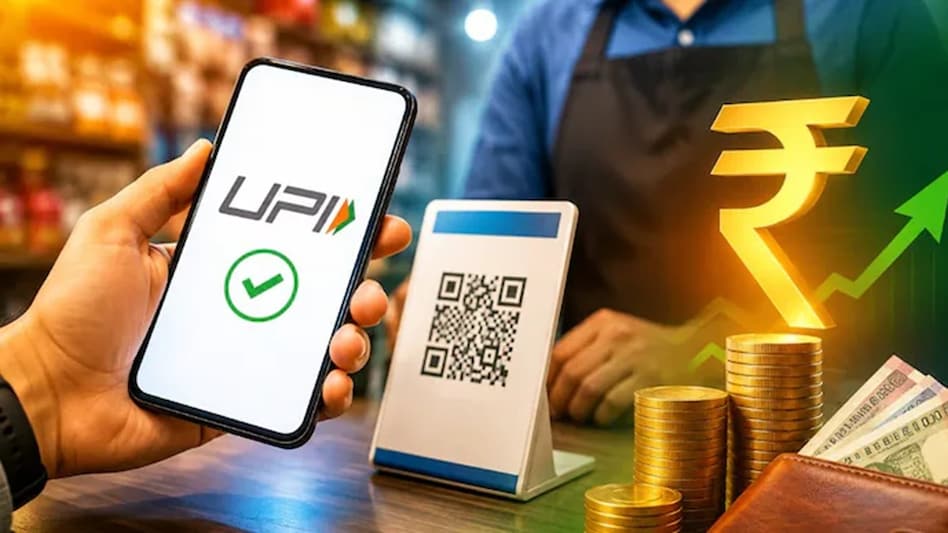
 RBI Governor Sanjay Malhotra on Wednesday said it was too premature to talk about how things were going to pan out as the government was still carrying out the amendment.
Will you have to pay a charge for UPI (Unified Payments Interface) payments in the future? That is a question on many people's minds after the Finance Ministry introduced the Payment and Settlement Systems (Amendment) Bill, 2027 in Parliament, paving the way for the possible introduction of a Merchant Discount Rate (MDR) on digital payment modes, including UPI.
The Reserve Bank of India (RBI) Governor Sanjay Malhotra on Wednesday said it was too premature to talk about how things were going to pan out as the government was still carrying out the amendment. He said that their task was to continue strengthening this public infrastructure.
"Costs have to be paid by someone. We all want that this public infrastructure should continue to strengthen, become more efficient... We continue to do that. That is our primary focus as of now," Malhotra told reporters in an interaction following the monetary policy committee announcement.
MUST READ: MDR on UPI transactions over ₹2,000? Here’s what we know so far
As of now, there are no charges on UPI payments, unlike other payment instruments like credit and debit cards where an MDR is levied. The aim behind keeping UPI free was to drive widespread adoption of digital payments.
However, in the last few years, the scale and size of UPI have grown significantly. According to the latest data released by National Payments Corporation of India (NPCI), UPI transactions hit a record high of Rs 29.9 lakh crore in July 2026, with volumes touching 23.66 billion. As it continues to scale, many argue that without MDR, it will be financially difficult to sustain.
The talk is that UPI payments of higher-value transactions, say above Rs 2,000, may be levied an MDR, and this will only be for merchant transactions and person-to-person payments.
The bill introduced in the Parliament as such doesn't prescribe any MDR rate. There would be a need for legislative approval for any such levy, and the RBI will also have to issue separate guidelines.
Governor Malhotra said on Wednesday that one would have to wait and see. He pointed out that consumers were already in a way paying a charge, basically signalling that while there may not be any direct fee right now, it may still be getting passed through the economy indirectly.

 How Sun Pharma is avoiding a tariff hit by agreeing to MFN pricing for US Medicaid
 BT EXCLUSIVE: Can the soundbox become a bank branch?
 GST mop up rises 14.8% to nearly ₹2 lakh crore in August, refunds climb 68%
 Purple Style Labs IPO: Pernia Qureshi sends legal notice over ‘Pernia’ rights; Axis Capital revises note
 Who is George Kovoor? PepsiCo veteran takes charge as Parle Biscuits CEO
 Modi, Putin, Xi, Pezeshkian At SCO: Is Trump Facing A New Anti-U.S. Power Bloc?
 Two Kerala Women Die In California; Families Await Answers And Their Daughters’ Return Home
 PAK’s Digital Terror Plot: How ISI-Backed Networks Hide Behind Anonymous Online Chats
 RSS Chief’s Mohan Bhagwat’s ‘Vishwaguru’ Message Sparks Political Clash Over India’s Idea Of Service
 Why Are Himalayan Disasters Increasing? Nepal, Uttarakhand & Sikkim Sound The Alarm
 Sugar stocks: Why Balrampur Chini, Bajaj Hindusthan, Dwarikesh Sugar, others are falling today
 Titan, PC Jeweller, Manappuram Finance, Kalyan Jewellers shares fall up to 7% post PM Modi's appeal
  GIC Re shares: Why Angel One sees 25% upside on this PSU reinsurer
 Tata Elxsi shares climb after pact with Sarla Aviation for Shunya aircraft; details here
 Auto ancillary stocks in focus: India to play big role in global supply chain, says Asit Bhandarkar
 Rajiv Kumar pushed for changes at HDFC Bank; Sashidhar Jagdishan chose to step down: Report
  Hyundai Motor India posts record sales in August
 ‘Shark Tank India's aftermath turned out to be good’: YouTuber Gaurav Taneja on getting ₹300 cr valuation for Beast Life
 Deepa Jewellers IPO Opens Today: Should Investors Subscribe? Key Positives & Risks Explained
 FM Nirmala Sitharaman’s First Reaction On Better Than Expected GDP Growth Figures For Q1












