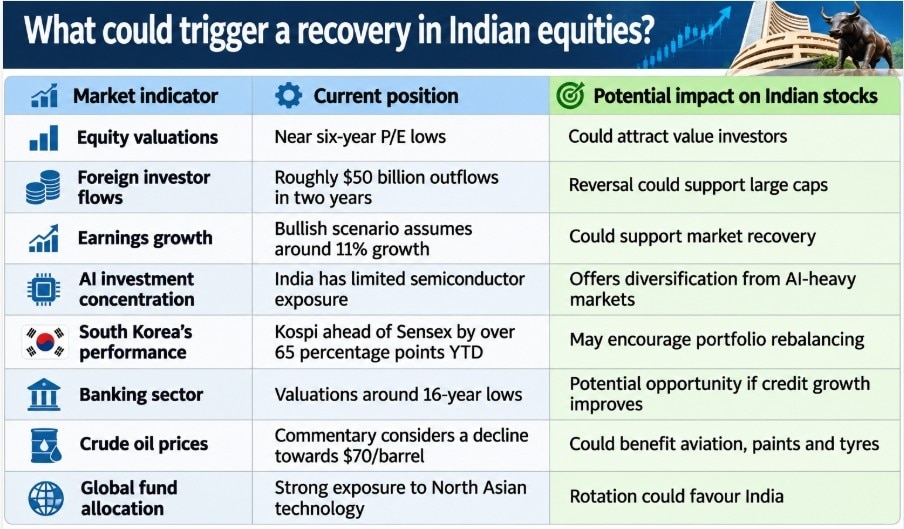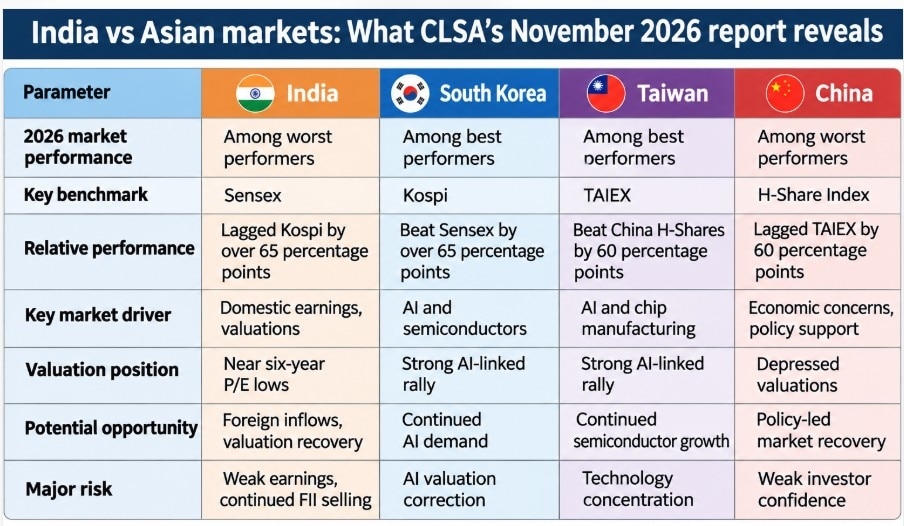



 India's limited exposure to semiconductor and AI hardware companies has been a major reason for its underperformance against Taiwan and South Korea.
Indian stocks may be approaching a turning point after a prolonged period of underperformance, with valuations at their cheapest in more than six years even as South Korean and Taiwanese equities have surged on the back of the artificial intelligence (AI) boom.
According to CLSA's Bits & Pieces report dated November 6, 2026, India and China rank among the worst-performing major global equity markets year-to-date, while Taiwan and South Korea have emerged as leading outperformers.

 AI stock rout: Jefferies increases India allocation to 14%, trims exposure to Korea and Taiwan
 Gold at $3,800–4,000: Could an AI spending crash trigger the next bullion rally? Jefferies explains
 'Emergency was a mistake...': Sonia Gandhi says Indira Gandhi eventually regretted 1975 decision
 Coca-Cola India bottler files IPO papers with SEBI; nearly 100 crore shares on offer, revenue rises 20%
 E20 petrol row: Centre rejects Karnataka's 31% ethanol claim, says all 893 samples passed quality tests
 PROMO | Muhurat Trading Special: Top Experts Share Market Insight & Investment Tips For Samvat 2083
 Agniveer Scheme Gets 2-Year Extension | What Changes For Agniveers?
 Gold Price Target ₹2 Lakh By Next Dhanteras? Ajay Kedia Expects Fresh Rally Despite Volatility
 Gold Prices Down 30%: Why Ajay Kedia Sees A New Bull Run Ahead | Gold & Silver Outlook
 Samvat 2083 Outlook: Why Investors Should Focus on the Next 10 Years, Not 6 Months

 Diwali Muhurat Trading 2026: NSE, BSE timings, Monday market schedule; what investors should knowAI stock rout: Jefferies increases India allocation to 14%, trims exposure to Korea and Taiwan
 Muhurat Trading 2026: Banks, chemicals or AI infrastructure — where are brokerages placing their bets?
 SEBI's new rules from November 7: Can you settle a market violation by paying ₹3 lakh?Gold at $3,800–4,000: Could an AI spending crash trigger the next bullion rally? Jefferies explains
 'Ramayana' box office collection day 3: Ranbir Kapoor, Yash-starrer epic film sails nears ₹200 crore in India
 Ex-Tech Mahindra executive shot dead over dog, parking dispute during Diwali visit to Faridabad
 PPFAS beats benchmark 99.6% of the time, but HDFC leads on returns: Which flexi-cap fund should you choose?
 ₹1 lakh in cash on a silver plate: Gujarat trader’s Diwali bonus leaves employees in tears
 Quote of the Day by Anand Mahindra: 'Sometimes the only kind of innovation comes when you have some solitude; when you step away'