


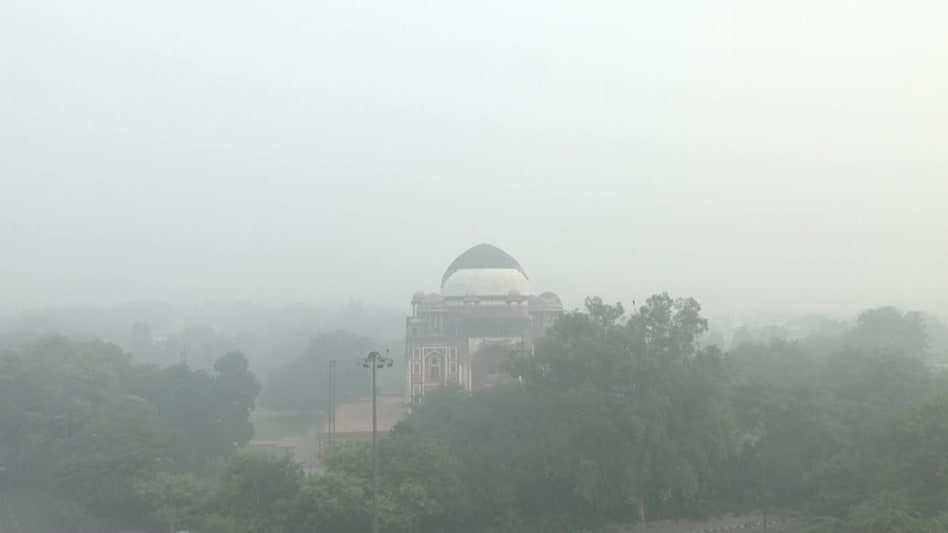
 Delhi's 24-hour average air quality index was at 313 on Sunday versus 248 on Saturday.
 Delhi Environment Minister Gopal Rai on Monday announced that firecrackers have been banned in the national capital during Dussehra. He also appealed to Delhiites to cooperate in reducing air pollution, saying "whatever work we do will have an impact on us only."
He also announced that the 'Red Light On, Gaadi Off' campaign will start from October 26. This campaign is aimed at reducing air pollution in the city by encouraging people to turn off their engines while waiting at red lights.

 Essel Group debt: Now, LIC Housing Finance, Union Bank to challenge NCLT's repayment plan
 'Essel Group repaid ₹43,000 crore debt': Subhash Chandra seeks independent audit to examine his debt
 India should create 1,580 Suzukis: Piyush Goyal urges Japan to boost investment
 Solar may remain king, but India’s next renewable boom could be in batteries and transmission
 Why Adani and Tata Power are turning to foreign nuclear reactors over local models
 Hitachi Stock Doubles In 6 Months: Why It Became The Top Portfolio Performer Of 2026
 TCS, Infosys In Value Zone? Why AI Could Be The Key To Their Next Big Re-Rating
 Gold & Silver Outlook: New Record Highs Ahead? Expert Predicts Multi-Year Commodity Rally
 YouTube & Instagram Income Tax Rules: What Content Creators Need To Know Before Filing ITR
 Why Fund Manager Aniruddha Sarkar Is Big On SML Mahindra | Trucks, Buses & Growth Outlook
 Jio Platforms IPO gets SEBI nod: Rs 27,500 crore debt repayment plan, $100 billion valuation in focus
 Closing Auction Session: Why the system expected to reduce volatility is still seeing occasional wild swings
 RIL-backed penny stock hits 52-week low; firm clarifies on high trading volume
 Happiest Minds shares slip despite IT stocks surge; here's what is weighing on the stock
 BEL, Solar Industries shares remain Nuvama's top defence picks; here's what it said on BDL, Data Patterns, HAL
 GST Council set to meet on September 12; ITC norms, state revenues likely on agenda
 Budget 2027-28 preparations commence with pre-Budget meetings from October 12Essel Group debt: Now, LIC Housing Finance, Union Bank to challenge NCLT's repayment planWhy Adani and Tata Power are turning to foreign nuclear reactors over local models
 Tim Cook’s compensation: How much Apple’s CEO made from salary and stocks












