Safety surprise
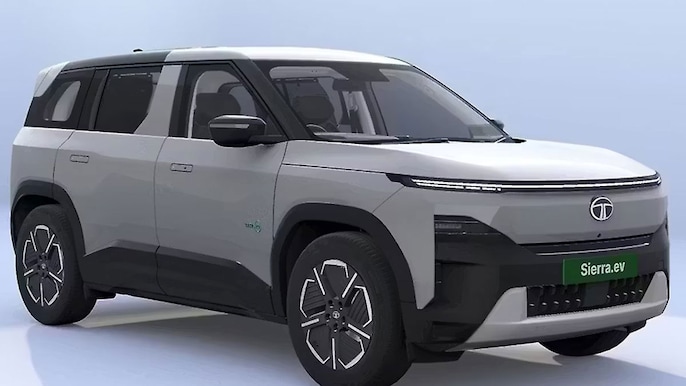
Five stars for both adults and children! Tata Sierra EV has secured the highest safety rating in Bharat NCAP crash tests, adding another major credential to the electric SUV. The vehicle scored 30.62 out of 32 points for adult occupant protection and 45 out of 49 for child occupant protection. According to Bharat NCAP results, the SUV performed strongly across multiple crash scenarios. But a closer look at the scores reveals that not every part of the driver's body received the same level of protection.
Crash reality
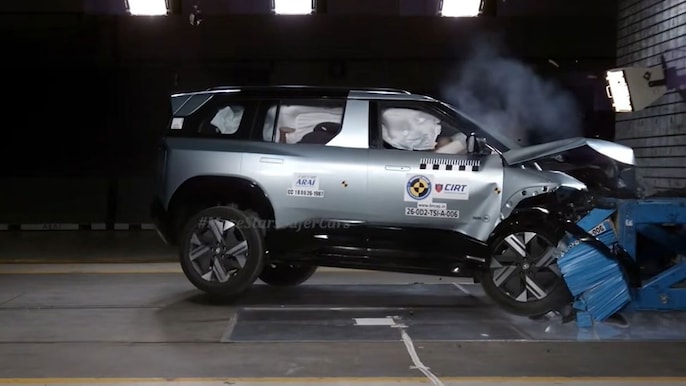
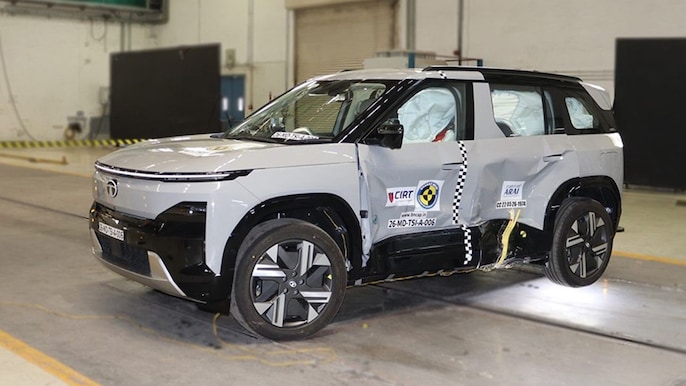
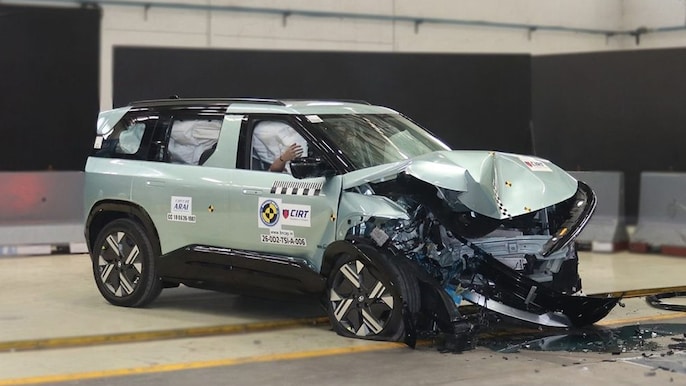
A five-star SUV with one area of concern! During the frontal offset crash test, Tata Sierra EV provided good protection to the driver and front passenger's head, chest, pelvis and thighs. However, protection for the lower legs was rated adequate, while the driver's feet received a marginal rating. The SUV scored 14.62 out of 16 in the frontal test and a perfect 16 out of 16 in the side-impact test. So while the overall rating looks impressive, what do the individual crash-test results reveal about passenger safety?
Child protection
A full 24 out of 24 points in the dynamic child safety test! Tata Sierra EV performed strongly when Bharat NCAP assessed protection for 18-month-old and three-year-old child dummies placed in rear-facing child seats. The electric SUV also scored 12 out of 12 for child restraint system installation. However, it lost four points in the vehicle assessment category, bringing its overall child occupant protection score to 45 out of 49. For families considering the electric SUV, these figures offer a closer look at its crash-test performance.
Variant advantage
₹18.79 lakh or ₹25.99 lakh, the five-star safety rating applies across the range! Bharat NCAP tested the top-end Tata Sierra EV Empowered variant equipped with a 75kWh battery and all-wheel drive. However, the rating covers all variants, including models with the smaller 63kWh battery. The SUV also comes with six airbags, rearview camera, electronic parking brake with auto hold and four-wheel disc brakes. For buyers comparing variants, the important question is whether they need to spend more for features beyond the standard safety equipment.
 Gold & Silver Prices: Is The Commodity Rally Losing Steam?
 Xi Jinping's Full Speech At APEC Welcome Banquet | 'To See 50 Years Of China, Come To Shenzhen'
 PM Modi's Message To Businesses: Tax Cuts, ₹12 Lakh Tax Relief & A Question On Hiring More Staff
 Inside China's Futuristic Shenzhen: AI Robots, Smart Cars And The City Of Tomorrow
 Trump-Xi-Putin Meet: Why India Has So Much At Stake | PM Modi's Big Diplomatic Test